What LOD 500 Really Means
LOD 500 is the as-built level of development. The definition sounds simple, but the term as-built deserves a closer look.
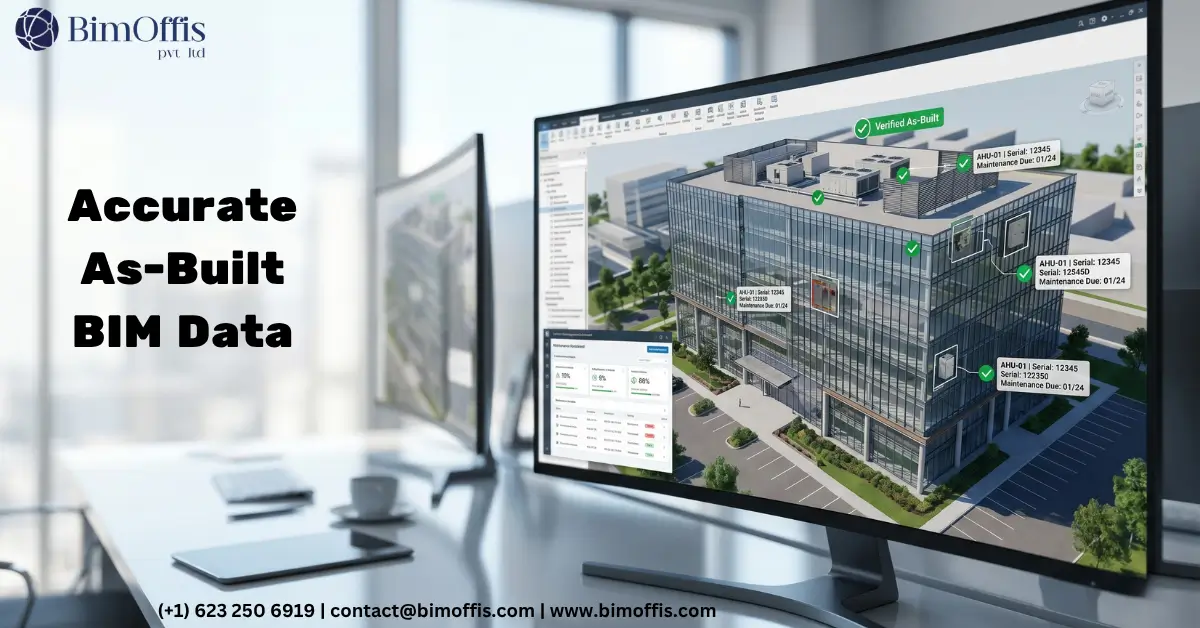
An LOD 500 model represents the building exactly as construction teams installed it. It does not show how designers intended to build the project, how the coordination model depicted it, or how contractors presented it in shop drawings. Instead, it reflects the verified condition of the completed building.
That distinction matters because construction rarely follows the design model perfectly. Contractors make field adjustments. Site teams resolve coordination issues in ways that differ from the original model. Approved substitutions alter equipment dimensions. MEP systems often follow revised routes to overcome unforeseen site conditions. By handover, the completed building usually differs from the design model in ways that range from minor adjustments to significant changes.
LOD 500 captures those changes. The BIM team updates the model to reflect installed conditions, verifies it against field measurements, and confirms that it accurately represents the completed asset. The result is a reliable digital representation of the building rather than a record of design intent.
Design Intent vs Installed Reality
Many project teams misunderstand this distinction. A design model with post-construction updates is not automatically an LOD 500 model. True LOD 500 deliverables require verification of installed conditions and confirmation that the model reflects reality in the field.
Where Most Projects Fall Short
Document Updates Are Not Field Verification
This is where many projects encounter problems.
Many teams hand over a model labelled as “as-built” even though they created it by updating the design model with marked-up drawings, contractor submissions, and O&M documentation. While this approach improves the accuracy of the design model, it does not produce a verified LOD 500 deliverable.
The difference is important. Marked-up drawings capture many changes but rarely record every adjustment made during construction. Installers often shift equipment positions slightly during installation. Site teams reroute services around unforeseen obstructions. Contractors may record these changes in site instructions without providing precise dimensions. When BIM teams rely solely on project documentation, those inaccuracies often remain in the final model.
A genuine LOD 500 model requires field verification of critical elements. Installation contractors must document as-installed conditions throughout the construction programme. The BIM team should update the model progressively as verified information becomes available instead of rushing through revisions just before practical completion.
Why End-of-Project Updates Fail
Achieving accurate as-built information requires planning. Contractor scopes must clearly define documentation requirements. The BIM management process must incorporate verification activities from the beginning of the project. Teams cannot effectively retrofit these requirements during the final weeks before handover.
What It Takes to Deliver LOD 500 Successfully
Define Requirements Early
The BIM execution plan should define LOD 500 requirements from the outset. Project teams need clear answers to several questions. Which elements require field verification? Which verification methods should teams use? Who is responsible for documenting installed conditions? When should they provide that information? How should the project team incorporate verified data into the model?
Build Verification Into Construction Workflows
Contractors need clear guidance on the as-built documentation they must provide and when they must submit it. Project managers should schedule and resource verification activities for critical building elements throughout construction rather than leaving them until project closeout.
Maintain the Model Throughout Construction
The BIM manager needs sufficient time, resources, and site access to keep the model current. Continuous updates produce a more reliable result than a large-scale revision effort at the end of the project.
These activities require additional planning, management effort, and documentation. In return, they produce a model that accurately represents the completed building rather than a design model with a collection of late-stage revisions attached to it.
The Bottom Line
Buildings continue to evolve long after construction ends. Owners maintain systems, renovate spaces, replace equipment, and expand facilities throughout the life of the asset. The quality of the as-built record handed over at completion directly influences how effectively future teams can perform those tasks.
A genuine LOD 500 model is more than a project deliverable. It becomes a long-term asset that supports operations, maintenance, compliance, and future development. Organisations that invest in accurate as-built modelling understand its value. Those that do not often discover the consequences later, when maintenance issues, compliance reviews, or renovation projects expose the gaps between the model and reality.
Ready to find out what your project will cost? Find out here.
Frequently Asked Questions from Clients
What is LOD 500 in BIM?
LOD 500 represents a verified as-built model that reflects the actual installed conditions of a building.
How is LOD 500 different from LOD 400?
LOD 400 focuses on fabrication and installation details, while LOD 500 reflects verified as-built conditions.
Why is a LOD 500 model important?
It provides accurate building information for facility management, maintenance, and future renovations.
Does LOD 500 require field verification?
Yes, critical building elements must be verified against actual site conditions.
Who is responsible for creating a LOD 500 model?
The project team, contractors, and BIM managers typically collaborate to produce the final model.
Can a design model be considered LOD 500?
No, a design model only becomes LOD 500 after it accurately reflects and verifies installed conditions.