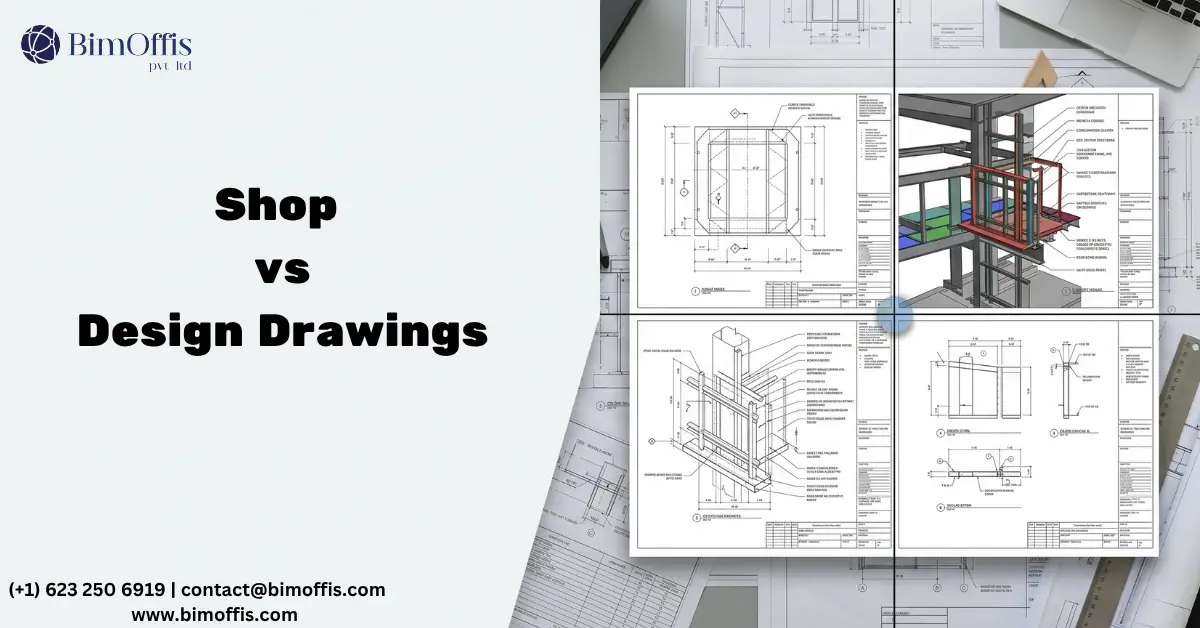
Design drawings tell everyone what the building needs to be. The architect produces them, describing the design, the materials, the dimensions, and the standards the building must meet.
Shop drawings, however, tell everyone how a specific element will actually come together on site. The contractor produces them to show exactly how a particular piece of work moves from raw material to finished installation, satisfying what the design drawings require.
One describes the outcome. The other describes the method. Both are essential. And honestly, the confusion between them causes more unnecessary arguments on construction projects than most people ever realise.
I’ve watched this play out more times than I can count. Two parties doing their jobs reasonably well, both looking at the same project, and somehow ending up in a complete breakdown over a shop drawing submission. The architect sends back comments. The contractor reads them and can’t figure out what the architect actually wants. As a result, the programme slips, frustration builds on both sides, and the project suffers for something a clear conversation at the start could have prevented entirely.
That’s what this is about. Not the theory. Rather, the practical reality of why this distinction matters, and what happens when nobody understands it properly.
Design Drawings: What They Are and What They Do
Their Job on a Project
Design drawings come from the architect and their consultants. Their job is simple: describe the building. What it looks like, how it flows, what materials go into it, and what performance standards it needs to hit.
Furthermore, they take different forms at different stages of a project:
- Early concept drawings establish the direction and general character of the building
- Design development drawings work out the technical approach in more detail
- Construction documents provide the full scope, dimensions, materials, and specifications the contractor needs to price and build the work
Where Their Responsibility Ends
Design drawings define the outcome. In other words, they answer one question: what does this project need to achieve?
What they deliberately don’t do is tell the contractor how to achieve it. Take a steel connection, the fabricator decides how to build it. A curtain wall system? The subcontractor decides how it goes together on site. Custom joinery? That’s the manufacturer’s call, not the architect’s. Those decisions belong to the contractor, full stop.
The architect knows what the building needs to be. The fabricator, on the other hand, knows how to make it. These are two very different jobs, and keeping them separate is the whole point of having two separate document types.
Shop Drawings: What They Are and What They Do
Their Job on a Project
Shop drawings come from the contractor, subcontractor, or supplier doing a specific piece of work. They show exactly how that work moves from design intent to physical reality, fabricated, manufactured, and installed.
In practice, this looks like:
- A steel fabricator producing drawings showing exact member sizes, connection details, bolt patterns, and fabrication tolerances
- A curtain wall subcontractor producing drawings showing precise profiles, fixing details, and assembly sequences
- A joinery manufacturer producing drawings showing cut lists, dimensions, hardware specs, and how every custom piece fits together
- MEP subcontractors producing drawings showing exact equipment positions, routing, and connection details
The Most Important Thing to Understand
Shop drawings take what the design drawings require and work through it in enough detail to actually make and install the thing. Essentially, they represent the contractor’s interpretation of the design.
And here is where most of the confusion starts.
Shop drawings don’t change the design. Instead, they interpret it.
A shop drawing that departs from the design intent, without flagging that departure and getting explicit approval, isn’t a valid document. It becomes an unapproved change, whether anyone intended it that way or not. This situation causes more arguments at practical completion than almost anything else, and nearly all of those arguments are completely avoidable.
The Real Differences Between the Two
Who Makes Each One
Design drawings come from the design team. Shop drawings, by contrast, come from the contractor or their supply chain.
That difference reflects responsibility. The design team owns the design intent. The contractor owns the means and methods of achieving it. When something goes wrong on a project, these two categories of ownership usually make it pretty clear where the problem started.
What Each Document Is Actually Saying
A design drawing says: here is what needs to happen. This is the geometry, the material, the performance requirement, the quality standard.
A shop drawing, on the other hand, says: here is our plan for making it happen. This is our interpretation of your requirement, worked through in enough detail to actually build the thing.
One sets the target. The other describes how the contractor plans to hit it. You genuinely need both. One without the other leaves a gap that fills with assumption, and assumptions on construction sites consistently turn into disputes.
The Level of Detail
Design drawings go as far as needed to define the design and communicate it clearly. Shop drawings, however, go as far as needed to manufacture and install a specific element.
A design detail for a curtain wall shows the overall assembly, key dimensions, and performance specification. A shop drawing for the same system, by comparison, shows exact extrusion profiles, specific fixing arrangements, glazing pocket dimensions, and fabrication tolerances. That level of manufacturing detail has no business sitting in a design drawing. Making those decisions belongs to the specialist subcontractor, not the architect.
When Each Gets Made
Design drawings exist before the contractor even joins the project. Shop drawings come later, during construction, as the contractor works out how to actually build what the design describes.
The review process sits between those two moments. Consequently, the design team reviews contractor submissions before fabrication proceeds, checks that the interpretation is correct, and either approves the drawing or sends it back with comments. That review is the checkpoint that catches problems before workers physically build them into the project.
Why the Review Process Gets Difficult
The shop drawing review is one of the most consistently difficult parts of the architect-contractor relationship. Worth saying that honestly rather than pretending it’s all smooth sailing.
From the Architect’s Side
Reviewing shop drawings is a genuine responsibility. The architect checks that the contractor has interpreted the design correctly, that proposed products will actually deliver what the design requires, and that fabrication details don’t create unforeseen problems. Therefore, when comments come back on a submission, the architect is doing their job. The feedback isn’t personal.
From the Contractor’s Side
The review process directly affects the programme. Drawings sitting with the design team for weeks, coming back with vague comments, creates real schedule pressure. Moreover, that pressure carries real cost implications, every single day.
The Fix That Actually Works
Both pressures are legitimate. The tension between them is almost never bad faith. It’s almost always a process that nobody clearly defined before construction started.
Worth sorting out before the first submission lands:
- Which elements actually need shop drawings
- What turnaround time the design team commits to for reviews
- What level of detail the submissions genuinely require
- What counts as a deviation needing a formal design change versus a simple shop drawing comment
Teams that answer these questions upfront have a noticeably smoother run than teams figuring it out under programme pressure. That conversation costs almost nothing at project start, and saves significant grief later.
Two Mistakes That Come Up Over and Over
Pushing Through a Design Change Without Flagging It
A contractor submits a drawing with slightly different dimensions or an alternative product, without highlighting the departure. The design team approves it without catching the difference. Subsequently, workers build the element. At completion, it doesn’t match the design drawings. Both parties have paperwork and neither is entirely wrong.
The fix is straightforward. Contractors must flag deviations explicitly. Similarly, design teams should review with one question in mind: does this drawing interpret the design correctly, or does it quietly change something?
Reviewing Shop Drawings Without Thinking About Interfaces
A curtain wall submission affects structural fixings, waterproofing details, and interior fit-out conditions. A structural steel submission likewise affects architectural clearances and MEP coordination. Reviewing drawings trade by trade, without considering those interfaces, means clashes surface during installation rather than during review. That is always more disruptive and always more expensive.
The Short Version
Design drawings say what needs to be built. Shop drawings, in contrast, say how the contractor plans to build it.
One comes from the design team. The other comes from the contractor. One defines the requirement. The other describes the response.
Neither replaces the other. Furthermore, shop drawings don’t change design drawings without a clear, agreed process. And the review connecting them, frustrating as it sometimes feels, is what keeps the finished building aligned with what was actually designed.
Most shop drawing problems are process problems. Therefore, sort the process out at the start and most of the friction looks after itself.
Need accurate shop drawings for your next project? Get a free quote from BimOffis.
Frequently Asked Questions from Clients
1. What is the main difference between shop drawings and design drawings?
Design drawings show what must be built, while shop drawings show how it will be built.
Who prepares design drawings?
Design drawings are prepared by the architect and design consultants.
Who creates shop drawings?
Shop drawings are produced by contractors, subcontractors, fabricators, or suppliers.
Can shop drawings change the original design?
No, any design deviation must be clearly identified and formally approved.
Why are shop drawings reviewed by architects?
They are reviewed to ensure the contractor’s interpretation matches the design intent.
When are shop drawings typically submitted?
They are submitted during construction before fabrication or installation begins.