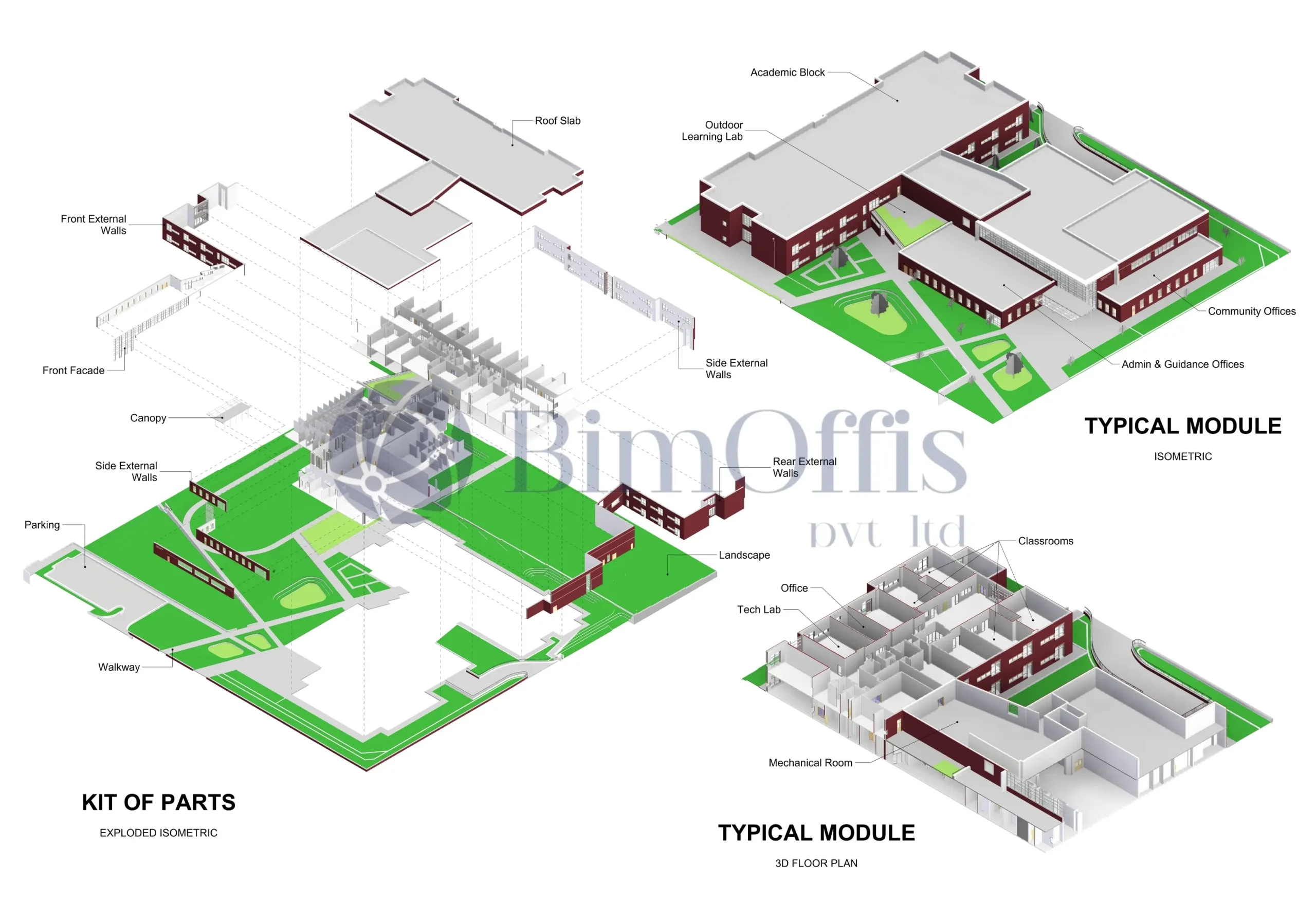
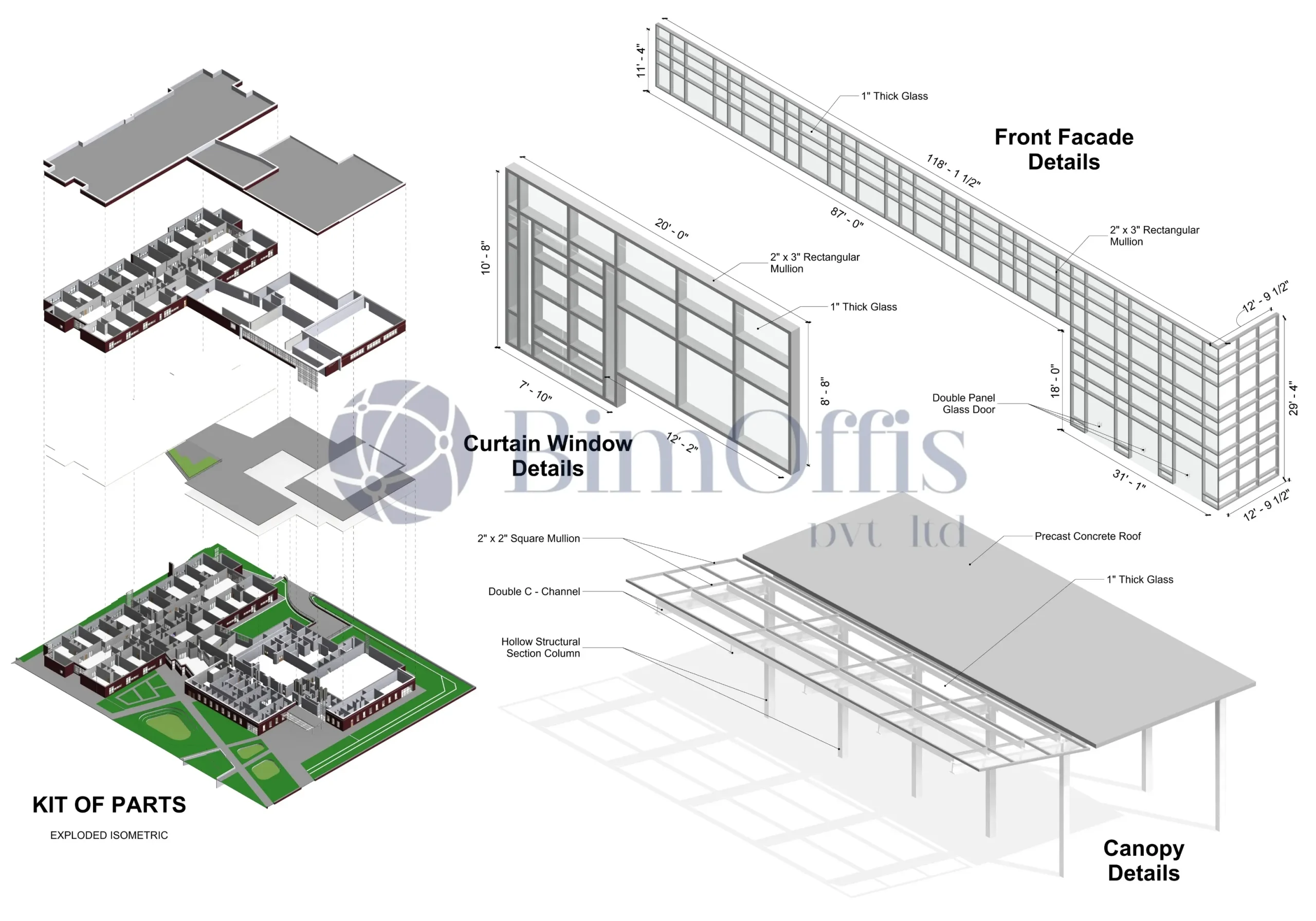
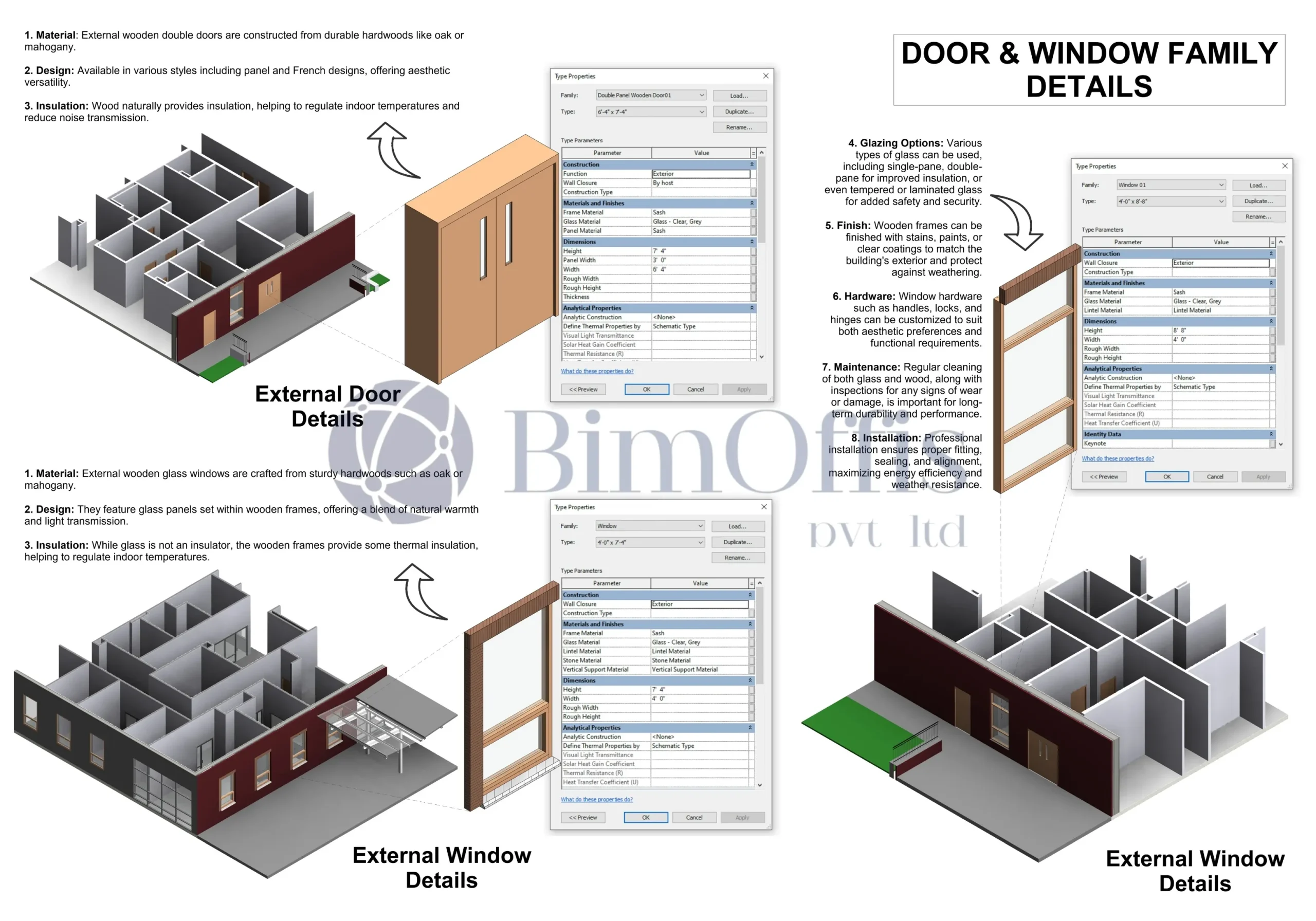
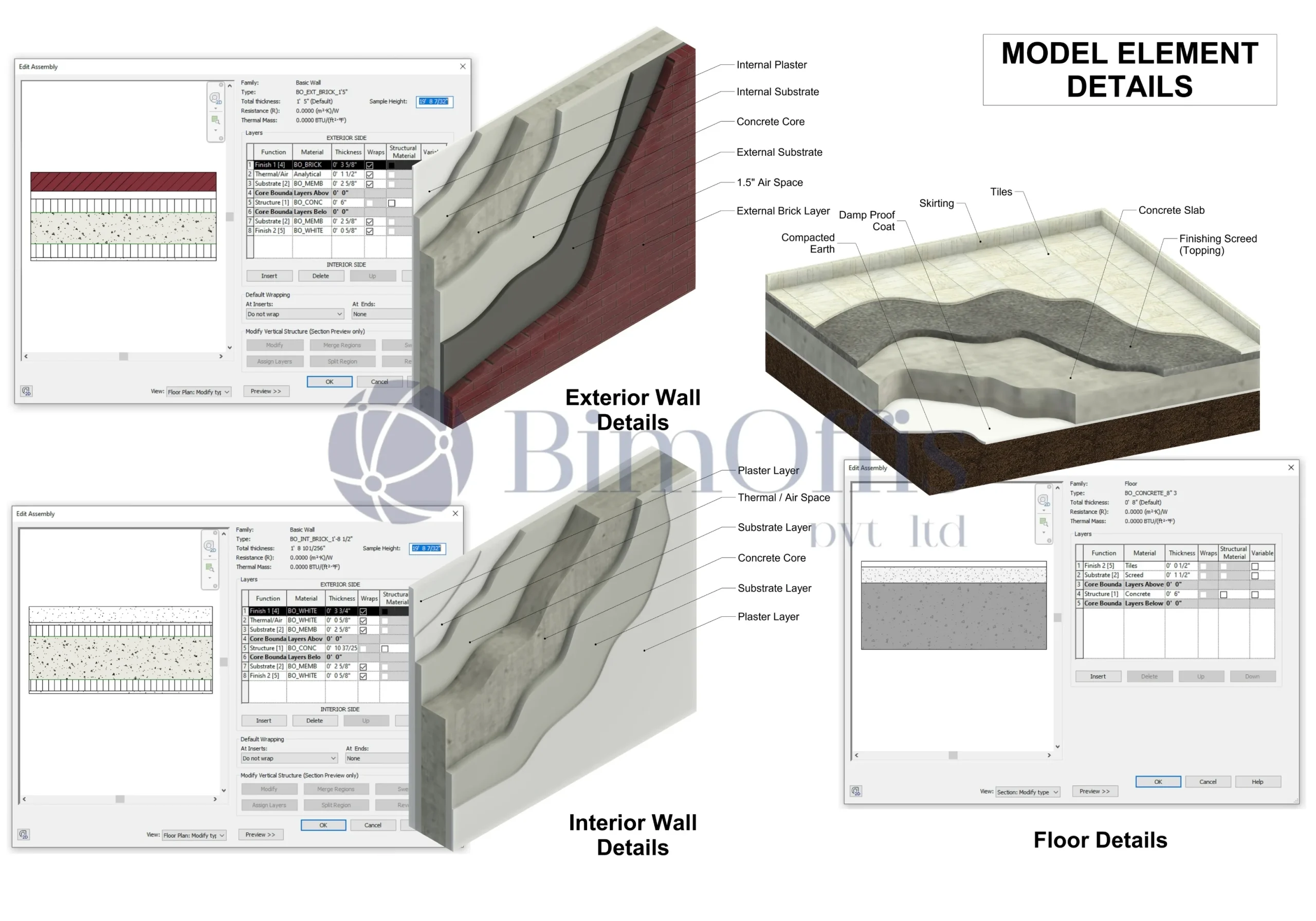
Project Overview
The Triumph Academy project focused on delivering a high-detail architectural BIM model to support both design development and construction execution. The goal was to create a reliable and data-rich model that could be used throughout the entire project lifecycle.
Our team developed a comprehensive BIM workflow that ensured design clarity, improved communication between stakeholders, and reduced potential errors during construction. The model served as a central source of truth for all project-related information.
Scope of Work
The scope of work for the Triumph Academy project included:
- Architectural BIM modeling (LOD 400)
- Detailed construction-level documentation
- 3D visualization and rendering
- Design coordination support
- Model-based planning and review
All deliverables were created with a focus on accuracy, usability, and real-world construction requirements.
BIM Modeling Process
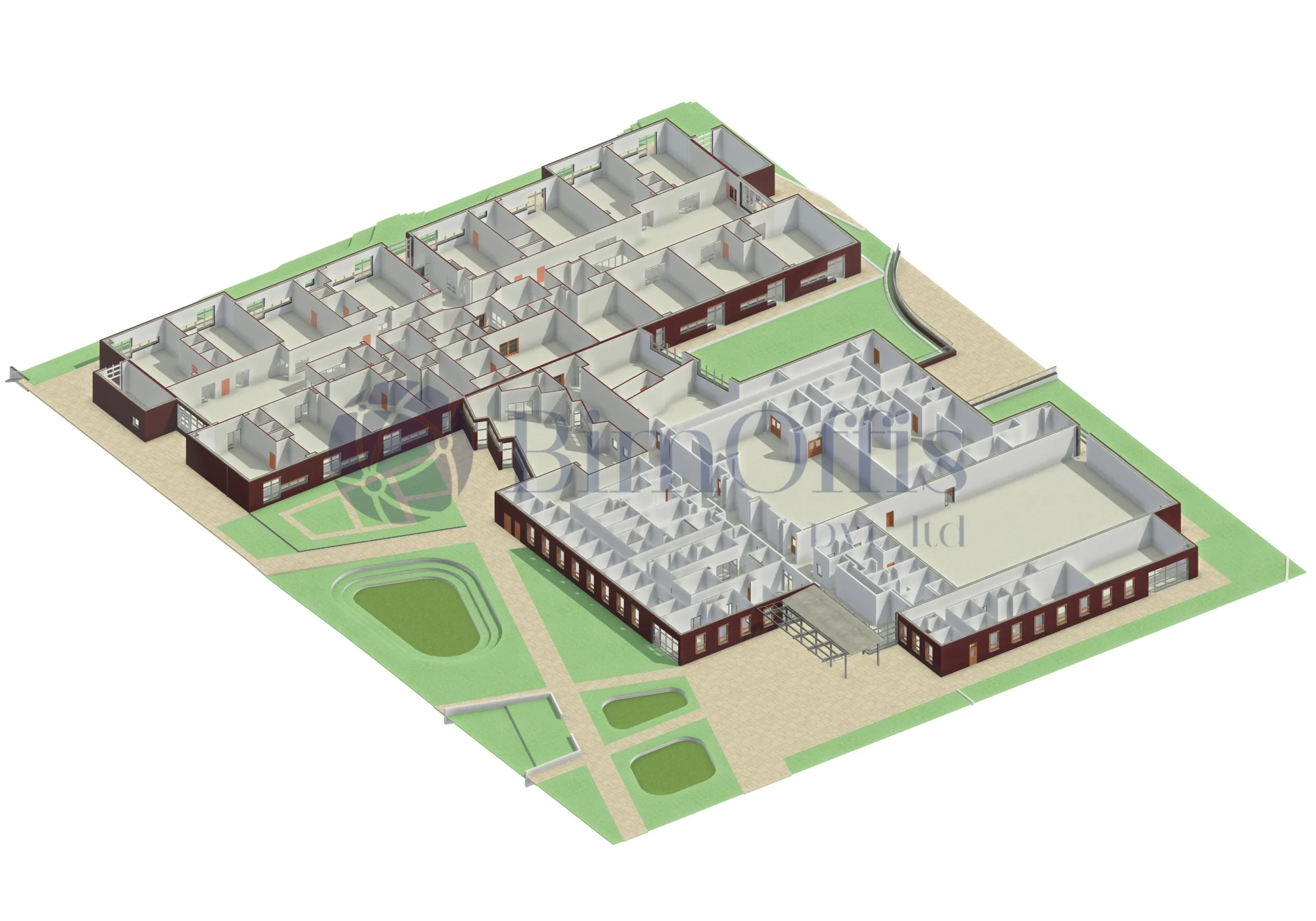
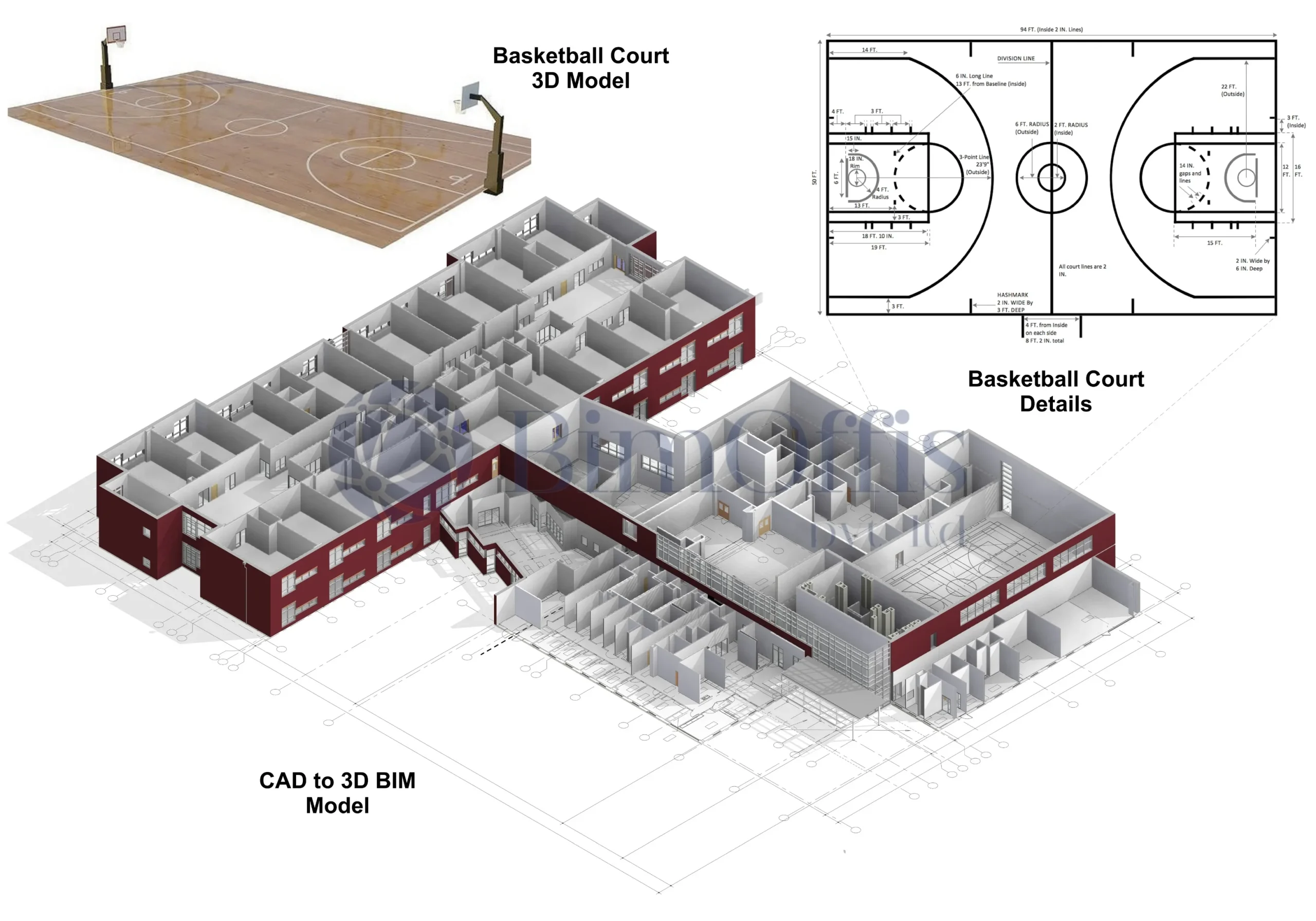
Using Autodesk Revit, we developed highly detailed architectural models that captured every element of the building with precision. The LOD 400 level ensured that the model could be directly used for construction documentation without ambiguity.
Special attention was given to detailing, ensuring that all components were aligned with real construction standards and project specifications.
Visualization & Coordination
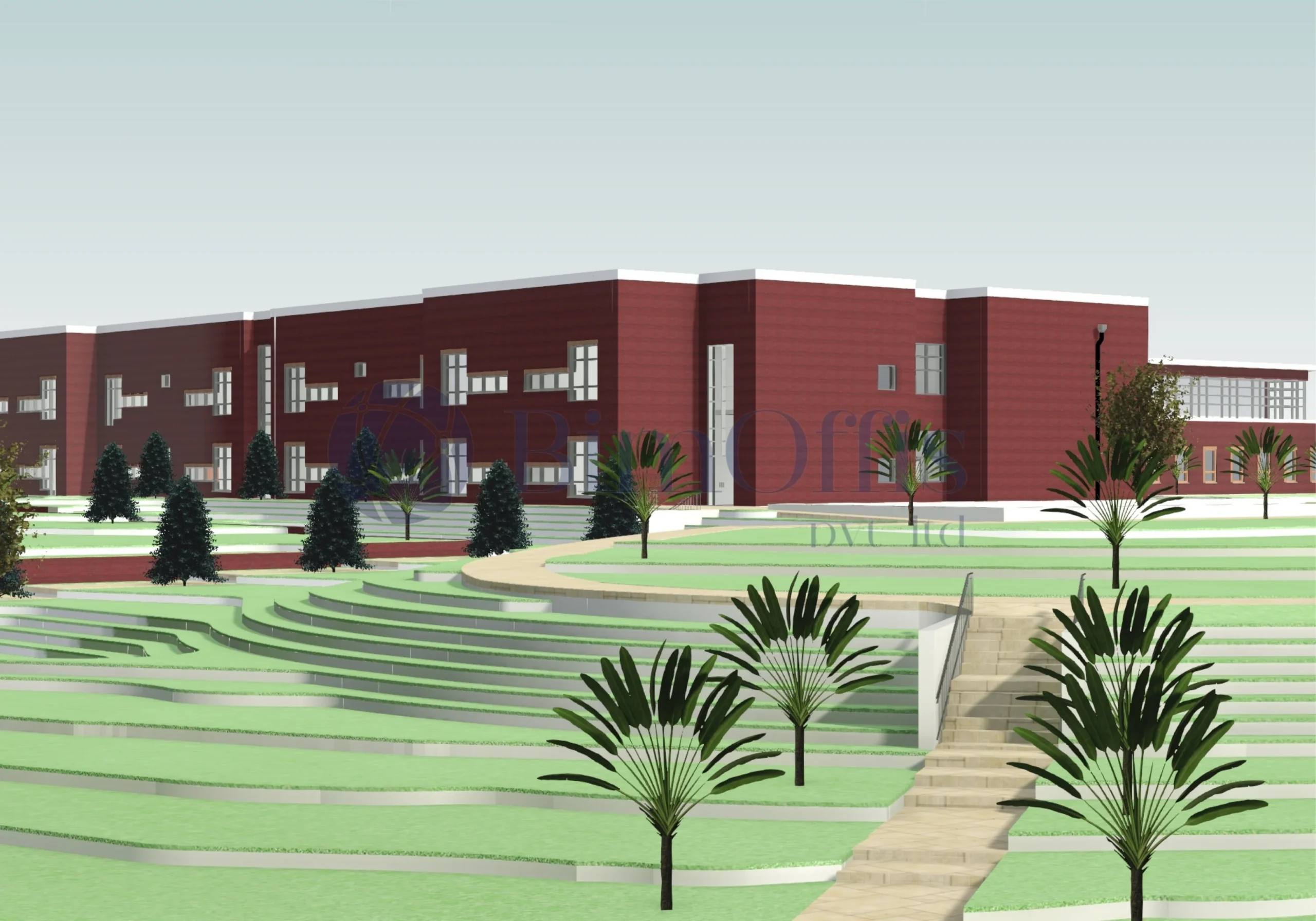
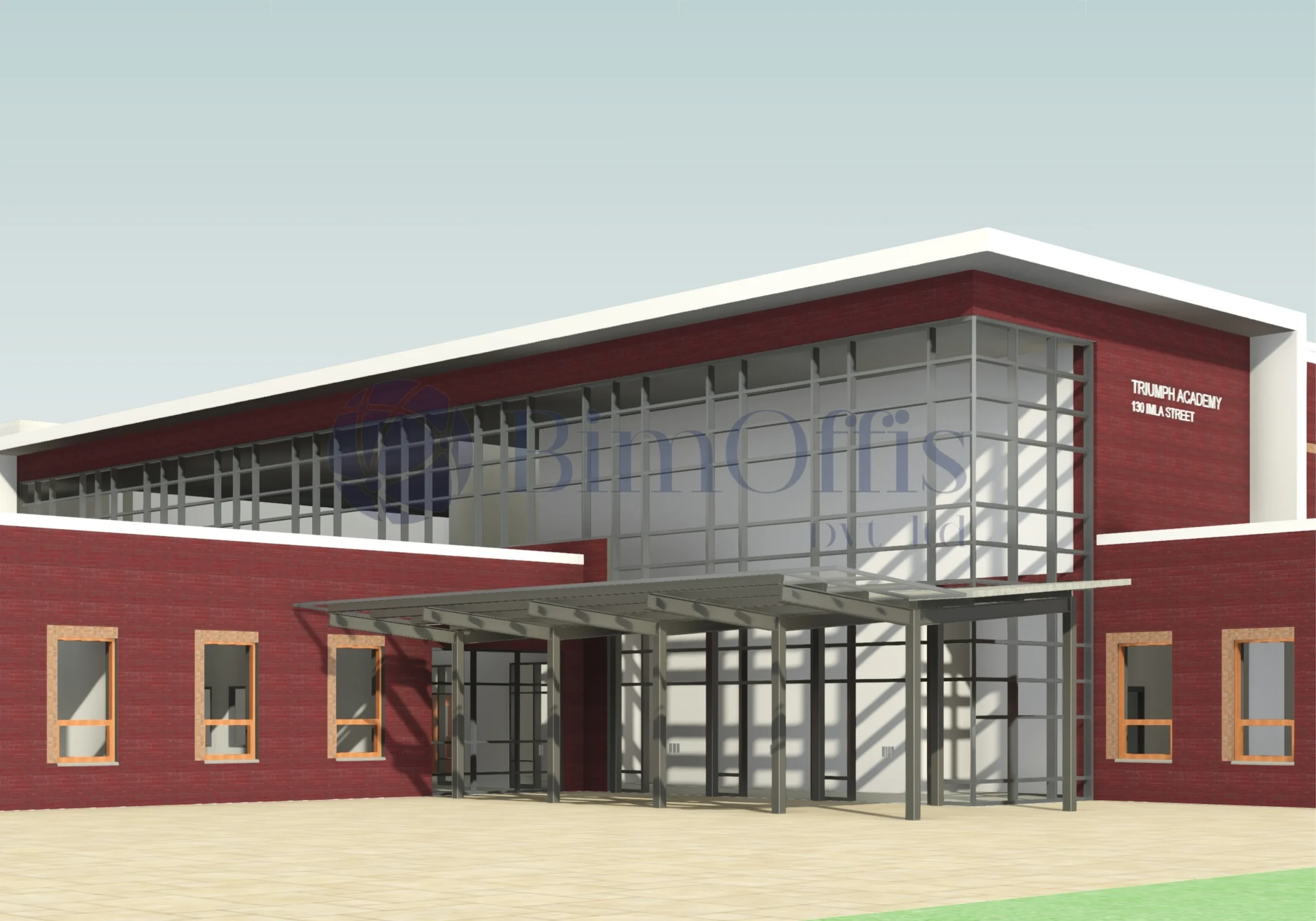
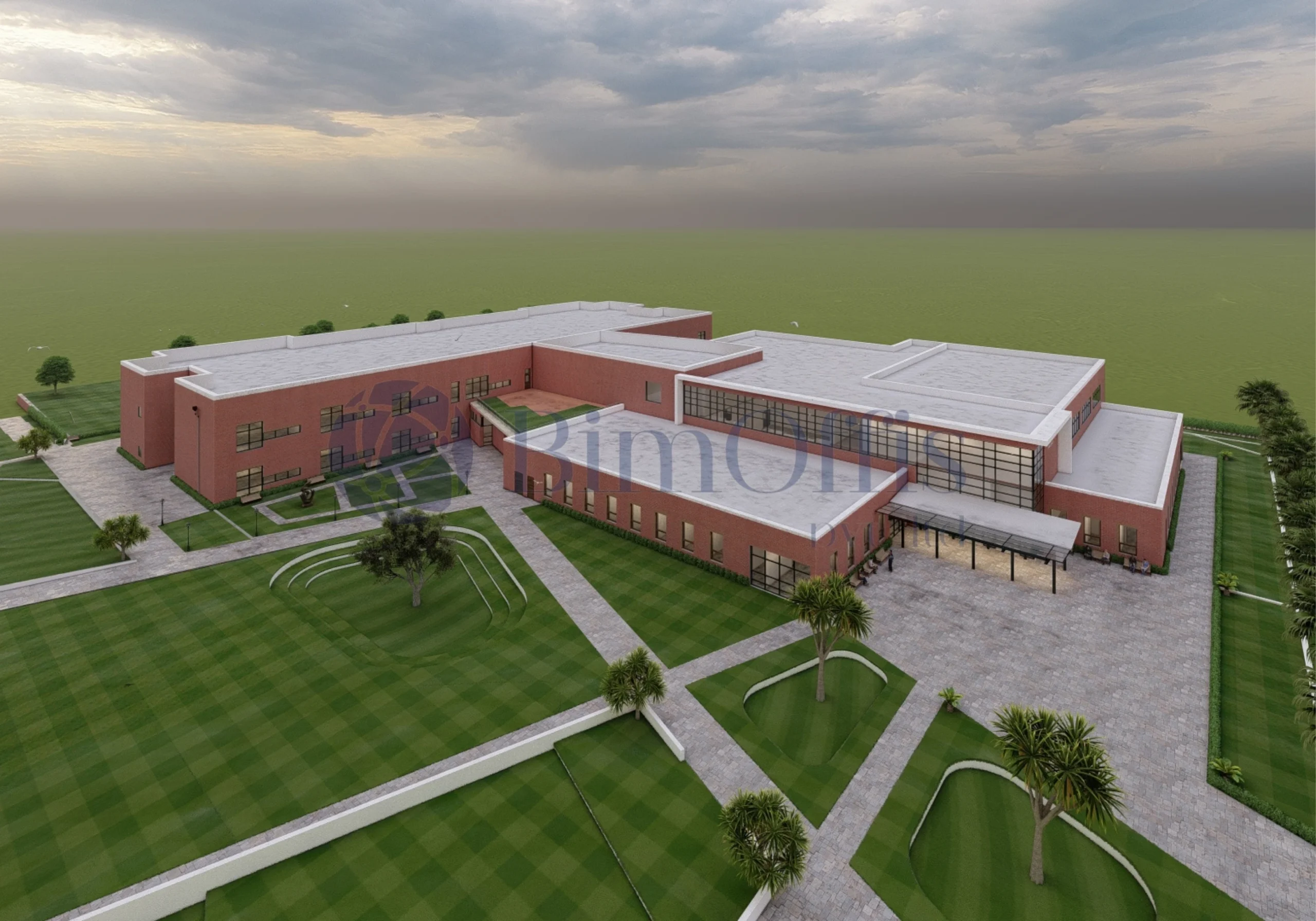
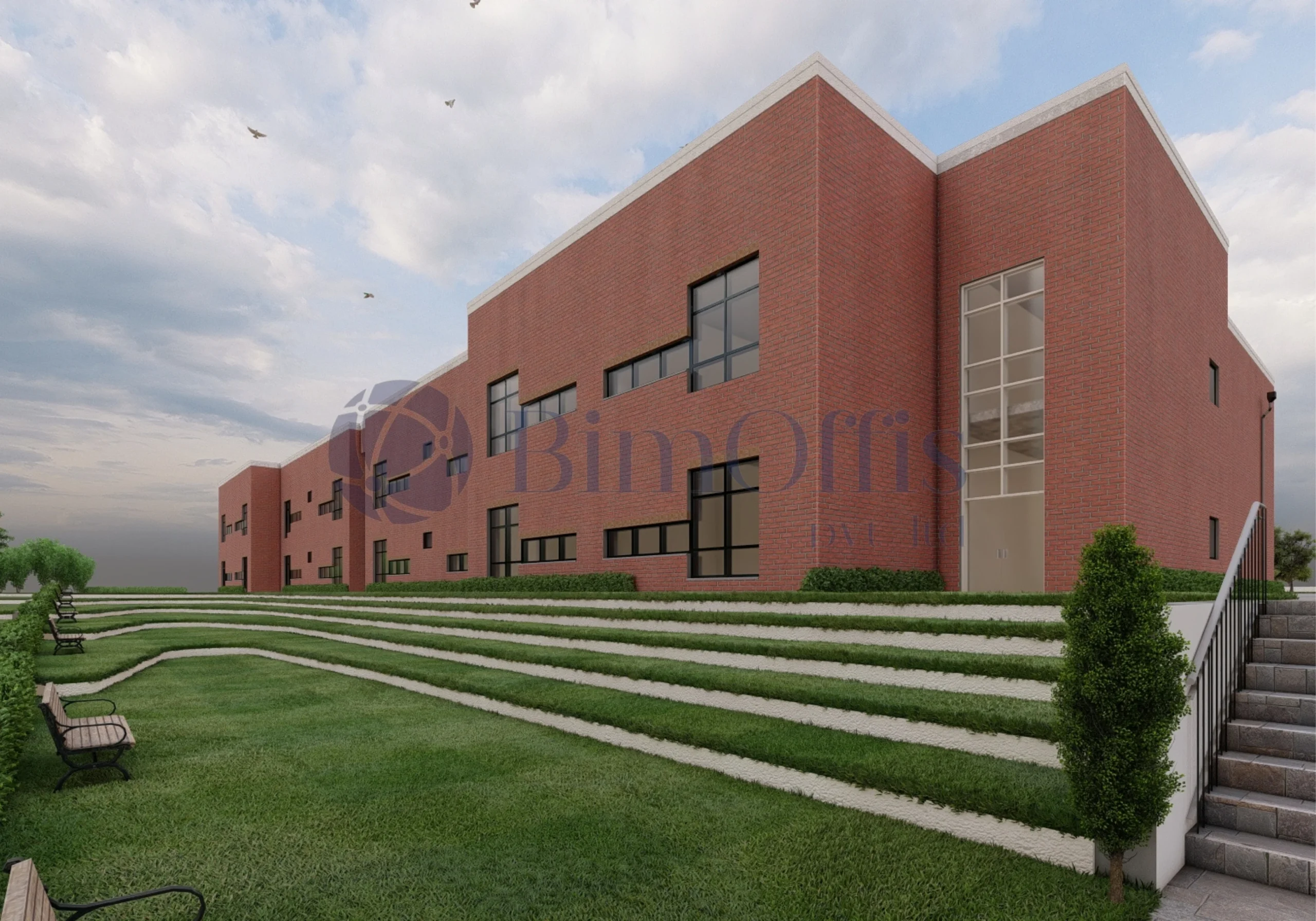
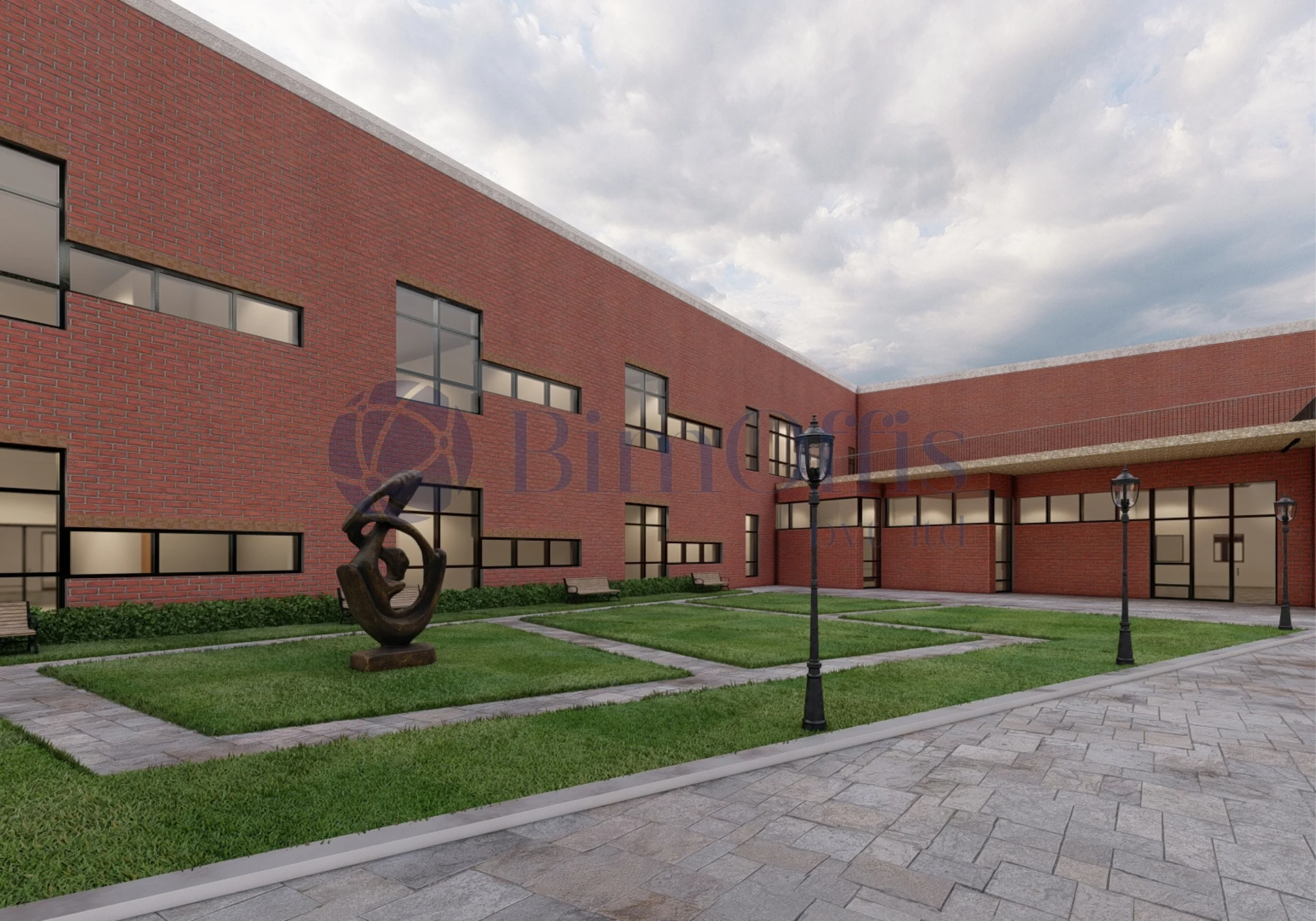
To enhance design understanding and stakeholder communication, we created high-quality visualizations using Lumion. These visual outputs helped clients and teams clearly understand the design intent before construction began.
The visualization process also supported smoother coordination by identifying design gaps early and improving overall project clarity.
Tools & Technologies
The following tools were used in this project:
- Autodesk Revit (Architectural BIM Modeling)
- Lumion (Visualization & Rendering)
- AutoCAD (2D Documentation)
- BIM Collaboration Tools
These tools helped ensure efficient workflow and high-quality project delivery.
Project Outcome
The Triumph Academy BIM implementation resulted in improved design accuracy, better visualization, and efficient coordination across all project stages.
The client benefited from a clear understanding of the design, reduced construction errors, and a smoother overall project execution process.
Scope of Work
CAD - BIM
Total Area
2,90,000 Sq. Ft.
Services
Architecture
Softwares Used
AutoCAD, Revit, Lumion
Sector
Institution
LOD
400
Ready to Work with us?
We establish long-term business relationships with our clients and are
committed to complete customer satisfaction. We would love to know
about your next project.
Project Challenges
Large Project Scale
The academy project covered an area of 290,000 sq. ft, requiring extensive modeling and data management.
LOD 400 Construction-Level Detailing
Developing LOD 400 models demanded high precision to support construction and execution stages.
Complex Institutional Layouts
Institutional buildings involve classrooms, corridors, common areas, and utilities that required accurate architectural coordination.
Documentation Accuracy Requirements
Preparing detailed plans, sections, elevations, and schedules required strict quality control to avoid design inconsistencies.
Design Updates and Client Feedback Integration
Frequent design revisions required real-time model updates and coordination with the client.
High-Quality Visualization Needs
Creating realistic CGI and 3D renderings for stakeholder presentations required parallel workflows and visualization expertise.
What We Delivered
- Detailed LOD 400 Architectural BIM model developed in Autodesk Revit
- Comprehensive architectural documentation including plans, sections, elevations, details, and schedules
- High-quality CGI visuals and 3D renderings using Lumion
- Standardized BIM workflows and SOP-driven production process
- Regular coordination, model updates, and client communication
Project Samples