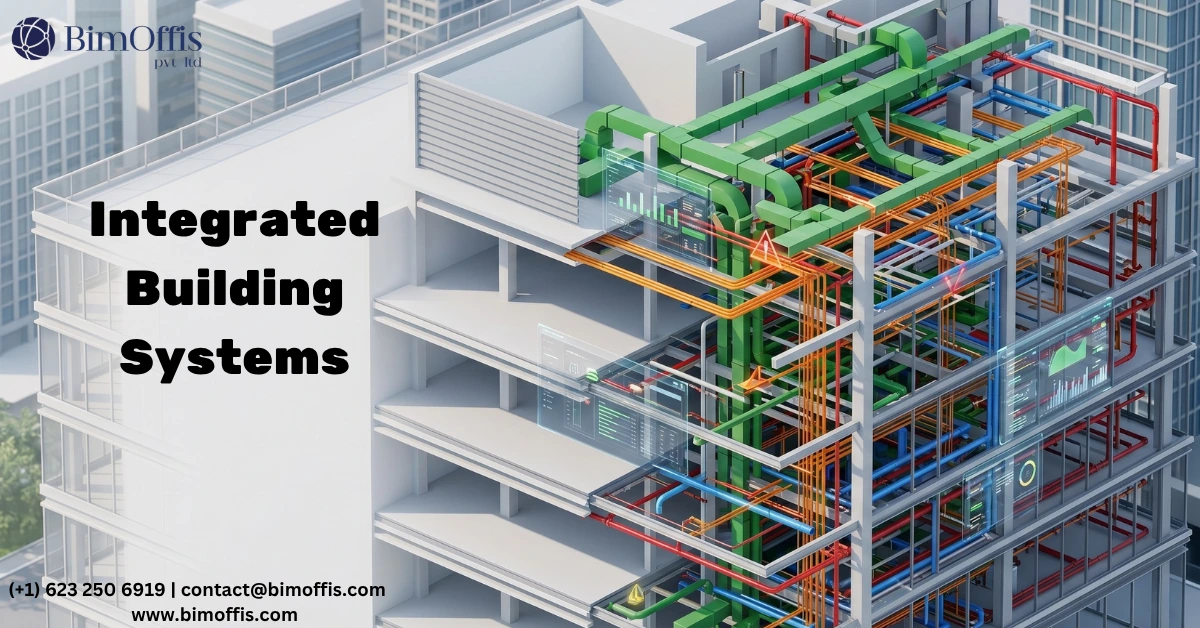
If you’ve ever stood under a finished ceiling in a modern building, you already know how messy things actually are above it.
There’s ductwork running in one direction, pipes crossing it, electrical trays squeezing through gaps, sprinkler lines going around everything, and lighting fixtures fitted wherever space is left. And the surprising part is that every one of these systems is designed separately by different teams.
That’s basically MEPF in BIM: Mechanical, Electrical, Plumbing, and Fire Protection. These are the systems that make a building work, even though you rarely notice them once everything is closed up.
The real challenge is simple: all of this has to fit in the same limited space without interfering with each other.
What MEPF Actually Includes
MEPF is just a combined name for four building services.
Mechanical covers HVAC, air conditioning, ventilation, and heating. It controls how air moves inside the building.
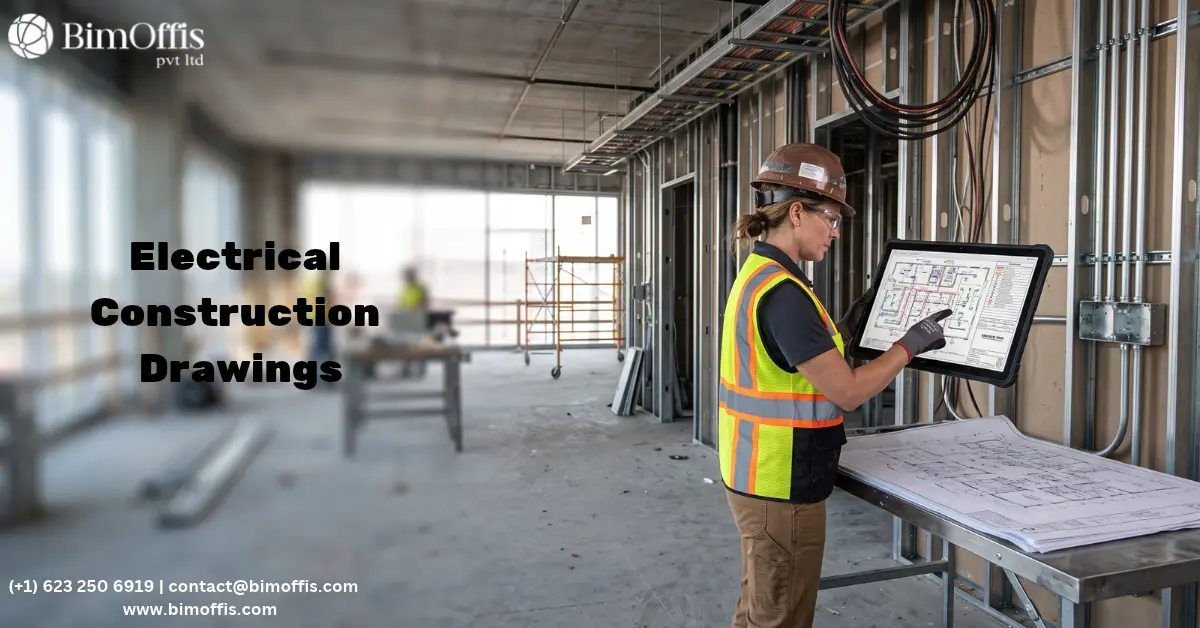
Electrical takes care of power, lighting, wiring, and everything that keeps the building running.
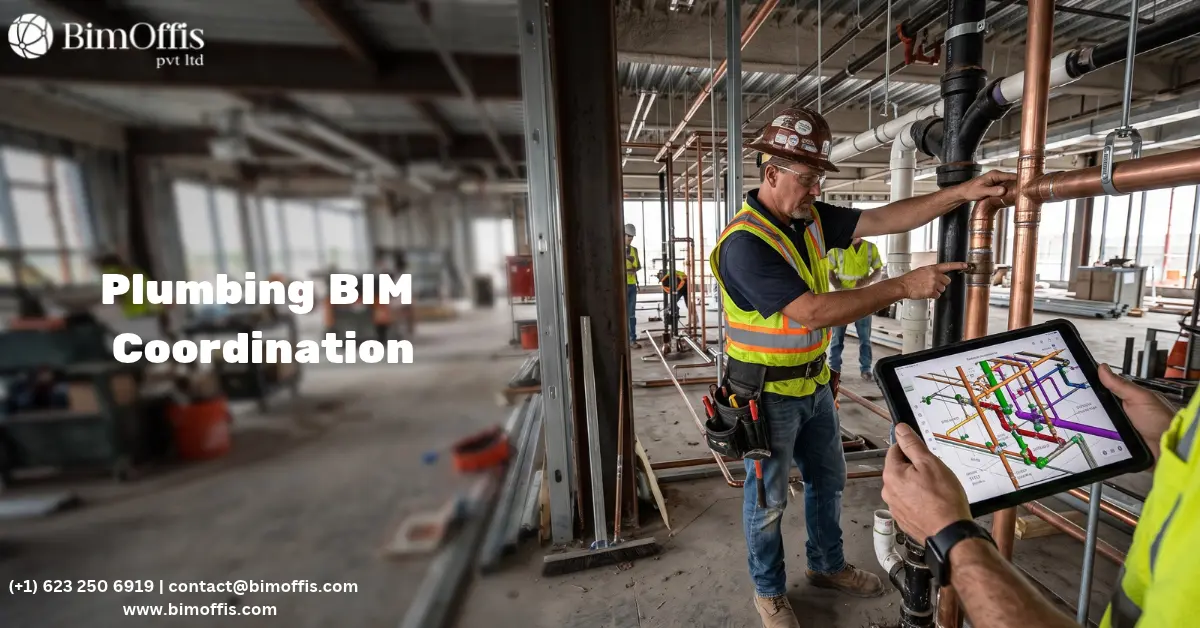
Plumbing is all about water supply, drainage, and waste lines.
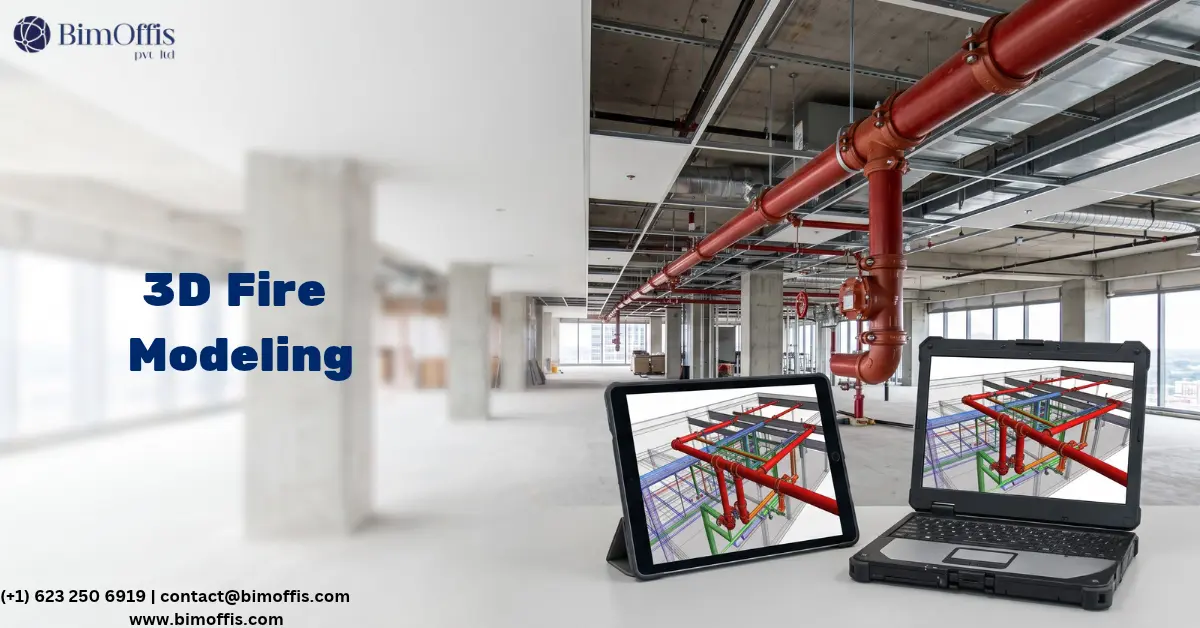
Fire protection includes sprinklers, fire alarms, and safety systems that protect people.
Individually, these systems make sense. The problem starts when all of them try to occupy the same ceiling space.
Why MEPF Coordination Becomes a Problem
In real buildings, space is always the issue.
A ceiling void or service shaft is not as big as it looks on drawings. And when multiple systems enter that same space, things start to clash.
What makes it worse is that each team works separately. Mechanical designs their duct routes, electrical plans their cable paths, plumbing runs its own network, and fire protection follows safety coverage rules.
Nobody is really wrong, but the problem is they are not thinking together.
So when everything comes to site, you suddenly find a duct blocking a pipe, or a cable tray sitting exactly where something else needs to go.
That’s where delays start.
How BIM Actually Helps
BIM basically brings all of this into one place.
Instead of separate drawings, everything is built in a single 3D model. Mechanical, electrical, plumbing, and fire systems all sit together in the same space.
So now you can actually see the real situation before anything gets built.
If something clashes, it shows up in the model. You don’t have to wait for site installation to find out. You fix it during design when changes are still easy.
That alone saves a lot of trouble on site.
What Changes on Site
Once BIM coordination is done properly, site work becomes much more predictable.
Installers already know where things go. They’re not guessing or adjusting on the fly.
So work flows better. Less stopping, less rework, fewer surprises.
Prefabrication Gets Easier
Another big benefit is prefabrication.
Since the model is accurate, a lot of ducting, piping, and cable work can be made off-site.
When those pieces arrive on site, they actually fit because they’re based on a coordinated model, not rough drawings.
That saves time and reduces mistakes.
Maintenance Becomes Simpler
After handover, BIM still helps.
Facility teams don’t need to dig through old drawings. They can open the model and see exactly where everything is.
If something breaks, they know where to look and how the system is connected.
It just makes building maintenance less painful.
Where It Really Matters
Hospitals
Hospitals are packed with systems, medical gases, ventilation, power backup, fire safety. Everything is critical. There’s no room for mistakes, so BIM becomes very important here.
Data Centers
Data centers are even more sensitive. Cooling, power, fire systems, and cabling all need perfect coordination. Even a small clash can cause serious issues.
Large Commercial Buildings
Big office buildings and mixed-use projects have a lot of MEPF running through every floor. Without BIM, coordination becomes messy very quickly.
Final Thought
MEPF coordination is honestly one of the hardest parts of building design.
Too many systems, too many teams, and very little space to work with.
BIM doesn’t remove the complexity, but it makes it controllable. It helps teams see problems early, fix them before they reach site, and keep construction running smoother.
And that’s really why BIM has become so important in MEPF work today.
Learn about the role and impact of MEPF in BIM projects.
Frequently Asked Questions from Clients
What is MEPF in BIM?
MEPF in BIM refers to modeling Mechanical, Electrical, Plumbing, and Fire Protection systems in a coordinated digital environment.
Why is MEPF important in BIM?
It improves coordination between systems and reduces clashes during construction.
How does BIM help MEPF design?
BIM provides accurate 3D models for better planning, visualization, and coordination.
What industries use MEPF BIM?
It is widely used in commercial, residential, and infrastructure construction projects.
Does MEPF BIM reduce construction errors?
Yes, it helps detect clashes early and minimizes on-site errors.
Which software is used for MEPF BIM?
Common tools include Revit, Navisworks, and AutoCAD MEP.