MEPF systems in high-rise buildings are genuinely one of the hardest things to get right in construction. And when you actually dig into what keeps a tall building running day to day, it is not hard to see why.
People tend to think of a high-rise as just a very tall building. But really it is more like a vertical city. Someone on the forty-fifth floor expects the same air quality as someone on the ground floor. A person turning on a tap at the top of the building expects the same water pressure as someone at the bottom. The lights need to work. The lifts need to run. If there is ever a fire, the suppression system cannot hesitate for a second.
All of that comes down to how well the MEPF systems are designed and coordinated. When that process goes wrong, the building feels it.
Why High-Rise MEPF Is Not Just a Bigger Version of the Same Thing
The Scale Changes the Problem Completely
One of the most common misconceptions is that MEPF in a tall building is just the same as a smaller building but with more floors. In reality, it is a completely different engineering challenge.
Water pressure is a good example. At the lower levels of a sixty-storey building, the pressure forces are enormous. Without pressure zoning, fittings near the bottom would take a beating while people near the top struggle to get enough flow. Electrical systems have to deal with voltage drop across much longer distances. Air distribution needs riser designs and fan setups that simply do not exist in low-rise construction.
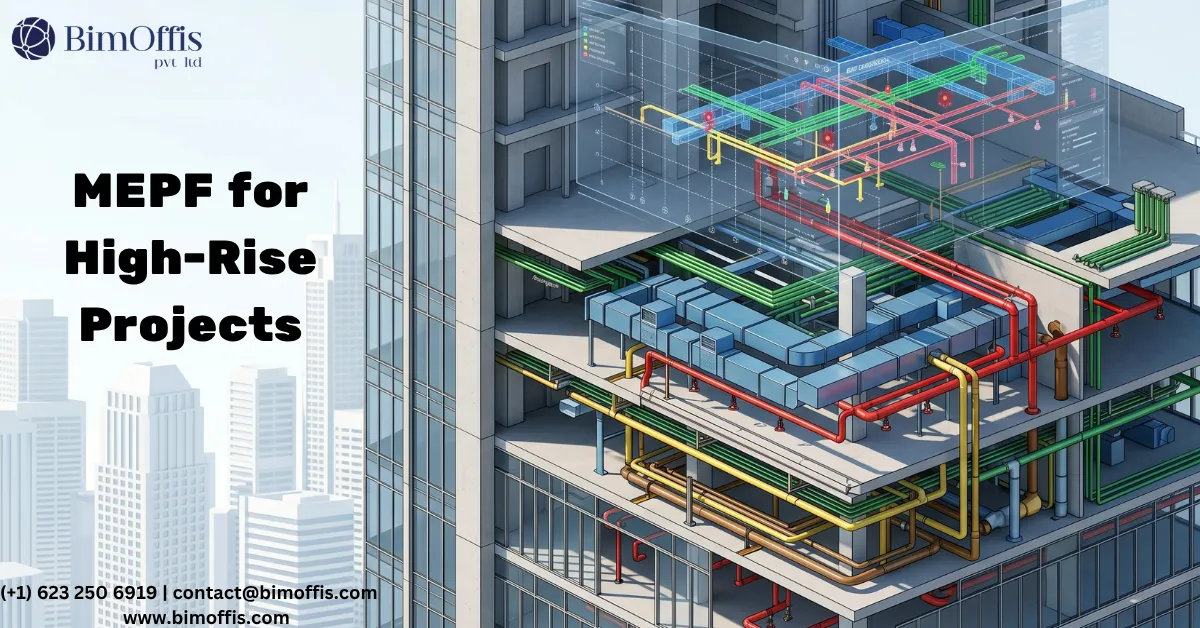
And then there is the ceiling void problem. Every floor in a high-rise has to fit mechanical ductwork, electrical cable trays, plumbing risers, fire suppression pipework, and structural beams all in the same limited space above the ceiling. Getting all of that to coexist without conflict is a real challenge on every single floor.
Coordination Is Where Projects Win or Lose
Look up at a finished ceiling in a commercial high-rise and everything looks simple and clean. What you cannot see is the sheer amount of work that went into making sure nothing above that ceiling clashes with anything else.
Every system has its own clearance requirements. Every system interacts with the others. Across dozens of floors and multiple disciplines, the opportunities for things to go wrong are everywhere. The projects that handle this well are the ones that treat coordination as a priority from day one, not something to sort out later.
A Closer Look at Each System
Mechanical
Mechanical systems are responsible for air quality, temperature, and ventilation across every occupied floor. When you have hundreds of people working on a single floor plate, the mechanical system has a direct effect on how comfortable and productive those people are. It is not a background detail.
There is also the energy side of things to consider. HVAC is responsible for a significant chunk of a commercial tower’s total energy consumption. The choices made during mechanical design have consequences that go well beyond comfort and follow the building through its entire operational life.
Electrical
From the incoming supply all the way down to individual outlets, light fittings, lifts, data infrastructure, and security systems, the electrical system is what ties everything together. In a modern commercial tower, the scope of that task is substantial.
What makes high-rise electrical design particularly demanding is the need to build in redundancy. Critical systems cannot be allowed to have a single point of failure. That means designing in multiple supply routes, backup power, and switchgear arrangements that add real complexity to the coordination picture.
Plumbing
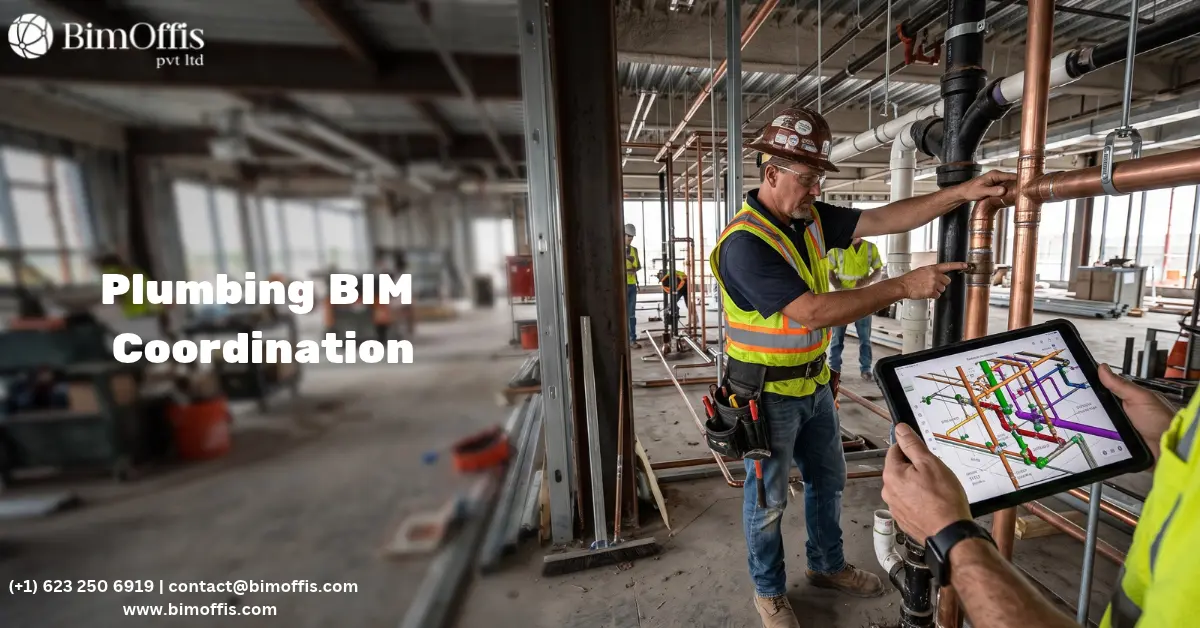
Getting consistent water pressure from the ground floor to the top of a fifty-storey building is harder than it sounds. You cannot rely on static water pressure to do the job evenly across that kind of height.
The standard solution is pressure zoning, where the building is divided into sections each served by its own booster pump set. Hot water systems bring their own challenges too, particularly around heat loss across long pipe runs, which simply is not an issue in a compact building.
Fire Protection
When it comes to life safety, fire protection is the system that matters most. Sprinklers need the right flow and pressure on every floor. Smoke detection needs to be dependable throughout the entire building. Pressurisation systems have to keep escape routes usable during an event. Dry and wet risers need to give fire crews what they need at any level.
Fire protection also has to coordinate closely with every other system in the building under strict regulatory requirements. That makes it one of the more demanding disciplines to manage, but also one where there is no room to cut corners.
How BIM Changes the Coordination Game
Why Drawing-Based Coordination Has Its Limits
Overlaying 2D drawings to find clashes works up to a point. The problem is that it tends to catch only the obvious stuff. The subtle three-dimensional conflicts, the ones that only become apparent when all the systems exist in the same space at the same time, get missed.
On a high-rise, those missed conflicts show up on site. A trade arrives to install something and finds the space already occupied. Work stops while someone works out an alternative route. Costs climb and the programme slips, often across multiple floors at the same time.
What Good BIM Coordination Actually Looks Like
When all the MEPF models sit together in the same 3D environment alongside the structural and architectural models, automated clash detection finds every conflict before installation begins. Not just the obvious ones that would have shown up on a drawing overlay, but every conflict regardless of how subtle it is.
BIM also gives contractors the information they need to plan installation sequences properly. Everyone working on site knows what space they have to work with, where other trades are, and what order things need to happen in. The installation runs more smoothly because the difficult questions were already answered during design.
The Bottom Line
MEPF systems are what determine whether a high-rise building actually delivers for the people using it every day. They affect energy performance, life safety, ongoing maintenance, and the long-term value of the asset.
The projects that get MEPF right are almost always the ones where proper coordination happened during design rather than being figured out on site. On a building of this complexity, that early investment in coordination is not optional. It is what separates buildings that work well from buildings that do not.
Ensure seamless MEPF coordination and efficient high-rise building performance with expert BIM solutions.
Frequently Asked Questions from Clients
What are MEPF systems in high-rise buildings?
MEPF systems include mechanical, electrical, plumbing, and fire protection services.
Why are MEPF systems important in high-rise construction?
They ensure safety, comfort, energy efficiency, and smooth building operations.
How does BIM help with MEPF coordination?
BIM improves design collaboration and identifies clashes before construction.
What challenges do MEPF systems face in tall buildings?
Space constraints, complex routing, and coordination issues are common challenges.
Which software is commonly used for MEPF design?
Revit and Navisworks are widely used for MEPF modeling and coordination.
How do MEPF systems improve building performance?
They optimize energy use, occupant comfort, and operational efficiency.