Let me describe a situation that facility management teams run into constantly.
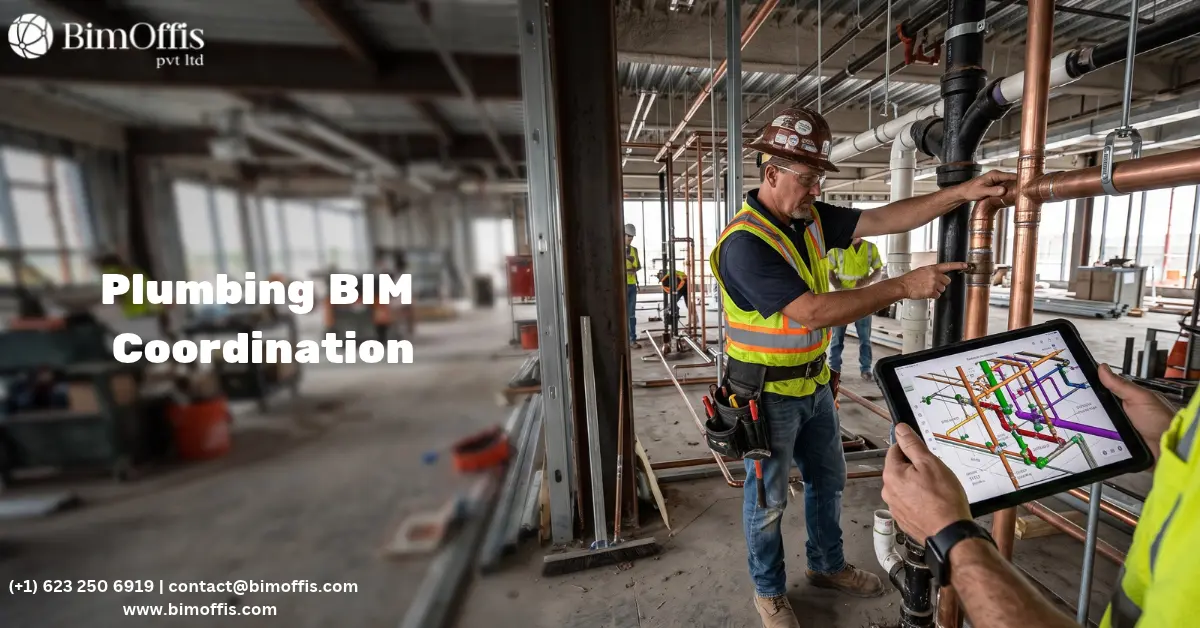
Something breaks. It could be a chiller on the roof plant, a valve in a riser that needs isolating urgently, or a section of pipework leaking behind a ceiling tile. The maintenance team needs to find it, understand what it connects to, identify the correct isolation points, and get someone in to fix it.
In most buildings, what happens next involves a scramble through a filing cabinet or shared drive. The team looks for as-built drawings that may not be current, may not show the element at a useful level of detail, and may not reflect modifications made since someone last updated them. Sometimes the drawings help. Sometimes they do not. Occasionally the maintenance team ends up tracing pipework through a ceiling void with a torch because nobody can find documentation showing what is actually there.
3D laser scanning BIM exists to make that situation obsolete. For facility management teams responsible for complex buildings, it is genuinely one of the most useful tools that has come along in years.
What 3D Laser Scanning BIM Actually Is
3D laser scanning BIM combines two things that work extraordinarily well together.
How Laser Scanning Works
Laser scanning captures the physical reality of an existing building as a dense three-dimensional point cloud. A scanner sits in a space and fires laser pulses in every direction. Each pulse hits a surface and returns to the scanner. The scanner then uses the travel time to calculate the exact distance to that surface. Repeat this from enough positions and you end up with a complete three-dimensional map of the space, accurate to within a few millimetres, capturing every visible surface, pipe, duct, and structural element.
How BIM Turns That Into Something Useful
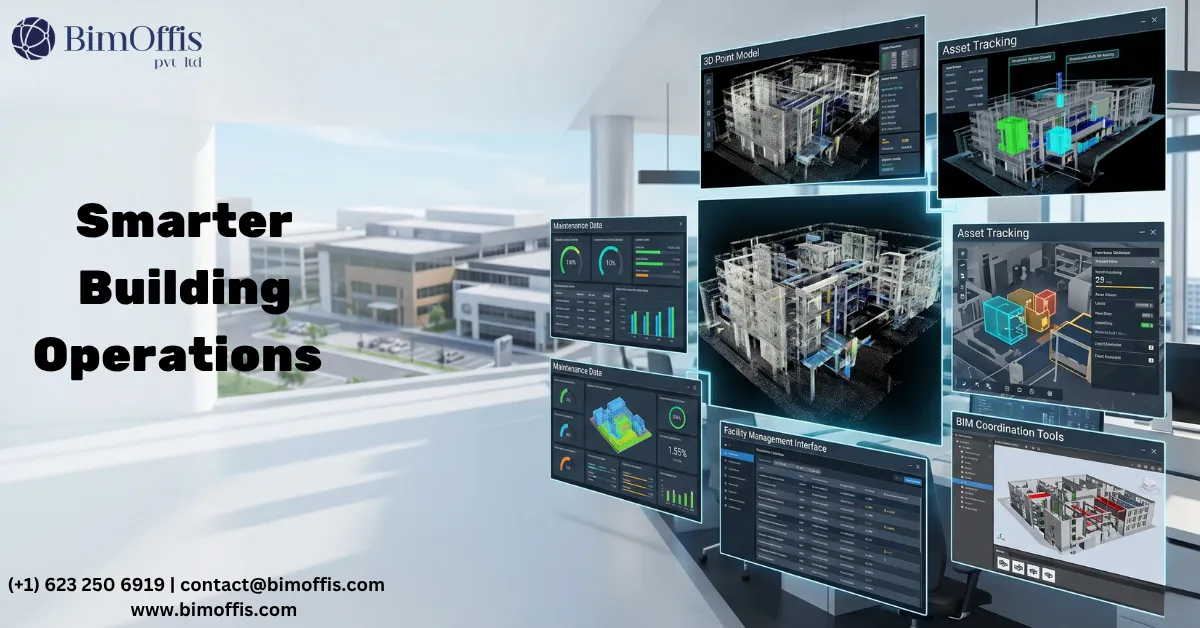
BIM turns that captured reality into an intelligent, queryable model. The point cloud from the laser scan becomes the reference from which modelers build a BIM model of the building as it actually exists. Walls, floors, columns, MEP systems, and equipment all get modeled at the level of detail the facility management team needs, with data attached to every element.
The result is an as-built BIM model reflecting the real building. Not the building as someone designed it. Not the building as someone surveyed it with a tape measure five years ago. Rather, it shows the building as it physically stands right now, with all modifications and changes accurately captured. For a facility management team, that is an extraordinarily useful thing to have.
How It Actually Helps Facility Management Teams
Finding Things Quickly
This is the most immediately practical benefit and consequently the one with the most direct impact on the day-to-day experience of running a building.
When a building exists as an accurate 3D laser scanning BIM model, finding any element becomes a model query rather than a drawing search. The maintenance engineer needs to know where the isolation valve for a specific section of cooling pipework sits. They open the model, find the pipework, trace it to the relevant valve, and have the location, elevation, and access route in seconds.
On a large building with complex MEP infrastructure, the difference between having this information immediately and spending twenty minutes searching through potentially outdated drawings is significant. Furthermore, multiply that across every maintenance event over a year and the productivity improvement becomes genuinely substantial.
Knowing What Is Actually There
Here is something that sounds obvious but causes real problems in most facilities.
Buildings change over time. Systems get modified by contractors who rarely update the documentation. Equipment changes when replacements arrive in different dimensions. Partitions shift during fit-outs. MEP services take new routes around obstacles. In most cases, the documentation simply does not keep up. The as-built drawings from the original construction get modified sometimes and ignored mostly. Consequently, the gap between what the documentation says is there and what actually exists grows wider every year.
3D laser scanning BIM closes that gap definitively. The scan captures what is actually there, not what the original plans showed. The model built from the scan reflects the real building. When a maintenance team queries the model, therefore, they look at the actual configuration of the building rather than a historical record of its intended configuration.
For any maintenance or repair task that involves understanding how a system is configured before work begins, this accuracy is the difference between planning work correctly and discovering surprises when work starts.
Supporting Planned Maintenance
Reactive maintenance, fixing things after they break, is the most expensive way to maintain a building. Planned maintenance, servicing and replacing equipment on a schedule before failures occur, costs significantly less and causes far less disruption. Moreover, it extends equipment life considerably.
3D laser scanning BIM supports planned maintenance by giving the facility management team an accurate record of what equipment exists, where it sits, what it connects to, and what its maintenance requirements are. Equipment families in the BIM model carry manufacturer data, service intervals, and specification information as parameters. The facilities team can query these directly and use them to build maintenance schedules rather than relying on incomplete paper records.
For a large building with significant mechanical and electrical infrastructure, this model-based approach, therefore, replaces the ad-hoc mix of incomplete records and institutional knowledge that leaves when key staff leave.
Enabling Future Works
Every building goes through changes over its operational life. Fit-outs get reconfigured, systems get upgraded, spaces change purpose, and occasionally the building gets extended.
Every time this work happens, the design team needs accurate information about what is already there before they can design what is going to change. Without accurate as-built documentation, they either resurvey the building or design against assumptions and discover the gaps on site. Both options cost time and money that good documentation eliminates.
A 3D laser scanning BIM model gives future design teams a starting point they can trust. They do not need to resurvey the elements the model accurately represents. Instead, they direct survey effort toward specific areas where additional verification is needed rather than starting from scratch every time a project comes along.
Over the life of a building, the value of this reliable starting point compounds considerably. Every project using the as-built BIM model benefits from the investment in accuracy made when the team first produced it.
What Good 3D Laser Scanning BIM Looks Like for Facilities
The Scan Has to Be Comprehensive
The value of a 3D laser scanning BIM model depends entirely on its accuracy and completeness. A scan that captures the main spaces but misses plant rooms, risers, and ceiling voids produces a model that looks impressive and fails the maintenance team the moment they need information about the areas the scan skipped.
Good 3D laser scanning for facilities, therefore, covers the building comprehensively. Plant rooms, risers, accessible ceiling voids, and significant equipment spaces all need scanning. The hardest to access areas are often where accurate documentation matters most. Consequently, a scanning programme that skips the difficult areas defeats much of the purpose.
The Model Has to Match What the Facility Team Actually Needs
A 3D laser scanning BIM model supporting facilities management has different requirements from one supporting a renovation design project. Equipment needs to carry operational data, manufacturer information, service intervals, and warranty details. MEP systems need sufficient detail to support isolation tracing and maintenance planning. Furthermore, spaces need the area and occupancy data that space management depends on.
Defining the scope clearly before scanning and modeling work starts determines whether the model serves the facility management team’s actual needs or is technically impressive but not quite fit for purpose.
It Has to Stay Current
A 3D laser scanning BIM model that never gets updated gradually loses its value as the building continues to change. Over time, the model starts reflecting what the building was at the time of the scan rather than what it is today.
The most effective approach, therefore, treats the BIM model as a live asset rather than a one-time deliverable. When significant building changes occur, new equipment arrives, systems get modified, or fit-outs change, the team updates the model accordingly. Consequently, the model stays current and the facility management team continues to benefit from accurate documentation rather than watching it slowly become as out of date as the drawings it replaced.
The Bottom Line
3D laser scanning BIM helps facility management teams by giving them something most buildings lack: an accurate, queryable, data-rich record of what the building actually contains and how it is actually configured.
The practical benefits show up in faster fault response, more effective planned maintenance, better planning for future works, and reduced reliance on institutional knowledge that walks out the door when experienced staff leave.
For facility management teams responsible for complex buildings, the question is not really whether accurate documentation would be useful. The answer is obvious from the first time a maintenance team cannot find what they are looking for and consequently traces pipework through a ceiling void with a torch. The real question is how to make it happen and how to keep it current once it does.
Improve facility management with accurate as-built BIM models and real-world building data, get a free quote today.
Frequently Asked Questions from Clients
What is 3D Laser Scanning BIM?
3D Laser Scanning BIM captures real-world conditions and converts them into accurate BIM models.
How does 3D Laser Scanning support facility management?
It provides precise as-built information for maintenance, renovations, and asset management.
What is the role of point clouds in BIM?
Point clouds serve as the foundation for creating accurate BIM models from scanned data.
Can laser scanning improve asset tracking?
Yes, it helps facility teams maintain accurate records of building assets and systems.
What industries use 3D Laser Scanning BIM?
Commercial, healthcare, industrial, educational, and infrastructure sectors commonly use it.
What are the benefits of Scan to BIM for facility managers?
It improves planning, reduces errors, supports maintenance, and enhances decision-making.