I want to start with something that anyone who has worked in real estate sales will recognise immediately.
A buyer walks into a sales office for an off-plan development. They look at the floor plans on the wall. They look at the scale model on the table. The sales person walks them through everything, explains the layout, talks about the finishes, describes the view from the balcony. The buyer nods, says they need to think about it, and leaves.
They do not come back.
The apartment was probably exactly what they were looking for. But they could not picture it. Not really. The floor plan told them the dimensions but it did not tell them how the afternoon light would fall across the living room floor. The scale model showed them the shape of the building but not what it would feel like to stand in the kitchen looking out at the view. And when you are asking someone to spend several hundred thousand on something that does not exist yet, not being able to picture it is enough to kill the sale.
That is the problem architectural 3D modeling solves in real estate. And the developers who have figured this out are consistently outselling the ones who have not.
What Changes When Buyers Can Actually See the Property
The Emotional Connection That Drives Purchase Decisions
Here is something worth saying plainly.
People do not buy properties rationally. They buy them emotionally and then justify the decision rationally afterward. The square footage, the price per metre, the commute time, all of that matters. But what actually moves someone from interested to committed is a feeling. A moment where they can picture themselves living there. Morning coffee on that balcony. Coming home to that lobby. Cooking in that kitchen.
Floor plans do not create that feeling. A photorealistic rendering of the living room with the afternoon sun coming through the west-facing windows can create it immediately. The buyer stops trying to interpret the drawing and starts experiencing the space. They see the light. They feel the proportions. They imagine their furniture in that room. And that shift from interpretation to experience is what changes the sales conversation entirely.
Architectural 3D modeling creates that emotional connection before the building exists. That is genuinely difficult to put a price on in a sales context.
It Kills the Hesitation That Kills Sales
Every real estate sales team knows the questions that come up in every conversation with every buyer about an off-plan development.
Will the bedroom feel dark? Does the living room feel big enough for the price? How do those two finishes actually look together? What does the view from the fourth floor actually look like?
These are not unreasonable questions. They are the questions any sensible person asks before committing to one of the largest purchases of their life. The problem is that drawings cannot answer them convincingly. Explanations cannot answer them convincingly either. The only thing that answers them convincingly is showing the buyer what they need to see.
When the sales team can point to a photorealistic interior rendering and say look, here is your bedroom at midmorning, here is the light, here is how the finishes work together, the conversation changes. The question gets answered. The hesitation dissolves. And a buyer who has had their questions answered visually is significantly more likely to move forward than one who is still trying to build the picture in their own head.
What This Delivers for the Developer
Pre-Sales Before Anything Gets Built
Most developers need pre-sales before construction starts. Lenders want to see committed buyers before they release funding. Investors want to see market demand before they commit capital. The stronger the pre-sales result, the better the position the developer is in on every front.
The quality of the presentation drives the pre-sales result. A development that shows buyers what they are buying, through high-quality renderings and walkthrough animations that make the apartments feel real before they are built, converts enquiries into commitments at a higher rate than one presenting floor plans and brochure copy.
The architectural 3D modeling investment pays back through the financing position it makes possible, not just through the individual sales it closes.
Winning in a Competitive Market
Most buyers in any real estate market are looking at more than one development at the same time. They are comparing. And they will spend more time with, feel more connected to, and ultimately lean toward the development that showed them something they could genuinely see and respond to.
When one development presents through photorealistic renders and immersive walkthrough animations and another presents through floor plans and a scale model, the comparison is not neutral. Buyers bring the emotional experience of the better presentation into every subsequent conversation about that development. It colours how they think about the quality of the product itself.
That is a competitive advantage that has nothing to do with the actual specifications of the apartments and everything to do with how clearly and compellingly the development communicated what those apartments will be.
Fewer Problems After Handover
This is the benefit that developers rarely mention when they are making the case for architectural 3D modeling investment but genuinely should.
Buyers who clearly understood what they were purchasing before they signed the contract make fewer change requests during construction. They raise fewer disputes at handover. They are more satisfied with the completed property because it matches what they pictured when they bought it.
A buyer who went through a sales process based on accurate photorealistic renderings and walkthrough animations knows exactly what they bought. The apartment they move into matches the apartment they saw in the visualisations. There is no moment of I did not realise the kitchen would be this size or the light in here is nothing like what I expected.
That match between expectation and reality is one of the most undervalued outcomes of good architectural 3D modeling in real estate.
What Actually Makes the Difference in Real Estate Architectural 3D Modeling
It Has to Be Honest
This is the thing that matters most and the thing that gets compromised most often.
A rendering that shows ceiling heights slightly more generous than the real apartment will have, or finishes that will not actually be specified, or a view that the real building orientation cannot produce, creates expectations the completed property cannot meet. At handover, that gap between the rendering and reality creates dissatisfied buyers. In some markets it creates legal exposure.
Good architectural 3D modeling for real estate starts from the actual design with the actual specifications. The finishes shown are the ones that will be installed. The proportions are real. The light reflects the actual building orientation and window sizes. The rendering is a faithful representation of the design, not a version of it that was made more attractive for marketing purposes.
Buyers are also more sophisticated than developers sometimes give them credit for. When something looks too perfect, too idealised, they sense it even when they cannot articulate why. An accurate rendering that shows a genuinely good apartment is more convincing than an inflated one that looks too good to be true.
The Quality of the Visuals Signals the Quality of the Product
Right or wrong, buyers use the quality of the marketing materials as a proxy for the quality of the development itself.
High-quality photorealistic visualisations communicate that the developer has invested in their product and is presenting it seriously. Basic renders communicate the opposite. In a quality-conscious market, the level of investment in the architectural 3D modeling directly influences how buyers perceive the level of investment in the development.
For premium residential projects, this is not a minor consideration. It is part of the brand positioning of the development in the market.
Show Everything That Matters to a Buyer
Good architectural 3D modeling for real estate covers the full range of things buyers actually need to see to make a confident decision.
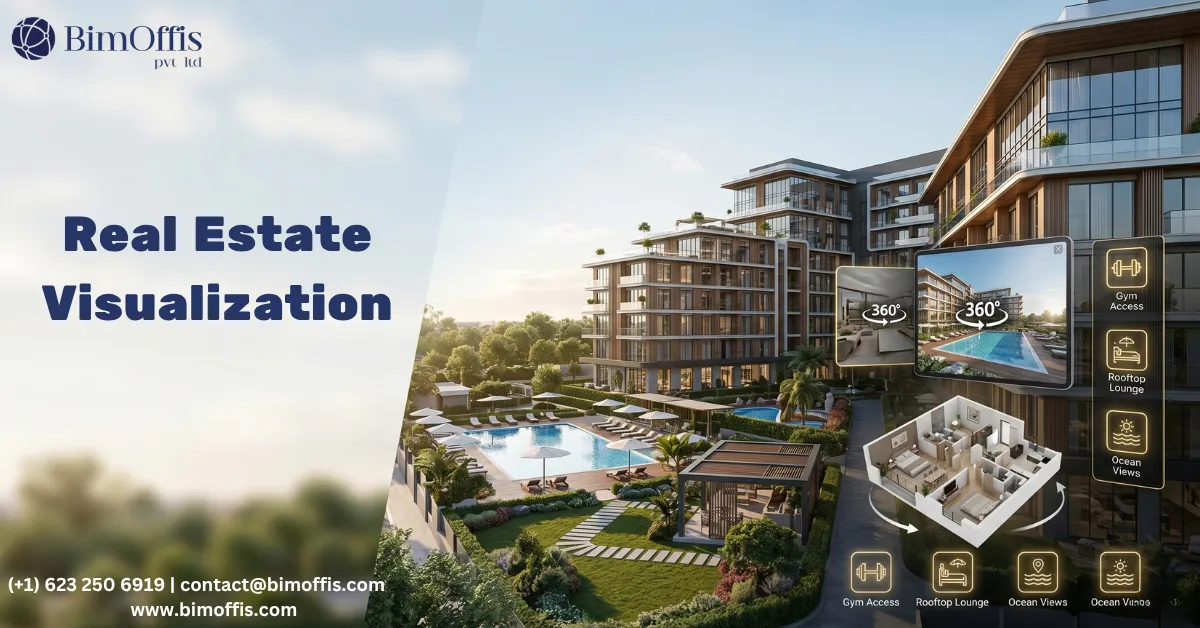
Exterior views of the building in its landscaped setting from the angles buyers will approach it from in real life. Interior renderings of every key space, the living room, the kitchen, the master bedroom, the bathrooms, the balcony. Walkthrough animations that move through the apartment in the sequence a buyer would actually experience it when they come home. Development context showing how the building sits in the neighbourhood and what the surroundings actually look like.
Each of these answers a different question. Together they give buyers the comprehensive visual picture they need to commit with confidence rather than holding back because they are still not sure about something they could not see.
The Honest Bottom Line
Architectural 3D modeling helps real estate marketing because it turns an abstract off-plan development into something buyers can genuinely see, feel, and respond to.
The effect on sales performance is real. Pre-sales happen earlier and at higher rates. Buyers make fewer changes mid-project. Handover disputes reduce. And the development stands out more effectively in a competitive market where every other developer is trying to attract the same buyers.
The investment is real too. Good architectural 3D modeling costs money and takes time to produce properly. But compared to the cost of a slower pre-sales process, a weaker financing position, and buyer disputes at handover, the return on that investment is usually straightforward to justify.
Showcase your properties with immersive Architectural 3D Modeling and turn prospects into buyers, get a free quote today.
Frequently Asked Questions from Clients
What is Architectural 3D Modeling for real estate marketing?
It creates realistic visual representations of properties for promotion and sales.
How does 3D modeling improve real estate marketing?
It helps buyers visualize projects before construction and increases engagement.
What types of properties benefit from 3D modeling?
Residential, commercial, mixed-use, and luxury developments benefit from 3D visualization.
Can architectural 3D models increase property sales?
Yes, realistic visuals can improve buyer confidence and accelerate decision-making.
What deliverables are included in 3D modeling services?
Common deliverables include renderings, walkthroughs, animations, and virtual tours.
Which software is used for architectural 3D modeling?
Tools such as Revit, 3ds Max, SketchUp, and Lumion are commonly used.