Last year, a mid-size electrical contractor took on a commercial office fit-out. Solid team, experienced crew, decent drawings. Everything looked fine on paper.
Three weeks into installation, one of the electricians noticed the main conduit route they had been planning ran straight through a mechanical duct the HVAC team had already hung in the ceiling void. Not close to it. Through it.
Work stopped for four days. The electrical contractor had to redesign two floors worth of conduit routing, send material back, and bring the crew back in on overtime to catch up. The client was not happy. The main contractor deducted delay costs. What looked like a profitable job ended up being a financial headache.
Nobody on that project was incompetent. The design team did their job. The contractors showed up ready to work. But the coordination between trades existed mostly in emails and 2D drawings, and nobody caught the conflict until it was sitting right in front of them on site.
That story is not unusual. It plays out on construction projects all the time. And Electrical BIM is the thing that stops it from happening.
What Electrical BIM Actually Means Day to Day
Forget the technical definitions for a second.
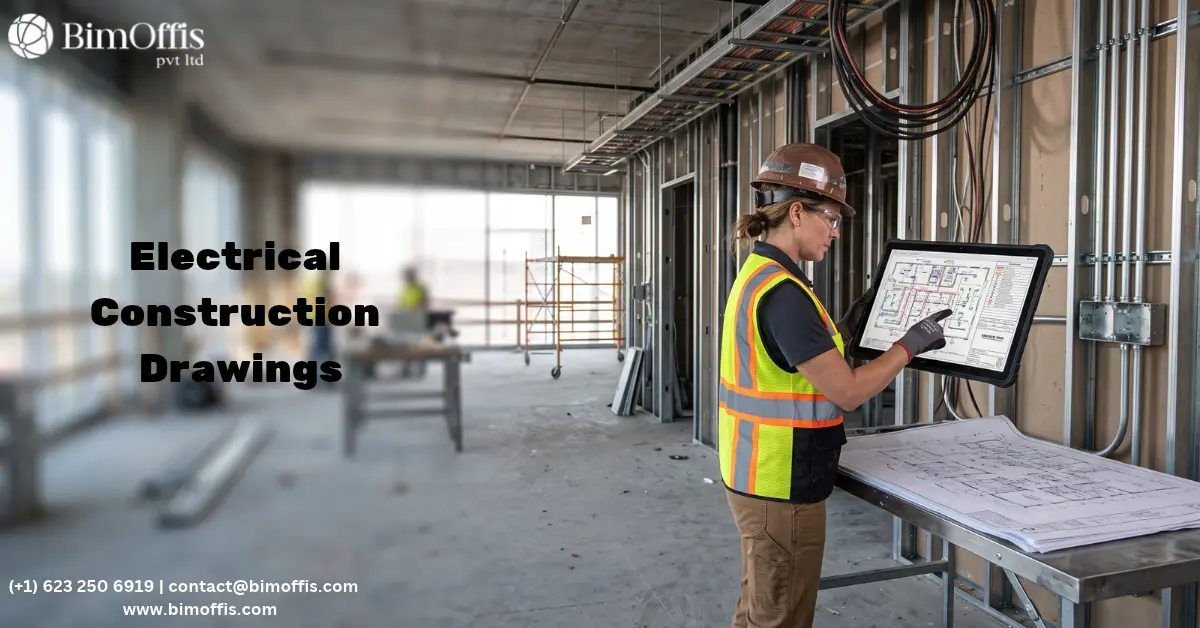
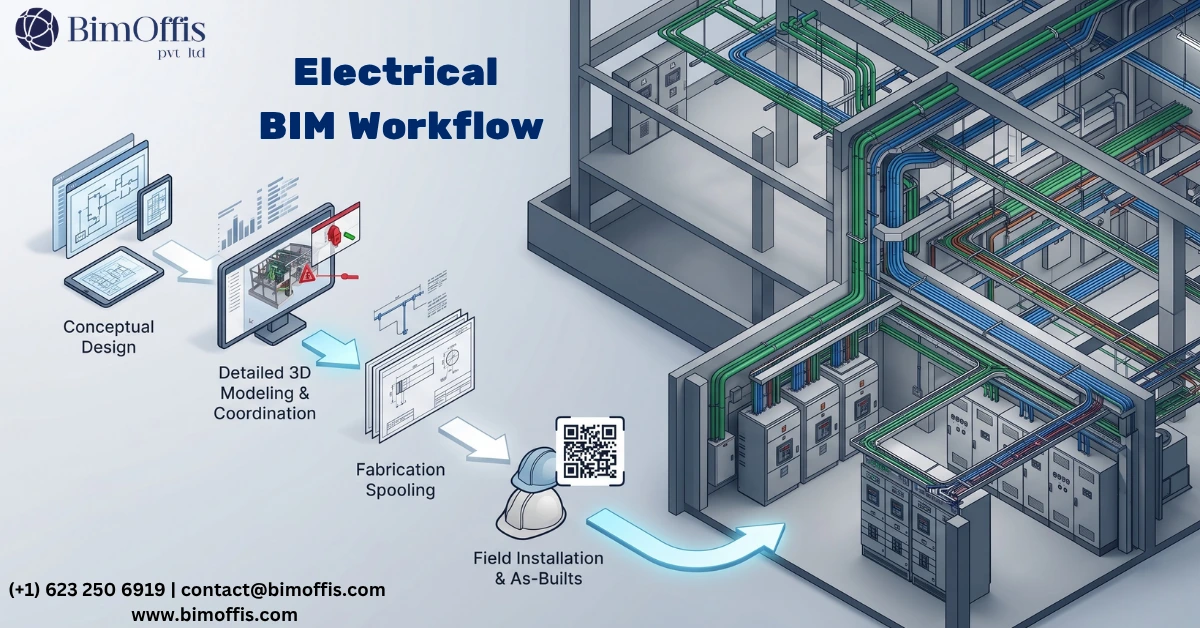
In plain terms, Electrical BIM means you build the electrical systems of a project digitally before you build them physically. Every conduit run, every panel location, every cable tray, every fixture, every junction box gets modeled in a shared three-dimensional environment alongside the structural frame, the mechanical systems, the plumbing, and the architecture.
You are not just drawing lines on a plan. You are building a working digital version of the project where every trade can see exactly what everyone else is doing, in the same space, at the same time.
And here is the part that actually matters. Every component in that model carries real information attached to it. Specifications, dimensions, manufacturer details, installation requirements. So when someone looks at that conduit in the model, they are not just seeing a shape. They are seeing a component with a size, a specification, a route, and a relationship to everything around it.
That is what makes Electrical BIM genuinely useful on a real project rather than just impressive to look at in a presentation.
Why 2D Drawings Keep Letting Electrical Teams Down
Two-dimensional drawings have been the backbone of construction projects for a long time and they work reasonably well for communicating design intent. But they have always had a fundamental problem that nobody fully solved until BIM came along.
A flat drawing cannot show you how things share physical space.
The electrical contractor draws conduit routes on his plan. The mechanical contractor draws ductwork on his plan. The structural engineer shows beams and columns on his plan. Each drawing looks perfectly fine on its own. But the building only has one ceiling void, and all three sets of systems need to fit inside it together.
When the coordination between trades happens through separate 2D drawings and occasional site meetings, conflicts stay hidden until construction exposes them. And construction is the most expensive possible time to find them.
Fixing a clash during design takes a conversation and a model update. Fixing the same clash on site means stopping work, rescheduling crews, potentially returning material, redesigning affected sections, and explaining the delay to a client who was expecting progress. The cost difference between those two scenarios on a large project can be enormous.
The Real Difference Electrical BIM Makes on a Project
You Find the Problems Before the Crew Does
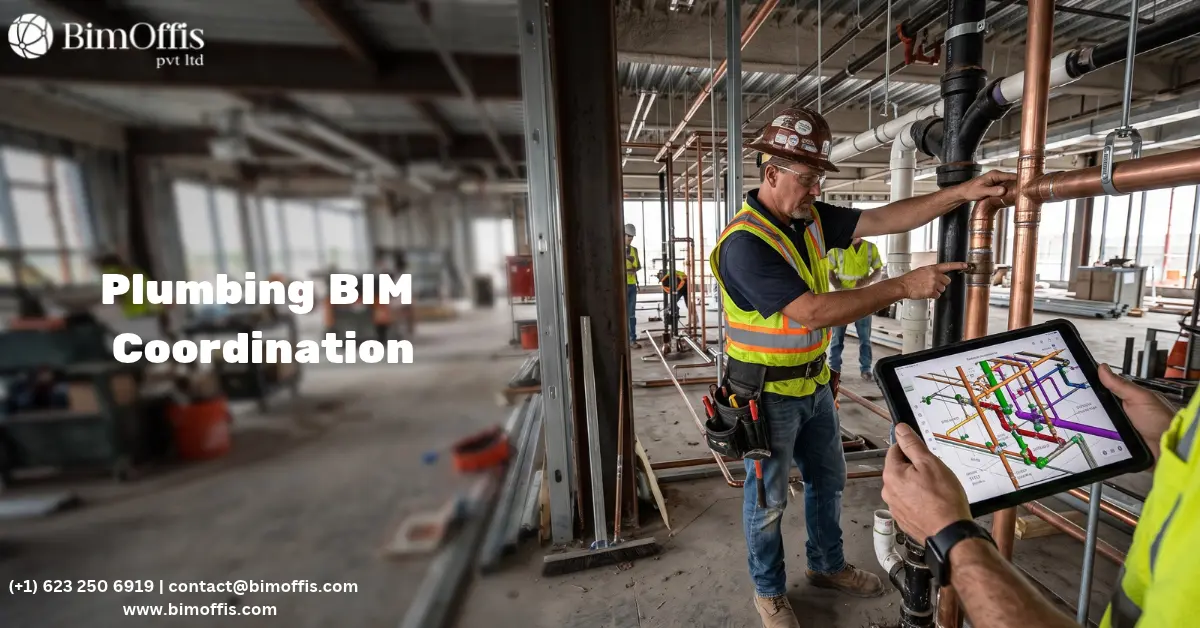
When all the trade models come together in a shared federated model, software flags every point where systems conflict. The coordination team sits down, reviews the clashes, works out solutions, and updates the models before anyone sets foot on site with tools.
By the time your installation crew arrives, the routing is already coordinated. The panels are positioned where they actually fit. The cable trays have the clearance they need. Your team installs rather than problem-solves, and the job moves at the pace it should.
That shift alone changes the entire feel of a project. Instead of constant reactive firefighting on site, the hard thinking happens upfront where it belongs.
Your Material Orders Actually Reflect Reality
When every component is already modeled with real dimensions and specifications, pulling accurate quantities for procurement is straightforward. You are not manually counting from printed drawings and hoping you caught every run and every fitting.
Getting quantities right at the procurement stage matters more than most people account for. Running short on material mid-installation disrupts the whole crew and costs more to fix urgently than it would have cost to order correctly in the first place. Over-ordering wastes money and clutters the site. A coordinated BIM model gives you numbers you can actually trust.
Your Whole Team Looks at the Same Thing
Here is something that quietly causes enormous problems on traditionally run projects. Information lives in too many places.
Emails carry design decisions that never made it back into the drawings. Site meeting notes reference changes that half the team was not present for. Printed drawing sets get marked up differently by different people. Someone is always working from an outdated version without knowing it.
With a shared Electrical BIM model, every update is visible to everyone immediately. The design team, the main contractor, the electrical contractor, and the installation crew are all looking at the same current version of the project. When something changes, everyone sees it at the same time. That sounds like a small thing but it eliminates a whole category of mistakes that cost real money on site.
Prefabrication Stops Being a Gamble
One of the practical benefits of Electrical BIM that does not get talked about enough is what it does for prefabrication.
When conduit routes and cable tray configurations are fully modeled before construction starts, you can fabricate assemblies off site to exact dimensions with real confidence. The measurements come from a coordinated model, not from site measurements taken in difficult conditions by someone who might have written them down slightly wrong.
Those prefabricated assemblies arrive on site and go in cleanly. Your crew installs rather than cuts, adjusts, and refits. The work is faster, neater, and more consistent. On a project with a tight programme, that efficiency genuinely matters.
The Model Keeps Working After Practical Completion
Construction teams hand over the building and move on to the next job. But the Electrical BIM model keeps delivering value to whoever manages the building afterwards.
When a circuit trips and the facilities team needs to trace where it runs, the model tells them without opening walls. When a component fails and needs replacing, the model carries the original specification. When a renovation project starts five years later, the design team has an accurate record of what is inside the building to work from rather than spending weeks investigating before design can even begin.
Clients who understand this value increasingly treat a well-maintained BIM model as a deliverable in its own right, not just a byproduct of the construction process.
Why the Workflow Behind the Software Matters More Than the Software Itself
A lot of firms invest in BIM tools and do not get the results they expected. The technology gets blamed, but the technology is rarely the real problem.
The issue is usually the workflow. Modeling standards that nobody actually follows consistently. Coordination meetings that happen too infrequently to catch clashes before they cause damage. A model that gets built during design and then never updated to reflect what actually gets built on site.
A strong Electrical BIM workflow needs clear standards that every team member follows from day one. It needs regular coordination sessions where clash reports get reviewed and resolved promptly, not filed away for someone to deal with later. And it needs someone actively maintaining the model throughout construction so it stays accurate as the project evolves.
Without those things in place, the model becomes an expensive drawing exercise rather than a project management tool. With them in place, it genuinely changes how smoothly a project runs.
What This Means If You Are Running Electrical Projects Right Now
Electrical BIM is not something coming in the future that you should start thinking about. It is already the standard on commercial, healthcare, infrastructure, and large residential projects. Main contractors require coordinated BIM models before they let trades start on site. Clients specify it in project briefs. Design teams build their coordination workflows around it.
Contractors who have invested in building real Electrical BIM capability are running cleaner projects, catching problems early, protecting their margins, and winning work that traditionally run competitors cannot credibly bid on.
The investment to get there is real. Tools cost money. Training takes time. Building a consistent workflow does not happen overnight. But the first project where your team catches a major clash on screen, resolves it in a coordination meeting, and keeps the schedule intact because of it will answer any remaining questions about whether it was worth the effort.
Ready to find out what your project will cost? Find out here.
Frequently Asked Questions from Clients
What is Electrical BIM?
Electrical BIM is a digital 3D modeling process that helps design, coordinate, and manage electrical systems before construction begins.
How does Electrical BIM reduce construction delays?
It identifies clashes between electrical, mechanical, structural, and architectural systems before installation starts.
Why is Electrical BIM better than traditional 2D drawings?
Unlike 2D drawings, BIM shows how all building systems interact within the same physical space.
Can Electrical BIM improve material estimation?
Yes, BIM provides accurate quantity takeoffs, helping reduce material shortages, waste, and procurement errors.
How does Electrical BIM support prefabrication?
It enables precise off-site fabrication of electrical assemblies using coordinated and verified model dimensions.
Does Electrical BIM provide value after project completion?
Yes, the model serves as a detailed asset for maintenance, troubleshooting, renovations, and facility management.