How 3D Modeling and Rendering Services Changed Modern Architecture
Let me tell you about a conversation that plays out on construction projects more often than anyone likes to admit.
The design is done. The architect has spent months refining every detail. They know exactly how the afternoon light hits the west facade. They understand how the entry sequence creates a moment of compression before opening into the main space. The material palette has been carefully considered at the scale of the building.
All of this is clear in the architect’s mind because the design was developed piece by piece over weeks of work.
Then comes the client meeting. The architect opens a set of floor plans and sections and begins explaining the project.
The client follows along reasonably well. They ask questions, nod at the right moments, and eventually approve the design. Fast forward eight months. The building is halfway through construction, and the client walks the site for the first time. They look around, take everything in, and say something like, “I didn’t realize the ground floor would feel this enclosed.”
Nobody lied. Nobody made a mistake. The client simply could not picture the building from the drawings. Unfortunately, no better method was used to communicate the design before construction began.
That is the problem 3D modeling and rendering services solve. Not completely and not magically. But they solve it in a meaningful way.
Why It Changed Client Conversations
Seeing Is Different From Reading
There is a fundamental difference between understanding a building intellectually from a drawing and actually seeing it.
Reading a floor plan requires training. You need to understand scale, spatial conventions, the relationship between plans and sections, and how two-dimensional drawings represent three-dimensional space. Architects spend years developing these skills through education and practice. Most clients never do. Expecting them to make confident decisions about a building they cannot fully visualize often leads to disappointment.
Better Understanding Leads to Better Decisions
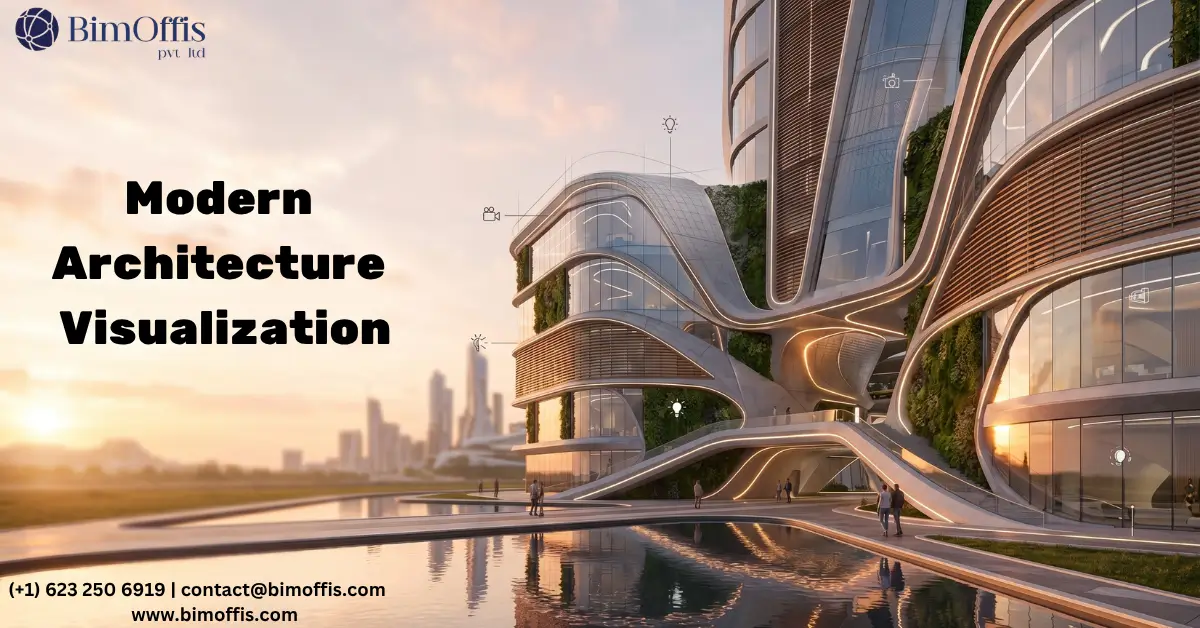
When a client sees a properly rendered interior for the first time, something changes. Instead of interpreting technical information, they begin responding to the experience itself.
A room may feel spacious or restrictive. The quality of light becomes easier to judge. Materials begin communicating warmth, texture, and atmosphere. These reactions are valuable because they help guide better design decisions.
3D modeling and rendering services make those insights possible before construction starts. Clients no longer need to rely entirely on imagination. They can see the spaces they are approving and respond with greater confidence.
Feedback at the Right Moment
This is where the practical value becomes clear.
Imagine a client looking at a rendering and saying the bedroom feels too dark. The design team can respond immediately. Increasing a window size during design development may take only a few hours. Discovering the same issue after construction could require expensive modifications and unnecessary disruption.
3D modeling and rendering services move the moment of genuine understanding earlier in the project timeline. Their greatest contribution is not making designs look beautiful, although that certainly helps. Their real value lies in making important conversations happen when meaningful changes are still possible.
What It Does for the Design Process Itself
Designers See Things They Would Otherwise Miss
This benefit is often overlooked because it is less visible than the client communication story.
When a design exists only in two dimensions, certain problems remain hidden. Proportions that seem correct in plan can feel slightly off when viewed in three dimensions. Materials that work individually may interact differently when applied across real surfaces. A window that appears generous on a floor plan can feel undersized once placed within the scale of an actual wall.
Using 3D modeling and rendering services during design development helps identify these issues early. Architects can evaluate the design as it will appear in reality. Adjustments become easier to make. Alternative solutions can be tested before construction documents are finalized.
As a result, the final design has been visually verified rather than simply assumed to work. Over time, the difference between firms that use visualization as a design tool and those that use it only for presentations becomes noticeable.
How It Changed the Business of Architecture
Winning Work Changed
Clients are not only choosing an architect. They are also choosing how well they will understand their building throughout the design process.
A firm that clearly shows clients what their building will look like has a significant advantage. Clients feel more confident when they can visualize the outcome rather than rely solely on technical drawings.
This shift has changed the nature of architectural presentations. High-quality 3D modeling and rendering services are no longer considered a luxury. In many markets, they have become an expected part of professional service.
Firms that invested in visualization early often saw benefits beyond presentation quality. They won more commissions, strengthened client relationships, and built reputations for being easy to work with. Better presentations helped, but better conversations delivered the greatest value.
Construction Gets Cleaner
A detailed 3D model communicates design intent to contractors in ways traditional drawings often cannot.
Complex junctions, unusual geometries, custom joinery details, and sophisticated facade systems can be difficult to interpret through plans and sections alone. A three-dimensional model makes these elements easier to understand for everyone involved in construction.
The result is fewer RFIs and less interpretation on site. Finished work is more likely to reflect the architect’s original vision. While no system is perfect, outcomes are often better when contractors can clearly understand design intent before construction begins.
The Thing Nobody Mentions
A rendering is not a building. It is a representation of an idea about a building.
A strong rendering can make an ordinary design look compelling. An excellent design can appear extraordinary. However, the image is still a version of reality rather than reality itself.
Materials in renderings interact with light differently than they do in the real world. Spaces viewed on a screen can feel different when experienced at full scale. For that reason, renderings should support design decisions rather than replace professional judgment.
The firms that gain the most value from 3D modeling and rendering services understand this distinction. They use visualization to think, test, and communicate ideas. At the same time, they continue relying on the expertise required to create buildings that truly work.
The rendering is a tool. Design judgment remains irreplaceable.
What This All Adds Up To
3D modeling and rendering services have changed modern architecture in ways that are practical, measurable, and lasting.
Client relationships improved because people gained a clearer understanding of what they were approving before construction started. Design quality increased because potential problems were identified earlier. Firms became more competitive because presentations communicated ideas more effectively. Construction outcomes improved because design intent became easier to understand.
None of these benefits are minor. Together, they represent a significant shift in how architecture is designed, communicated, and built.
That shift did not happen because the technology looked impressive. It happened because the technology solved a problem that had existed in the profession for a very long time.
Ready to find out what your project will cost? Find out here.
Frequently Asked Questions from Clients
What do 3D modeling and rendering services actually do for architecture projects?
They close the gap between what an architect understands about a design and what a client can genuinely grasp before the building gets built.
Why do clients struggle to understand traditional architectural drawings?
Reading floor plans and sections requires years of training that most clients never had, 3D rendering makes the design immediately visible without requiring that expertise.
How do 3D rendering services improve design quality?
They let architects see their designs the way the building will actually look, catching proportion problems, material conflicts, and daylighting issues during design rather than after construction.
How do 3D modeling and rendering services help firms win more work?
Clients respond to firms that show them what their building will look like in a way they can genuinely understand rather than asking them to trust drawings they cannot fully read.
How does 3D modeling improve communication with contractors during construction?
Complex geometries and design intent that drawings struggle to communicate become immediately readable in three dimensions, reducing RFIs and keeping finished work closer to the original design.
What is the honest limitation of 3D rendering services?
A rendering is a representation of a design, not the design itself, it can make any scheme look compelling, so design judgment still determines whether the building actually works.