Let me tell you something that people working in construction rarely say openly, even though most of them know it.
A lot of the money that gets spent on construction projects should not need to be spent. Not because anyone is doing a bad job. Because the industry has quietly accepted a level of waste and rework and coordination failure as normal. Change orders that happen because nobody had the right information at the right time. Rework that happens because two disciplines designed their systems without properly coordinating them. Material waste that happens because the quantities were based on inaccurate drawings. Delays that happen because problems nobody spotted during design showed up on site instead.
All of that costs money. A lot of money, on complex projects. And most of it is preventable.
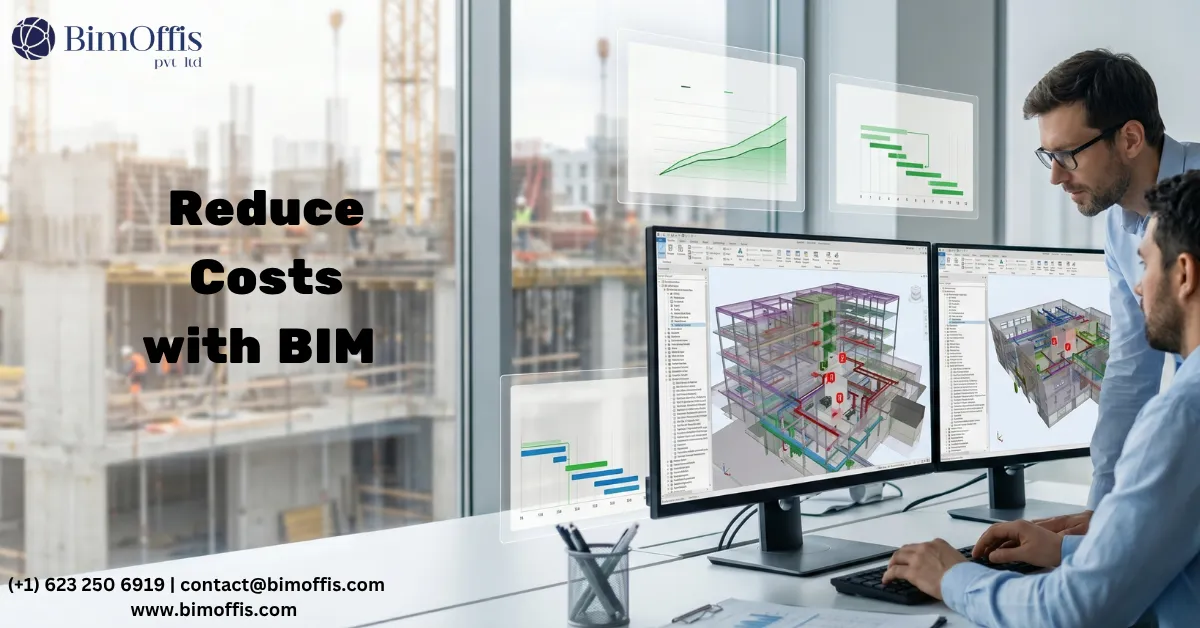
BIM modeling for cost reduction is what serious construction teams use to prevent it.
What BIM Actually Is
I want to explain this quickly before getting into the cost argument, because the explanation matters.
BIM is not just a 3D drawing tool. It is a way of designing a building where every element carries real information attached to it. Walls know what they consist of, what their fire rating is, how they perform thermally. Doors know their dimensions, their hardware specification, their acoustic performance. Mechanical equipment knows its manufacturer, its maintenance requirements, and how it connects to other systems.
That information lives inside the model, not in a separate document that someone has to maintain separately from the drawings. When the design changes, the information updates with it. When you need a door schedule, the model produces it automatically from the doors placed in it.
This differs from traditional design in a fundamental way. In a traditional workflow, every drawing is a separate file. Every discipline works from their own documents. Coordination between disciplines happens through drawing exchange and manual checking. Each project stage requires teams to recreate information from scratch rather than pulling it through from earlier work.
BIM changes all of that. And the financial consequences of that change are real.
Where the Money Actually Gets Lost
Before talking about what BIM does, it helps to understand where the unnecessary costs come from on construction projects.
Rework
The biggest single source of avoidable cost on any complex project is rework. Work that has to be done twice because the information it was based on was wrong, incomplete, or inconsistent with what another discipline was doing.
Consider what this looks like in practice. A duct gets installed where a structural beam sits. The wall goes up to dimensions that do not match the current architectural design. Meanwhile, an MEP service routes through a zone that another system already occupied. This stuff happens on projects constantly. When it happens, someone has to cut out the work that was done wrong and redo it. That costs time, material, and money.
On complex commercial projects, rework can account for a significant portion of the total construction budget. Moreover, most of it traces back to coordination failures and documentation problems that the design process could have caught.
Programme Delays
When coordination problems surface during construction instead of during design, fixing them takes time that nobody budgeted for. The affected trade stands down while everyone figures out what to do. Installation sequences get pushed back across the board. Acceleration costs get added to try to recover the programme, and knock-on effects ripple through every trade that planned around the problem not existing.
A coordination failure caught during a design meeting costs a few hours and a revised model. The same failure caught on site, however, can cost weeks and significant money.
How BIM Modeling Actually Reduces Those Costs
It Finds Coordination Problems Before Anyone Starts Building
This is the most direct and most significant way BIM modeling reduces construction costs.
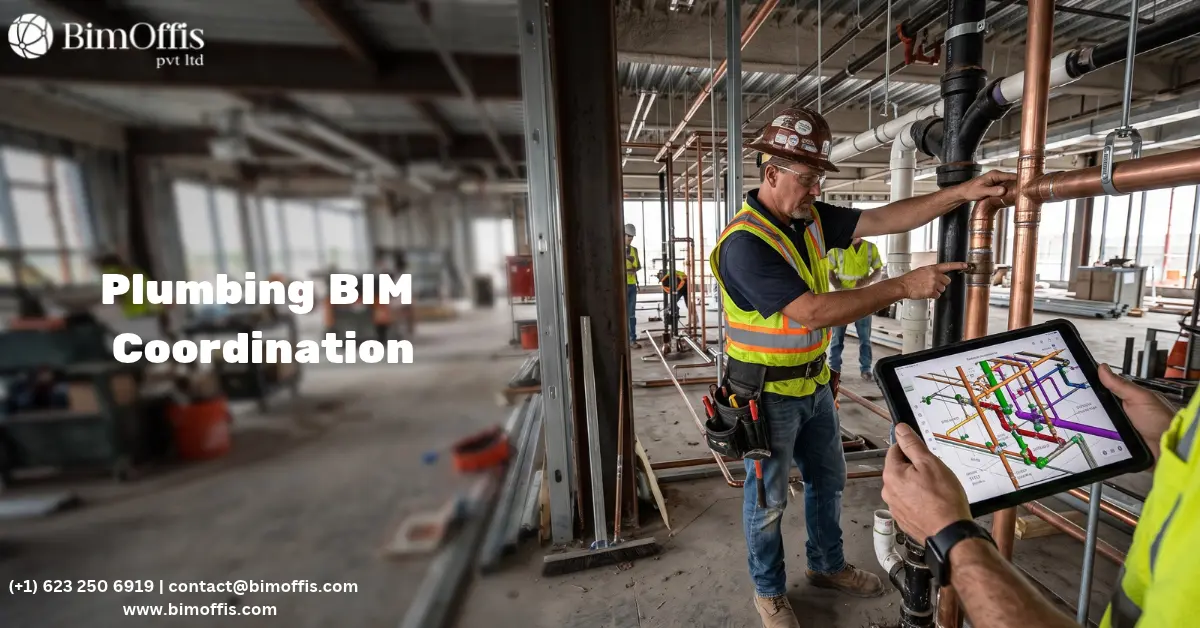
When all the discipline models sit in the same coordinated environment, automated clash detection finds every geometric conflict between systems. The structural beam sitting exactly where the main duct run needs to go. The cable tray occupying the same space as the plumbing pipework. The MEP service routing through a structural element. All of these show up as flagged conflicts in a coordination meeting during design.
The team resolves them in the model. Someone adjusts a route, changes an elevation, or redesigns around the constraint. That resolution costs a few hours of modeling time and a conversation between engineers.
The same resolution on site costs rework, programme delay, trade contractor standby, and sometimes acceleration costs to claw back the programme. On complex projects, the difference in cost between resolving a coordination conflict during design and resolving the same conflict during construction is substantial. Every serious piece of research on this topic points to the same conclusion: the later a problem gets discovered in the project lifecycle, the more it costs to fix.
It Produces Quantities You Can Actually Trust
Manual quantity takeoffs from 2D drawings are slow, prone to error, and often out of date by the time someone uses them. When the design changes, someone has to go back through the drawings and update the quantities manually. That rarely happens as quickly or as accurately as it needs to. Cost plans drift away from the current design. Procurement decisions rest on quantities that no longer match what the team will actually build.
When the building exists as a BIM model, quantities come directly from the model. Wall areas, floor areas, door and window counts, structural quantities, MEP material quantities, the model generates all of it from actual modeled elements rather than from someone measuring drawings. Design changes trigger automatic quantity updates, so the cost plan always stays aligned with the current design rather than drifting behind it.
For cost managers and contractors, the difference between quantities they can trust and quantities they cannot is the difference between a budget that reflects reality and one that does not. Over-ordering wastes money. Under-ordering causes delays. Accurate quantities from a BIM model reduce both risks at the same time.
It Reduces Material Waste
When procurement rests on accurate quantities from a coordinated model, over-ordering drops significantly. You order what you need rather than what you estimate plus a safety margin to cover the uncertainty in your estimate.
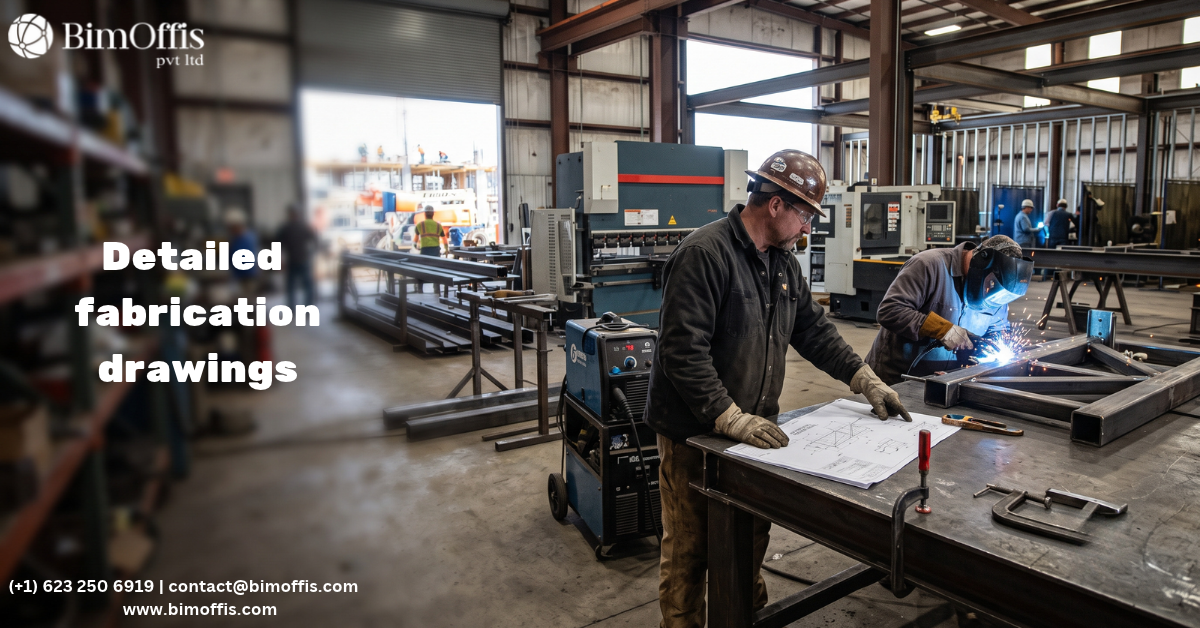
For prefabricated elements, BIM modeling enables fabrication to precise dimensions. Ductwork sections, cable tray assemblies, structural connections, and other prefabricated components get manufactured to the exact geometry the model specifies. The waste from cutting and adjusting materials on site, which adds up significantly on large projects, reduces when accurate model geometry drives the fabrication.
Fabrication drawings and cutting lists generated directly from the BIM model reduce offcuts and scraps further. This is not a large individual saving on any given element. Across a large project, however, it accumulates into real money.
It Stops Late-Stage Design Changes Getting Expensive
A design change during early design development costs almost nothing. The same change during construction documentation costs more. During construction itself, that same change can cost orders of magnitude more, and sometimes the team cannot make it at all without disrupting work already done.
BIM modeling reduces late-stage changes by improving the quality of design decisions earlier in the process. When the building exists as a three-dimensional model during design development, spatial problems that would never be visible on a 2D plan become obvious. The design team catches them and resolves them at the cheapest possible moment.
Client changes also reduce when clients genuinely understand what they are looking at. A client who reviews their building through accurate visualisations from the BIM model makes more informed decisions during design. They are less likely to request significant changes after construction starts because they actually understood what they approved before committing to it.
The Honest Part
BIM modeling for cost reduction is not free and it is worth being honest about that.
Producing a properly coordinated BIM model costs more upfront than producing a traditional 2D drawing set. Teams need training. Software costs money. The coordination rounds take time. These are real costs that need weighing against the returns.
The return comes from reduced rework, more accurate quantities, fewer late-stage changes, and a construction phase that runs more smoothly. On any complex project, that return consistently exceeds the upfront investment by a margin that is not hard to calculate once you have seen what coordination failures and rework actually cost.
On smaller, simpler projects the calculation is different. On complex commercial projects, healthcare facilities, data centers, and large mixed-use developments, however, the cost case for BIM modeling is about as straightforward as it gets in construction.
The Simple Version
The money that gets wasted on construction projects does not disappear into thin air. It goes into rework, into programme delays, into procurement errors, into late design changes that cost ten times what they would have cost earlier.
BIM modeling for cost reduction changes the process that generates those costs. It catches coordination failures during design. It produces quantities that reflect the actual design. It keeps documentation current. It gives clients a real understanding of what they are approving.
None of that eliminates cost from construction entirely. It eliminates the costs that should not have been there in the first place, which on complex projects is a very significant amount of money.
The Construction Costs Nobody Talks About, And How BIM Modeling Eliminates Them
Frequently Asked Questions from Clients
How does BIM Modeling reduce construction costs?
BIM improves coordination, reduces rework, and optimizes material usage.
Does BIM help with cost estimation?
Yes, BIM enables accurate quantity takeoffs and budget forecasting.
How does BIM minimize project delays?
It identifies design conflicts early, preventing costly on-site issues.
Can BIM reduce material waste?
Yes, BIM improves planning and helps optimize resource allocation.
Which projects benefit most from BIM cost savings?
Commercial, residential, industrial, and infrastructure projects benefit from BIM.
What software is commonly used for BIM Modeling?
Autodesk Revit and Navisworks are widely used for BIM workflows.