Most people don’t fully grasp what a building will feel like until they’re standing inside it. That’s always been the problem with selling or approving something that hasn’t been built yet.
A 3D architectural walkthrough animation solves that problem. And right now, it’s quietly becoming one of the most important tools in the American real estate and development industry.
So What Actually Is a 3D Architectural Walkthrough?
Think of it as a video tour of a building that doesn’t exist yet.
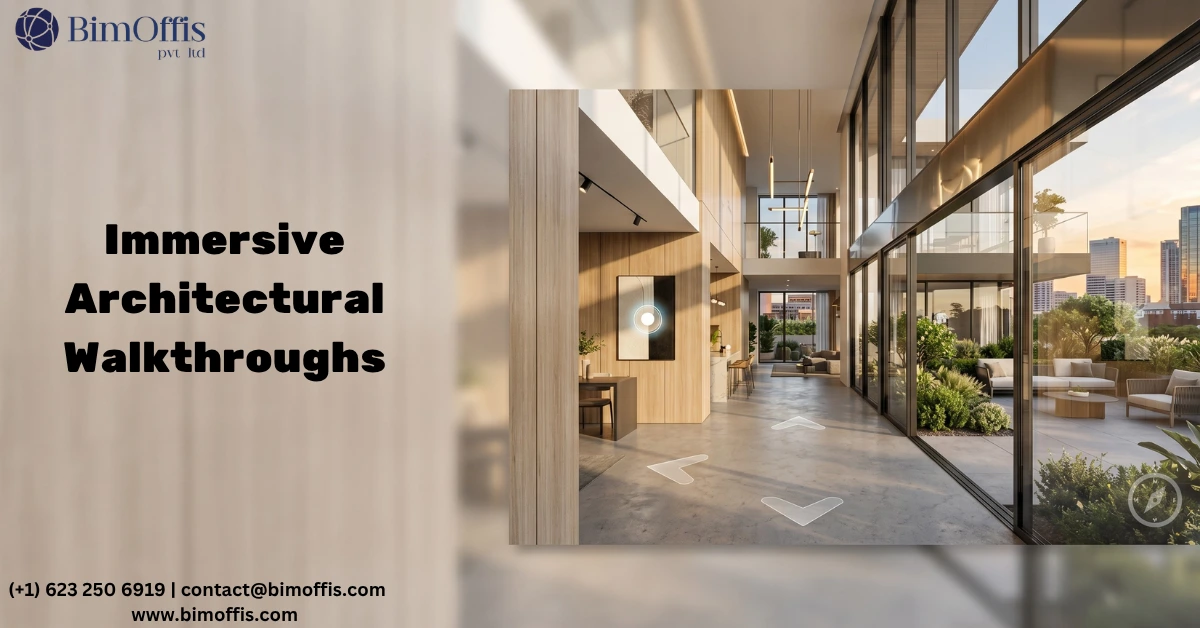
You’re not looking at blueprints. You’re not squinting at a floor plan trying to imagine the space. You’re moving through rooms, looking out windows, walking down corridors, and the whole thing looks real enough that you have to remind yourself it hasn’t been built.
It’s made from a detailed 3D model of the design, rendered to photorealistic quality. The light falls correctly. The materials look like actual materials. The proportions feel right. By the time it’s done well, it stops feeling like an animation and starts feeling like a walkthrough of the actual building.
A solid walkthrough will typically show you:
- Interior spaces with real-feeling light and finishes
- The building sitting in its actual surroundings
- Landscaping, street context, neighbouring properties
- How the space looks in daylight versus evening
- Furniture and people, because without them, scale is meaningless
- Camera movement that actually guides you through the space naturally
Why Are So Many USA Developers Using These Now?
Pre-Sales and Investor Conversations
Here’s the situation a lot of developers are in: you need buyers to commit, investors to fund, and approvals to come through, all before a shovel touches the ground.
Floor plans and static renders have their place. But they ask a lot of the person looking at them. Not everyone can take a 2D drawing and mentally build a three-dimensional space from it. Most people can’t.
A walkthrough removes that gap entirely. A buyer watches it and knows, genuinely knows, whether they like the apartment. An investor sees exactly what the finished product will be. You spend less time explaining and more time actually moving the conversation forward.
Practically speaking:
- Buyers in other cities or countries can experience the project without flying in
- Sales teams have a tool that answers “but what does it actually feel like?” immediately
- Marketing content people actually watch instead of scroll past
- Investor presentations that show, not just tell
Planning Approvals Go Smoother
Not everyone on a planning committee is an architect. Most aren’t. Handing them a thick set of technical drawings and asking them to make an informed decision about design quality is a big ask.
A walkthrough changes that. When committee members can see how the building meets the street, how it sits next to its neighbours, what the public experience of it will be, the conversation is just easier. You’re not asking them to interpret anything. You’re showing them.
Same thing during community consultation. People get anxious about nearby development because they can’t picture it. Show them a walkthrough and most of that anxiety becomes a real conversation instead of blanket opposition.
Clients Make Better Decisions During Design
Every architect has a version of this story. Client reviews the drawings. Client says everything looks great. Building goes up. Client says “I had no idea it would feel this cramped.”
Walkthroughs catch that before it costs anyone money. When a client can actually see the building, they start asking the right questions. They notice the thing that’s been bothering them but they couldn’t articulate from a floor plan. They make decisions with confidence instead of just signing off on drawings they didn’t fully understand.
What Makes the Difference Between a Good One and a Forgettable One?
Rendering That Actually Looks Real
There’s a wide gap between “photorealistic” and “looks like a video game from 2012.” Anyone who watches a lot of these can spot the difference in the first five seconds.
Good rendering means the marble looks like marble, not like a texture applied to a flat surface. It means light comes from the right direction at the right intensity. It means shadows make sense and reflections behave the way reflections actually behave. When the rendering is off, it doesn’t just look cheap, it makes the whole project feel less credible.
Camera Movement That Actually Guides You
A lot of studios treat a walkthrough as a technical exercise: get in the model, move through it, export the video. The good ones treat it as storytelling.
The best walkthroughs move like a knowledgeable person giving you a tour. They pause at the moments that matter. They approach the building from the street the way a visitor would. They don’t just fly through rooms, they let you absorb each space before moving to the next. That difference isn’t subtle. Viewers feel it even if they can’t explain why.
It Has to Actually Match the Design
An animation that shows a building more generously than it will be delivered is a liability, not an asset. If the finished project doesn’t match what you showed buyers, you have a trust problem.
The best studios work directly from the coordinated design model so that what you see in the video is what gets built, same proportions, same materials, same ceiling heights.
Picking the Right Studio in the USA
The market is crowded and the quality range is genuinely wide. A few things that separate the reliable ones:
Their portfolio covers your project type. A studio that’s great at high-end residential may struggle with large commercial or mixed-use work. Make sure you’re looking at comparable projects, not just impressive reels.
They have a clear process for design changes. Projects evolve. Facades get revised, materials change, layouts shift. If a studio can’t clearly explain how they handle mid-production changes, expect delays.
They take the brief seriously before touching the software. The camera choreography, the storytelling arc, what moments to highlight, all of that should come from a proper briefing process. Studios that skip this produce generic walkthroughs.
Be realistic about pricing. Quality photorealistic rendering takes time, skill, and serious compute. If a quote seems too low for what they’re promising, it probably is.
Worth Saying Plainly
The reason 3D architectural walkthrough animations have become standard across the USA isn’t trend-chasing. It’s because they work. They help sell projects. They help approvals go through. They help clients arrive at construction actually knowing what they signed up for.
Done well, a walkthrough pays for itself in the first meeting where it changes someone’s mind. The key is finding a studio that understands buildings, not just rendering, one that treats your project as something worth telling a story about.
Want to see your project come to life before it’s built? Get your 3D walkthrough quote today.
Frequently Asked Questions from Clients
How long does a 3D architectural walkthrough animation take to produce?
Most projects take between 2 to 4 weeks depending on the size and complexity of the building.
How much does a 3D architectural walkthrough animation cost in the USA?
Pricing typically ranges from $1,500 to $10,000+ based on project scale, detail level, and animation length.
Can changes be made to the animation if the design gets updated?
Yes, most studios can incorporate design revisions, though major changes mid-production may affect timeline and cost.
What files does a studio need to start building the walkthrough?
They usually work from CAD drawings, architectural plans, elevation sheets, and material/finish specifications.
Is a 3D walkthrough animation better than a virtual tour?
A walkthrough animation is a directed, cinematic experience, better for presentations and marketing, while virtual tours suit interactive self-exploration.
Can a 3D architectural walkthrough be used for planning permission submissions?
Yes, many USA planning authorities accept walkthrough animations as part of development applications to demonstrate design intent and contextual fit.