Let’s Be Honest About BIM for a Second
Most people in the construction industry have heard about BIM by now. The 3D models, the clash detection, and the coordination process. It sounds great in a presentation, and it looks impressive when someone pulls up a federated model on a big screen.
But here is what nobody really talks about. All of that only works when someone is actually managing it properly behind the scenes.
BIM management is the unglamorous side of BIM that makes the glamorous side possible. It is the planning, the standards, the coordination, the follow-through. Without it, you just have expensive software and a pile of models that nobody fully trusts.
I have seen projects where BIM was technically being used, but the management was so poor that teams were still working from outdated information, coordination meetings were going in circles, and the handover package at the end was basically unusable. I have also seen projects where solid BIM management turned a genuinely complicated job into something that ran smoothly from start to finish.
The difference was never the tools. It was always the management.
What BIM Management Actually Covers
People often assume BIM management is mostly about keeping files organized and making sure everyone is using the right software. Those things are part of it, but they are honestly the smallest part.
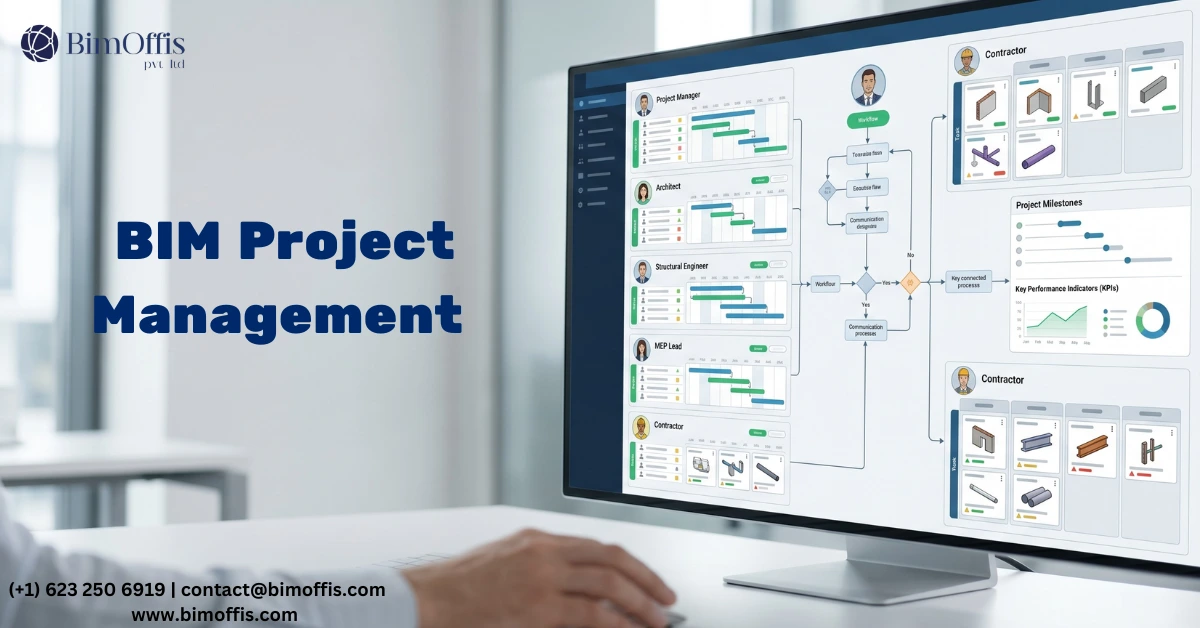
Real BIM management means taking responsibility for the entire BIM process across the whole project. Who is doing what, when things need to be delivered, how information flows between disciplines, what standards the whole team is working to, and how problems get resolved when they come up.
It sits right at the intersection of people, process, and technology. Get one of those wrong, and the other two start breaking down as well.
Tools That Serious BIM Projects Actually Use
Autodesk Revit
Revit is where most of the modeling happens. Architects, structural engineers, and MEP teams all build their discipline models here. It is the industry standard, and when teams use it consistently with clear agreed standards, the results are genuinely useful for coordination and construction.
The challenge is that every firm has its own habits around Revit. Some model at a high level of detail, some are not. Some follow naming conventions carefully, some ignore them completely. This inconsistency is one of the main reasons BIM management and clear standards exist in the first place.
Autodesk Construction Cloud
This is the central hub where the whole project lives digitally. Every model, every document, every issue log sits in one place that the entire team can access. When it is set up properly, nobody is hunting through old emails for the latest version of a file. Everyone knows where to go, and what they find there is current.
Navisworks
Navisworks is where discipline models get combined and tested. The coordination team brings everything together here, runs clash detection, finds conflicts between systems, and works through resolution before any of those problems show up on a real job site.
It is also used for 4D sequencing, which links the model to the construction schedule so the team can visualize how the build will actually unfold. This is genuinely useful for planning and for spotting sequencing problems before work starts.
Issue Management Platforms
Tools like BIM Track replaced the old approach of sending clash reports as PDFs that sat in inboxes and got ignored. Issues are now logged directly in the model environment. They get assigned to specific people, tracked through to resolution, and only closed when the fix has been confirmed in the model. It is a much more accountable way of managing coordination issues, and the difference in outcomes is noticeable.
Common Data Environment
A CDE is simply the single place where all project information lives. One source of truth that the whole team accesses. When everyone is pulling from the same place, the endless confusion about which version of something is current basically disappears. It sounds simple, but the impact on day-to-day coordination is significant.
The People Who Make BIM Management Work
BIM Manager
The BIM Manager is the person who owns the whole process. They write the standards, define the workflows, manage the technology setup, and make sure everyone on the project is following the agreed approach. On a large complex project, this is a dedicated full-time role. On smaller projects, it sometimes gets carried alongside other responsibilities, which always involves some compromise.
What makes a good BIM Manager is not just technical knowledge. It is the ability to work with people across different disciplines and different firms and keep everyone aligned. Most BIM problems on a real project are communication problems that show up wearing a technical disguise.
BIM Coordinator
The BIM Coordinator is more hands-on in the day-to-day work. They manage the federated model, run clash detection sessions, follow up on open issues, and keep the coordination process moving forward between disciplines.
Projects with a strong BIM Coordinator resolve issues faster and run tighter coordination meetings. Projects where this role is unclear or understaffed tend to drift and fall behind on issue resolution.
Discipline Leads
Every discipline has someone responsible for the quality and accuracy of their own model. The architectural lead, the structural lead, the mechanical lead. These people show up to coordination meetings, respond to clashes raised against their work, and keep their models updated as the design develops.
The federated model is only as good as the individual models going into it. Discipline leads who take model quality seriously make every downstream process easier. Those who treat model updates as an afterthought create problems for the whole team.
The Owner
Owners are more involved in BIM today than they used to be, and that is actually a good thing. A well-run BIM process gives the owner real visibility into what is being designed and built at every stage. But they also need to define what they actually want at handover early enough for the team to plan for it. The owners who have this conversation at the start of a project save everyone a lot of frustration at the end.
What BIM Management Is Responsible For Day to Day
Writing the BIM Execution Plan
The BIM Execution Plan is the rulebook for BIM on a specific project. It covers software requirements, modeling standards, file naming conventions, level of development at each project stage, coordination workflows, roles and responsibilities, and deliverable schedules.
Every project needs one before work starts. Not as a box-ticking exercise but as a genuine working document that the team actually uses. A BEP that sits in a folder and gets ignored solves nothing. A BEP that the team follows from day one is the foundation on which the whole process is built.
Keeping the Federated Model Current
The federated model needs to reflect where the project actually is right now. Not where it was three weeks ago. Keeping it updated as designs develop and as coordination issues get resolved is an ongoing responsibility that runs through every phase of the project.
An outdated federated model is genuinely dangerous because people make decisions based on what they see in it. If the model is behind, those decisions will be based on wrong information and that always shows up in the field at the worst possible time.
Running Coordination Meetings That Actually Produce Results
A good coordination meeting ends with clear decisions and clear owners for every open item on the list. A bad one ends with everyone nodding along and agreeing to think about things before the next meeting.
The difference comes down to preparation and discipline. The right model version opens before the meeting starts. The right people in the room. A clear agenda. And someone willing to push for actual decisions rather than letting things stay comfortably unresolved.
Tracking Issues Until They Are Genuinely Closed
Finding a clash in the model is step one. Step two is making sure it actually gets fixed, the model gets updated, and the resolution gets confirmed before the issue is marked closed. This sounds obvious but on a busy project with a long issue list, it is very easy for things to fall through the cracks.
BIM management means staying on top of every open item, following up with the people responsible, and not accepting a closure until the fix is actually in the model. That discipline is what separates a clean issue log from a graveyard of half-resolved problems.
Getting BIM Deliverables Out on Time
At key milestones throughout the project, specific BIM deliverables need to go out. Design models, coordination models, clash reports, 4D simulations, and eventually the as-built model at handover. BIM management means knowing exactly what is coming and when, and making sure it is ready at the right quality when the deadline arrives.
The Honest Truth About Why This All Matters
The tools available for BIM today are good. Most firms have access to them. Most project teams have at least some BIM capability. The technology is not really the problem anymore.
What still varies enormously from project to project is how well the whole thing is managed. Some teams get real value from BIM because someone is genuinely running the process. Other teams go through all the same motions, use all the same software, and still end up with coordination failures, frustrated subcontractors, and a handover that nobody is proud of.
The difference is always management. Someone who owns it from day one, stays engaged throughout, and holds the team accountable all the way to the end.
Wrapping Up
BIM management is not a background task that takes care of itself. It is active, ongoing work that touches every part of a project from first design to final handover.
If BIM is going to be part of your next project, treat management as seriously as you treat the technology. Make sure someone owns the process end-to-end. Make sure the standards are clear, and the team is actually following them. And make sure issues are getting resolved rather than just getting logged.
Do that, and BIM will deliver what it is supposed to deliver. Skip it, and you will spend the project wondering why all that technology did not help as much as it was supposed to.
Ready to find out what your project will cost? Find out here.
Frequently Asked Questions from Clients
What is BIM management?
It is the process of planning and overseeing how BIM is used across a project from start to finish.
Why is BIM management important?
Because without it, even the best tools and models will not deliver real results on a project.
What is a BIM Execution Plan?
It is the rulebook for BIM on a project. It covers standards, responsibilities, workflows, and deliverable schedules.
What does a BIM Manager do?
They own the entire BIM process. They set standards, manage tools, and keep the whole team aligned throughout the project.
What is the difference between a BIM Manager and a BIM Coordinator?
The BIM Manager handles the overall strategy. The BIM Coordinator handles the day-to-day coordination work.
What is a federated model?
It is one combined model that brings together all discipline models for coordination and clash detection.