Building in New York Is Hard. Bad Coordination Makes It Harder.
Anyone who has spent time on a construction project, BIM Services in New York will tell you the same thing. This city does not forgive mistakes easily. Sites are small, timelines are short, and the moment something goes wrong, the whole team feels it.
And here is the honest truth about most project problems. They were not surprises. The conflict was sitting in the drawings for weeks. Nobody caught it until a crew showed up on site, ready to install something and realised it simply would not fit.
That is when the calls start. Change orders come in next. Then the schedule starts slipping, and the fingers start pointing.
BIM services exist specifically to stop that from happening. Not by making construction simpler, because New York construction will never be simple.
But by making sure the team actually knows what they are walking into before the work begins.
What BIM Services Really Are
More Than Software, More Than Models
When most people hear BIM, they think about 3D models. Yes, the model is part of it. But treating BIM as just a modeling exercise means missing most of what makes it valuable.
BIM is really about how information moves through a project team. When it works properly, every person on the project looks at the same data.
The architect, the structural engineer, the MEP contractors, and the owner all share one model and one source of truth. When something changes, everyone knows immediately.
Consider how most projects run without this. The architect sends updated drawings. The engineer works off the previous set. The mechanical sub has their own markups that nobody else has seen. Three teams, three versions of reality, and eventually all three versions collide on the job site.
BIM closes that gap. It is not magic. It is just a much better way of keeping a team coordinated.
The Services That Actually Make a Difference
3D Architectural and Structural Modeling
The team builds a real working model of the building to actual dimensions. Not a concept visual, but something every discipline can use to coordinate, review, and build from.
MEP Coordination
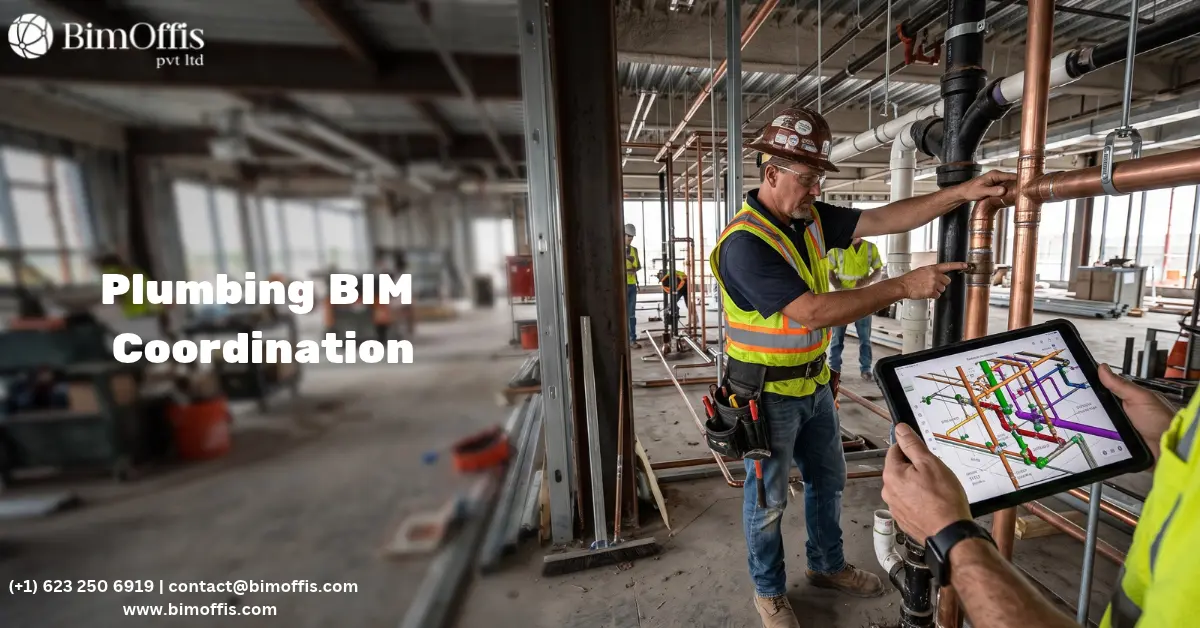
Most conflicts happen here. Mechanical, electrical, and plumbing systems all compete for the same space. Modeling them together before installation reveals conflicts while they are still cheap to fix.
Clash Detection
The coordination team thoroughly reviews the combined model and finds every place where systems run into each other. These are the issues that become expensive field problems if nobody catches them in time.
4D Scheduling
Linking the model to the project timeline lets the team watch the construction sequence play out visually and spot logistical problems before they happen in real life.
5D Cost Integration
Budget data ties directly to what the team builds. When scope changes, the cost impact shows up immediately instead of weeks later when someone finally runs the numbers.
As-Built Documentation
At closeout, the team delivers an accurate final model. Owners can actually use this for facilities management and future work, rather than relying on a record of what was originally designed.
BIM Coordination in New York
This Is Where the Real Value Shows Up
Some teams build their own models, leave the files on a server somewhere, and never actually coordinate anything. That happens more often than it should.
Real BIM coordination works differently. Each discipline produces its model. The coordination team combines those models, reviews the whole thing carefully, and finds every conflict before construction starts.
The math here is simple. Finding a clash in the model costs almost nothing. Finding the same clash after a crew has already installed work on either side of it costs real money and real time. In New York, where labour rates are high and schedules are tight, that difference matters enormously.
Why New York Makes Coordination So Critical
The space above the ceiling is never enough
Every trade wants to run their systems through the same eighteen inches of ceiling cavity. Without coordination, that space becomes a constant source of conflict. With coordination, every trade knows exactly where they are going before work begins.
Mechanical rooms are always too small
New York buildings pack a lot of equipment into very limited space. Getting everything to fit while maintaining proper clearances demands careful planning that traditional 2D drawings simply cannot deliver reliably.
Problems do not stay isolated here
Because systems in New York buildings are so dense, one routing conflict rarely affects just one area. It touches the ceiling height, the reflected ceiling plan, and the coordination of surrounding floors. Early detection keeps it manageable. Late detection turns it into a project-wide headache.
Rework here is punishingly expensive
New York labour costs rank among the highest in the country. Every hour crews spend tearing out and redoing work that was never properly coordinated is money nobody budgeted and time nobody planned on losing.
What Actually Changes When Coordination Is Done Right
Well-coordinated projects show results in very real ways.
Change orders drop because trades know exactly what they are doing and where before they ever mobilize. Prefabrication becomes realistic because subcontractors trust the model enough to build from it.
Schedules hold because unplanned rework, the main thing that kills timelines, largely disappears. Owners also make better decisions because they can see their project clearly before construction begins, instead of trying to interpret flat drawings.
New York Has Real Standards Around BIM
What the City Expects
The NYC Department of Design and Construction has maintained formal BIM guidelines for publicly funded work for years. These are not suggestions. They define what level of model detail each stage requires, what coordination deliverables the team must produce, and how to document the process from start to finish.
Why This Matters Even on Private Work
Private developers and general contractors who voluntarily apply similar standards consistently run better projects.
Their permit submissions come out cleaner. Coordination reviews move faster. And when something goes sideways, which it always does eventually, they have a documented record of every decision made throughout the project. That record proves extremely valuable when disputes arise.
Most people do not appreciate how much that documentation matters until the moment they actually need it.
Finding the Right BIM Partner in New York
There Is a Real Difference Between Providers
Some firms produce BIM models. That is not the same as doing BIM coordination. A firm that produces models hands over files and moves on. A firm that does real coordination stays involved throughout the project.
They attend coordination meetings, work directly with subcontractors to resolve clashes, keep the model current as things change in the field, and remain available at closeout when the team finalizes as-built documentation.
One of those is a deliverable. The other is a service. Complex New York projects need the service.
What You Should Actually Look For
Real experience in this market
Knowing New York building codes, understanding how the Department of Buildings operates, and knowing how trades work in this city comes from doing real projects here. Make sure whoever you bring in has actually worked in New York, not just in other markets.
Someone who gets ahead of problems
A coordination team worth hiring does not wait for issues to surface in the field. They review the model consistently, flag problems early, and arrive at meetings with solutions rather than just new items for the issues list.
Easy to work with day to day
BIM coordination only works when communication flows freely. Your BIM partner needs to stay reachable, speak clearly, and work directly with your subcontractors without requiring you to manage every conversation for them.
The Honest Bottom Line
New York construction already ranks among the most demanding environments in the world. Coordination problems on top of everything else this city throws at a project team can turn a hard job into a genuinely painful one.
The teams here that consistently deliver good BIM projects are not doing anything extraordinary. Early on, they decided that proper coordination was worth the investment. Their jobs reflect that choice. Fewer surprises, fewer arguments between trades, and projects that actually finish looking like what the team planned.
If your next New York project is still in the scoping stage, now is the right time to think seriously about your BIM approach. The earlier coordination enters the process, the more of the project you can protect. Once crews are in the field and work is moving, the window to fix things cheaply closes very fast.
Ready to find out what your project will cost? Find out here.
Frequently Asked Questions from Clients
What is BIM?
BIM is a process where your entire building is planned inside one smart digital model before construction starts. Everyone works from the same model, so there is no confusion.
Why do New York projects need BIM?
New York sites are tight, labour is expensive, and mistakes cost a lot. BIM helps catch problems early before they become costly surprises on site.
What is BIM coordination?
It is the process of combining all models from architecture, structure, and MEP into one and finding every conflict before construction begins.
What is clash detection?
It is when the team reviews the combined model and finds places where systems conflict with each other. Finding it in the model is cheap. Finding it on site is very expensive.
What is MEP coordination?
MEP stands for Mechanical, Electrical, and Plumbing. MEP coordination means all three systems are modeled together so they do not conflict during installation.
Does New York City require BIM?
Yes, for publicly funded projects, the NYC Department of Design and Construction has formal BIM guidelines. Private projects are not always required, but teams that use BIM still get better results.