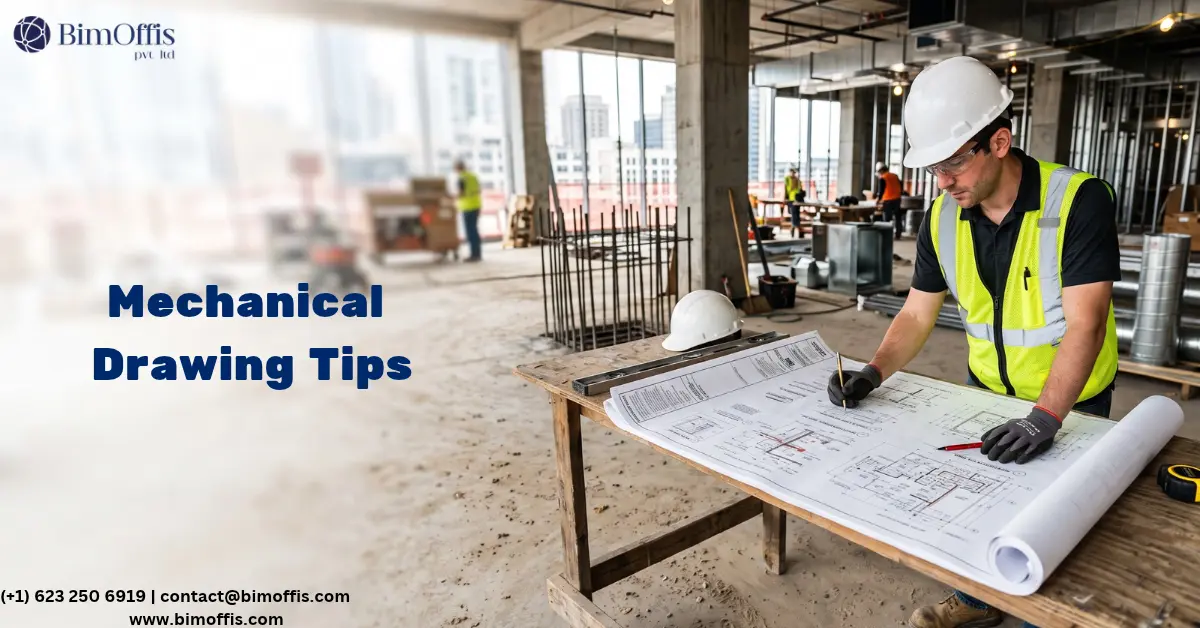
But walk onto any steel construction project running materials smoothly on time, crews moving, no angry calls between the engineer and fabricator, and somewhere behind that is a detailer who did their job really well.
Walk onto a project falling apart, though? The drawings are almost always where the trouble started.
What is structural steel detailing?
Structural engineers design buildings. They calculate loads, specify member sizes, and make sure the structure stands. However, they do not produce fabrication instructions.
Their drawings tell you what needs to be built not how to cut, drill, weld, and bolt every individual steel piece together.
That gap is exactly where the structural steel detailing process lives. A detailer takes the engineer’s design and converts it into two things:
- Shop drawings – detailed fabrication documents the shop floor works from
- Erection drawings – field documents that guide ironworkers during assembly
Every hole location, weld size, and connection plate dimension gets worked out here. When detailers do this right, projects move. When they rush it, the problems show up later in the worst possible places.
The structural steel detailing process step by step
Step 1: project review and information gathering
Before any modeling starts, a detailer goes through the complete project package, structural drawings, architectural plans, specifications, geotechnical reports, and foundation layouts.
The goal is simple: catch conflicts and missing information before they become field problems. Specifically, detailers should:
- Review all structural and architectural drawings for inconsistencies
- Check anchor bolt layouts against foundation plans
- Identify missing connection details or unclear member specifications
- Submit RFIs early for anything that needs clarification
For example, if a structural drawing doesn’t match the architectural plan, you want to know on day one, not after workers have already cut steel. Good detailers ask questions early. That’s not confusion; that’s the job being done right.
Step 2: 3D modeling and BIM coordination
Most structural steel detailing today runs through 3D BIM software. Tekla Structures, Advance Steel, and SDS/2are the most widely used platforms. The detailer builds the full steel structure in the model, columns, beams, braces, grating, connections, everything.
Key benefits of 3D modeling in the detailing process include:
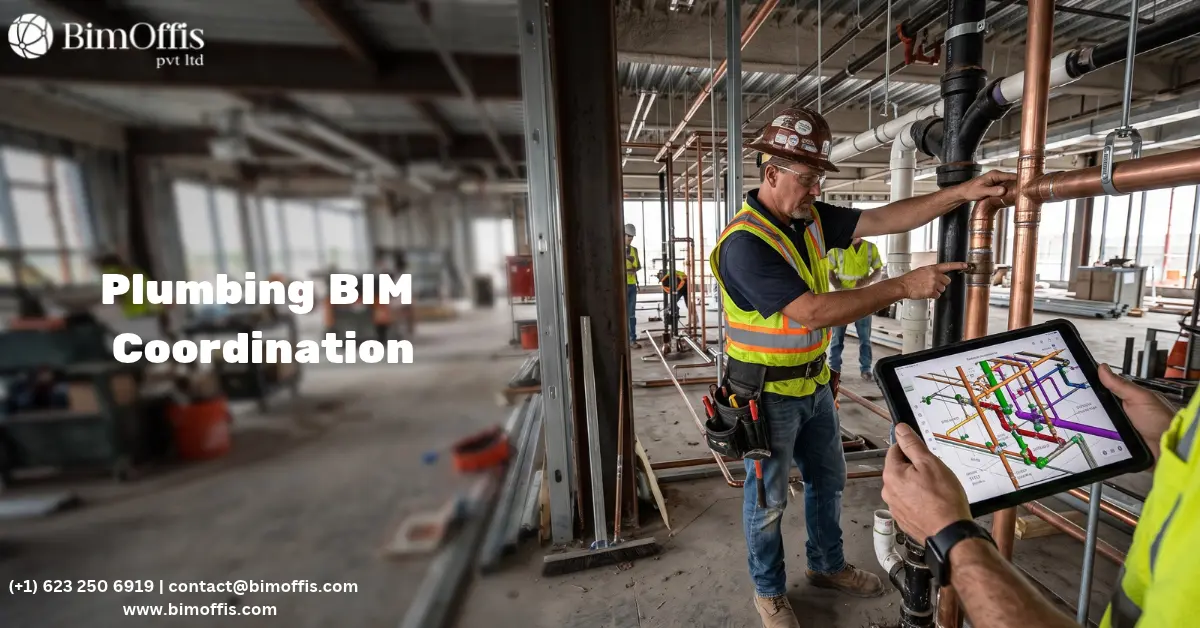
- Clash detection catches conflicts with MEP systems, concrete walls, and stairs before fabrication
- Accurate quantity takeoffs helps procurement teams order the right material
- Automated drawing generation reduces manual drafting time and errors
- Shared coordination other trades can reference the model for their own planning
Fix a clash in the model, and it takes a few hours. Find the same problem during steel erection, however, and you’re looking at days of delay and real cost.
Step 3: connection design
Every joint in a steel structure must transfer loads safely and remain physically buildable by a real person with real tools. That combination is harder than it sounds.
On most commercial projects, the fabricator’s engineer handles connection design and submits calculations for the engineer of record to review and approve. This works well when the contract documents spell it out clearly upfront.
Common connection types in structural steel detailing include:
- Shear tab connections simple beam-to-column shear transfers
- Bolted end plate connections moment connections for rigid frames
- Base plate assemblies column-to-foundation connections
- Brace connections for lateral force-resisting systems
When the contract leaves responsibility for connection design vague, delays and disputes follow. Therefore, clarify it before detailing begins.
Step 4: shop drawing production
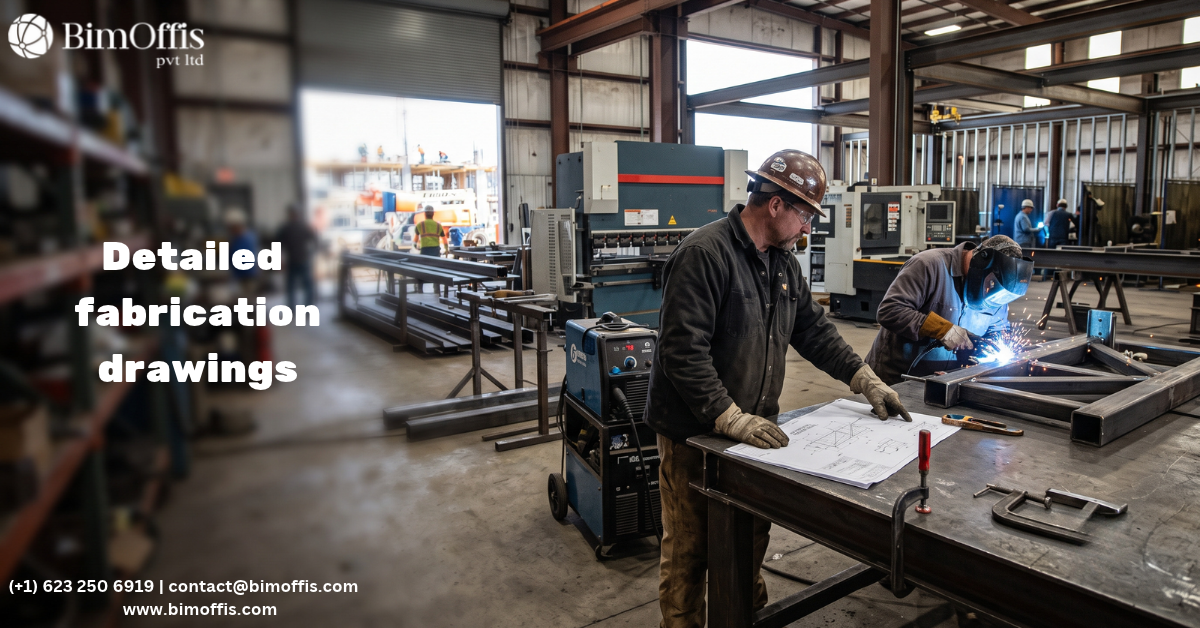
Once the team confirms connections, the software generates shop drawings for each fabricated piece. A shop drawing for a column includes:
- Overall member length and cross-section dimensions
- All hole locations, diameters, and bolt patterns
- Weld symbols and weld size specifications
- Plate sizes and bill of materials
- Material grade and surface treatment requirements
The test for a good shop drawing is simple: nobody on the shop floor should need to call the detailing office with a question. If the drawing leaves room for guessing, it is not finished.
Step 5: erection drawing production
Erection drawings serve as the field crew’s roadmap. Every fabricated piece carries a mark number, and erection drawings show exactly where each mark goes in the structure.
A complete erection drawing set includes:
- Column anchor bolt plans with grid dimensions and bolt spacing
- Framing plans showing beam locations at each floor level
- Elevation views for braced frames and moment frames
- Erection sequences for complex or phased steel packages
These drawings must be readable under real site conditions, not just in a quiet office. Cluttered erection drawings slow crews down and lead to pieces landing in the wrong location.
Step 6: submittal, approval, and revisions
Shop drawings go to the engineer of record and architect for approval before fabrication starts. There is almost always at least one round of review comments, and that is completely normal.
What is not normal, however, is a slow turnaround. Every day a submittal sits unapproved is a day the fabricator cannot move forward on that steel.
Best practices for the submittal process:
- Track all submittals and RFIs in a centralized log
- Respond to review comments thoroughly and quickly
- Mark revision clouds clearly on all updated drawings
- Remove superseded drawing versions from circulation immediately
Best practices in structural steel detailing
Always ask before assuming
When something on the structural drawings is unclear, submit an RFI. Detailers who keep moving by making assumptions create problems that cost far more to fix than a short wait for a clear answer.
Run a full model check before issuing drawings
Before the first submittal goes out, run a complete internal review. Verify member sizes, check connection geometry, and confirm anchor bolt layouts against the foundation plan. Automated clash detection helps, but it does not catch everything.
Know AISC and AWS standards
The AISC Steel Construction Manual and AWS D1.1 Structural Welding Code govern how the industry details, connects, and welds steel structures. Specifying the wrong weld size or misreading a bolt capacity table has real structural consequences. As a result, stay current with the editions your projects require.
Control your revision process
Use proper document control on every project. Mark revisions clearly, maintain a complete revision history, and make sure outdated drawing versions are pulled immediately. A fabricator working from a superseded drawing is one of the most common and most preventable problems in steel construction.
Final thoughts
The structural steel detailing process is not complicated in concept. In practice, though, it requires gathering complete information, building an accurate model, detailing connections carefully, producing clear drawings, and managing submittals without letting them stall.
The hard part is doing all of that consistently under schedule pressure, without cutting corners when deadlines get tight.
Steel gets fabricated once. Therefore, the drawings had better be right the first time.
Ready to find out what your project will cost? Find out here.
Frequently Asked Questions from Clients
What is structural steel detailing?
Converting an engineer’s design into detailed drawings that guide fabricators and ironworkers to build the steel structure correctly.
What are shop drawings and erection drawings?
Shop drawings guide fabrication in the workshop. Erection drawings guide ironworkers on where each piece goes on site.
What software is used in steel detailing?
Tekla Structures, Advance Steel, and SDS/2 are the most commonly used platforms in the industry.
Who designs the connections?
Usually, the fabricator’s engineer, with approval from the engineer of record. This must be agreed in the contract before work starts.
What standards are followed?
AISC Steel Construction Manual for structural requirements and AWS D1.1 for all welding specifications.
How long does steel detailing take?
Small projects take a few weeks. Large commercial projects can take several months, depending on complexity and review cycles.