When Electrical Coordination Arrives Too Late
The mechanical team finishes their ductwork coordination. The plumbing team has their pipe routes confirmed. Everyone feels good about where things stand. Then the electrical team submits their cable tray routing and suddenly conflicts appear everywhere. The main cable tray run needs to go exactly where the mechanical duct already sits. The electrical panels need wall space that the plumbing risers have already claimed. The ceiling void that everyone assumed had room for everything turns out to be completely full before the electrical infrastructure even gets considered.
Why This Keeps Happening
This is not a rare scenario. It plays out on MEP projects constantly. It is one of the clearest examples of why coordination between disciplines needs to happen in a shared three-dimensional environment rather than through separate drawing sets compared after the fact.
Electrical BIM modeling is what makes that shared coordination environment possible for the electrical discipline.
What Electrical BIM Modeling Actually Means
Building the Electrical Design in Three Dimensions
Electrical BIM modeling means building the electrical design as an intelligent three-dimensional model rather than producing 2D drawings that show where electrical systems should go.
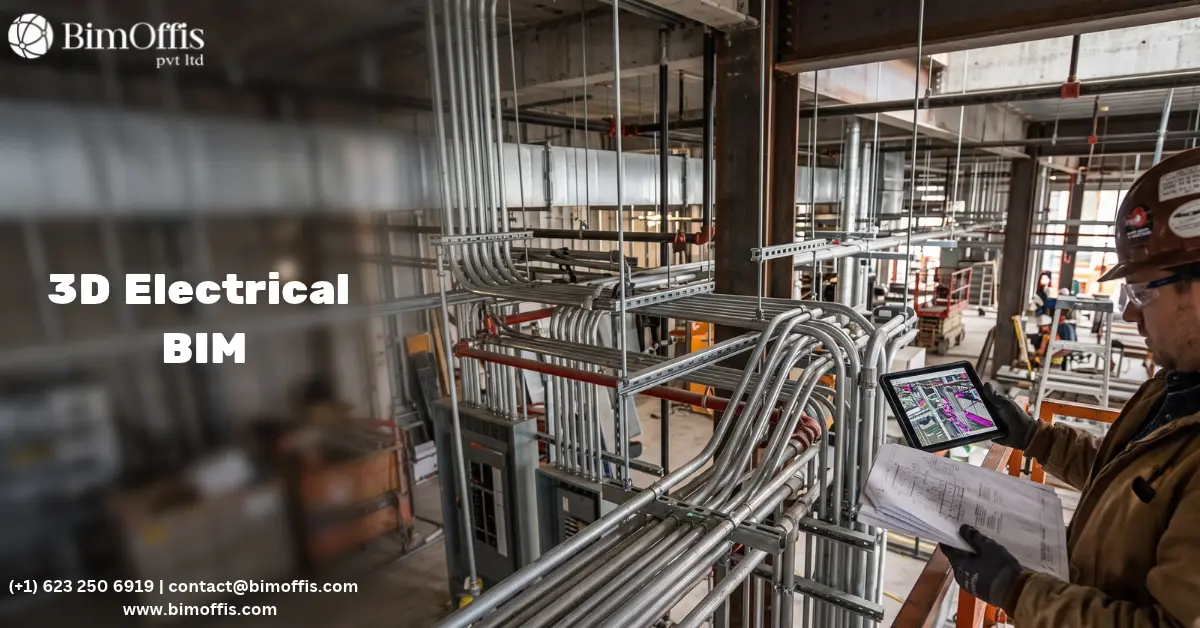
Every element of the electrical design exists as a modeled object in real three-dimensional space. Cable trays have actual width, depth, and length at their actual routing positions. Conduits follow their actual paths through walls, ceilings, and structural elements. Panels, switchboards, and distribution boards sit at their actual installed positions with their real dimensional footprints. Lighting fixtures appear at correct locations and correct mounting heights. Emergency systems, data infrastructure, and fire alarm elements all exist as modeled objects rather than symbols on a drawing.
How the Model Works in a Coordinated Environment
That model then sits in the same coordinated environment as the mechanical, plumbing, and structural models. Automated clash detection runs across all of them simultaneously. It finds every location where electrical elements conflict with any other system or violate required clearances.
The difference between this and traditional 2D electrical drawings is not just a technology difference. It is a coordination quality difference that shows up directly in how MEP projects run on site.
Why Electrical Coordination Is So Difficult Without BIM
The Ceiling Void Problem
The ceiling void on any commercial building floor plate is the most contested space in the project. Mechanical ductwork runs through it. Plumbing pipes cross it. Structural beams occupy it. Sprinkler systems cover it. On top of all that, the electrical infrastructure, cable trays, conduits, lighting, and data cabling, needs to fit through what remains.
Every system needs specific clearances. Cable trays need access space above them for maintenance. Conduits need separation from other services. High voltage and low voltage systems need spatial separation. When you coordinate all of these requirements through 2D drawings and manual overlay, you catch some conflicts and miss others.
The ones you miss show up during installation. On a construction site, a coordination conflict between electrical and mechanical systems becomes a programme delay, a change order, and a strained relationship between trades.
The Sequential Installation Problem
MEP installation typically follows a sequence. Structural elements first, then mechanical, then plumbing, then electrical. When electrical coordination happens through 2D drawings, the electrical design gets developed in relative isolation. The team then checks it against the other disciplines at coordination meetings.
By the time significant conflicts surface, the mechanical and plumbing installations may already be partially complete. The electrical team needs to reroute around installed work rather than coordinating before anything goes in. That rerouting costs time, material, and programme.
Electrical BIM modeling solves this by putting the electrical design into the coordination environment from the start of design development, not as a final check before construction begins.
How Electrical BIM Modeling Improves MEP Coordination
Real Clash Detection Across All Disciplines
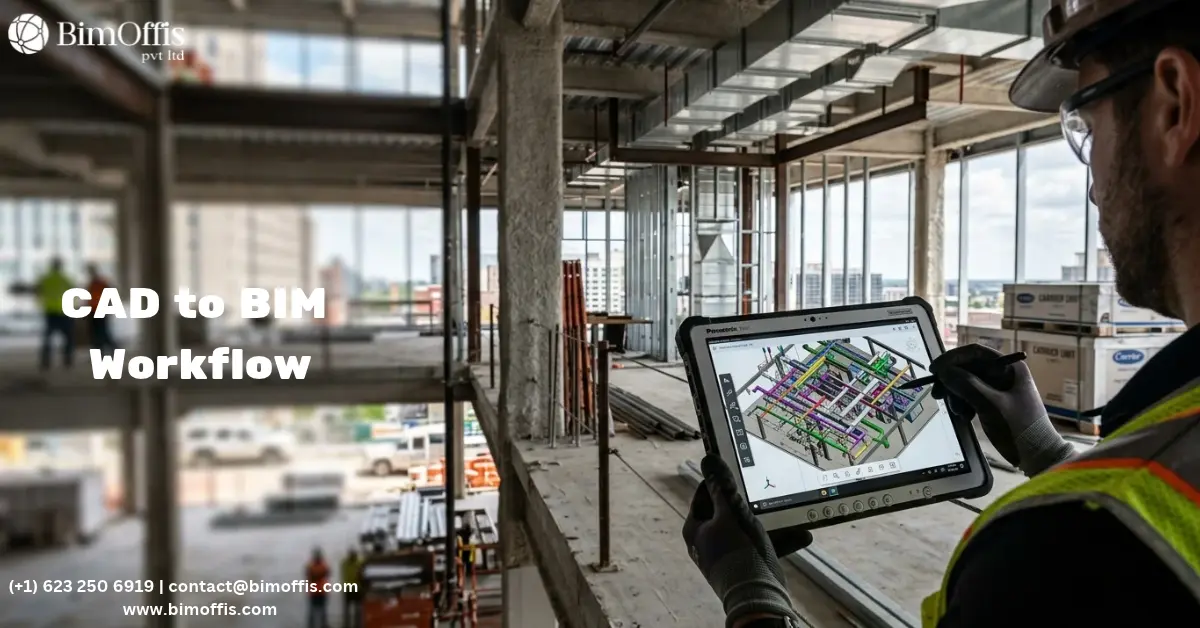
When the electrical model exists as accurate three-dimensional geometry in the same coordinated environment as the mechanical, plumbing, structural, and architectural models, automated clash detection finds every conflict between electrical elements and every other system.
Not just the obvious conflicts that would show up on a 2D overlay. Every conflict, including the ones that only exist in three dimensions. A cable tray that clears a duct in plan but clips it in section. A conduit that routes through a structural element modeled accurately but shown schematically on the 2D drawing.
The electrical engineer and the affected discipline resolve these conflicts by adjusting routes, changing elevations, or redesigning around the constraint. The resolution happens at a desk, during a coordination meeting, before any installation starts.
Coordinated Installation Sequences
Electrical BIM modeling supports coordinated installation sequencing in ways that 2D drawings cannot.
When the electrical model coordinates against all other disciplines in three dimensions, the team can plan the installation sequence against the coordinated model. Electrical contractors can plan their installation knowing exactly where other trades will be working. They know what clearances they have available. They know what sequence allows all trades to progress without blocking each other. That planning produces an installation that runs more smoothly with fewer delays.
Supporting Prefabrication
Electrical BIM modeling makes genuine prefabrication possible in ways that 2D electrical drawings cannot support reliably.
When cable tray routes exist as accurately coordinated three-dimensional geometry, sections of cable tray can be prefabricated off-site to the exact dimensions the model specifies. Conduit assemblies get fabricated to precise lengths and bend configurations. The prefabricated elements arrive on site ready to install in the coordinated positions.
Prefabrication from 2D drawings carries a real risk. If the drawings do not accurately reflect the three-dimensional spatial constraints, prefabricated elements may not fit when they arrive. Electrical BIM modeling removes that risk because the prefabrication geometry comes from a model already checked against everything else in the same space.
What Good Electrical BIM Modeling Looks Like
Families Built to Represent Real Equipment
The quality of electrical BIM modeling depends significantly on the quality of the families representing electrical equipment. A cable tray family that does not accurately represent the actual dimensional envelope of the tray it represents will produce clash detection results that miss conflicts in the real installation.
Good electrical BIM modeling uses families built or sourced to accurately represent the actual equipment and systems the project specifies. Manufacturer-specific families where they are available. Custom families built to the correct dimensions where manufacturer content does not exist.
Coordination Rounds Throughout Design
Electrical BIM modeling delivers its full value when coordination rounds happen throughout design development rather than as a single check before construction documents go out.
Early coordination catches conflicts while the design is still flexible. Routing adjustments happen before structural or mechanical elements get locked in. By the time construction documents go out, the electrical design has run against all other disciplines multiple times. The conflicts that remain are genuinely difficult to resolve rather than ones that earlier coordination could have caught.
As-Built Updates for Facilities Management
The electrical BIM model carries operational value beyond construction. An electrical model updated to reflect as-built conditions gives the building owner and facilities management team an accurate record of the installed electrical infrastructure.
Panel locations, circuit layouts, cable routes, and equipment specifications all exist in a model that the facilities team can query directly. For buildings with complex electrical systems, that operational record supports fault diagnosis, system upgrades, and future fit-out work in a way that 2D as-built drawings simply cannot match.
The Bottom Line
Electrical BIM modeling improves MEP coordination by putting the electrical design in the same three-dimensional coordination environment as every other discipline from the start of design development.
The conflicts that would otherwise surface during installation get caught during design. The team plans the installation sequence against real coordinated geometry rather than assuming it will work. Prefabrication becomes reliable. The operational value of the model extends beyond construction into the life of the building.
For MEP projects with any meaningful electrical complexity, this coordination quality is not a premium. It is what separates projects that run the way they should from ones that spend their construction phase managing conflicts that should never have reached the site.
Want to improve coordination in your MEP projects? Explore electrical BIM solutions.
Frequently Asked Questions from Clients
What is electrical BIM modeling?
It means building the complete electrical design as an intelligent 3D model that occupies real space and coordinates automatically against all other building systems.
Why is electrical coordination so difficult without BIM?
Because cable trays, conduits, and panels compete for the same ceiling void as mechanical ducts, plumbing pipes, sprinklers, and structural beams all at the same time.
How does electrical BIM modeling improve MEP coordination?
It puts the electrical design in the same coordinated 3D environment as all other disciplines, so automated clash detection finds every conflict during design rather than during installation on site.
How does electrical BIM modeling support prefabrication?
Cable tray and conduit assemblies get fabricated off-site to exact model dimensions because the geometry comes from a fully coordinated model rather than 2D drawings that may not reflect real spatial constraints.
When should electrical BIM coordination start on a project?
From the beginning of design development, not as a final check before construction documents go out, because early coordination catches conflicts while routing is still flexible and easy to adjust.
Does the electrical BIM model have value after construction ends?
Yes, a model updated to reflect as-built conditions gives facilities teams an accurate queryable record of panel locations, circuit layouts, and cable routes for fault diagnosis and future fit-out work.