A friend of mine runs a small MEP firm, and about two years ago he told me something that stuck with me. He said his clients used to accept 2D drawings without asking questions. Now half of them want a BIM model before they even sign off on the design. He wasn’t complaining exactly, just a bit tired, because switching over meant relearning half his workflow. But he also admitted the clash reports alone had already saved him from at least one expensive mistake on site.
That’s basically the story of the whole industry right now, just playing out at different speeds depending on where you are and who you work with.
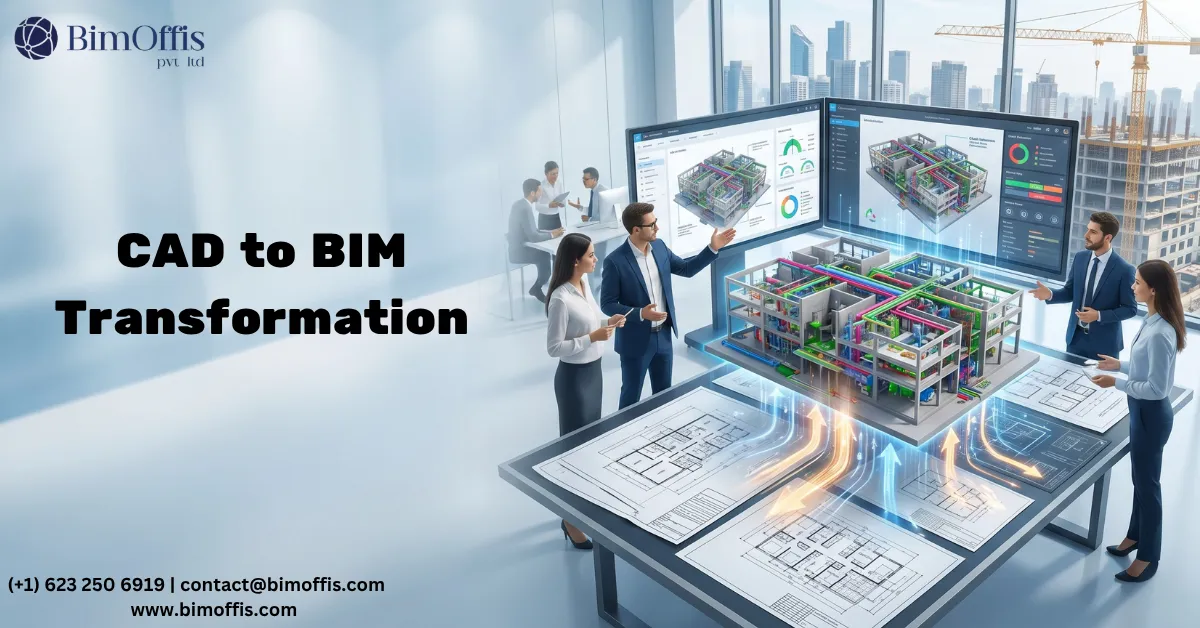
CAD to BIM services, if you’re not familiar with the term, basically means taking old flat 2D drawings and rebuilding them as proper 3D models that actually hold information, not just lines and dimensions. It sounds like a small technical upgrade. In practice it changes how people plan, build, and fix problems on a project.
The Old Way Wasn’t Really Broken, It Just Ran Out of Room
Nobody’s saying CAD was bad. It worked fine for a long time, and honestly a lot of smaller jobs still get by on it without any issue. The trouble starts once a project has more moving parts than one person can hold in their head. A hospital, a large residential tower, anything with a serious amount of MEP work packed into it.
A CAD drawing can’t tell you a duct is about to run straight through a beam. It just shows you where things are supposed to be, and trusts you to notice the conflicts yourself. On a big project with hundreds of sheets, that’s asking a lot from human eyes.
BIM handles that differently because the model actually knows what it’s looking at. A pipe is a pipe, not just a line with a label next to it. Change something and the rest of the model reacts to it. Doesn’t sound like much until you’ve watched a coordination meeting where three trades finally stop arguing because the model just shows who’s right.
Why Everyone Suddenly Cares About This
A few things pushed this along faster than expected.
Governments started asking for it. The UK’s public sector mandate is the one people mention most, but it’s not the only one anymore, and once a couple of major markets require BIM on government work, private clients tend to follow without being told to. Nobody wants to be the outdated firm in the room.
Teams are also just spread out more than they used to be. Architect in one city, structural engineer somewhere else, contractor on site in a third location entirely. Sending PDFs back and forth stopped being practical a while ago. A shared model at least gives everyone the same thing to look at, even if they still argue about it.
And rework. God, the rework. Ask anyone who’s managed a site for more than a few years and they’ll have a story about a clash discovered too late, after concrete was already poured. Catch that same issue inside a model during design and it costs you an afternoon instead of a month.
There’s also a huge chunk of this work happening on buildings that already exist, not new ones. Old schools, hospitals, factories built decades ago where the original drawings are either missing or don’t match what’s actually standing anymore. If you’re planning a renovation, you need something accurate to work from, and that usually means converting whatever CAD or scan data exists into a real BIM model first.
What This Work Actually Looks Like
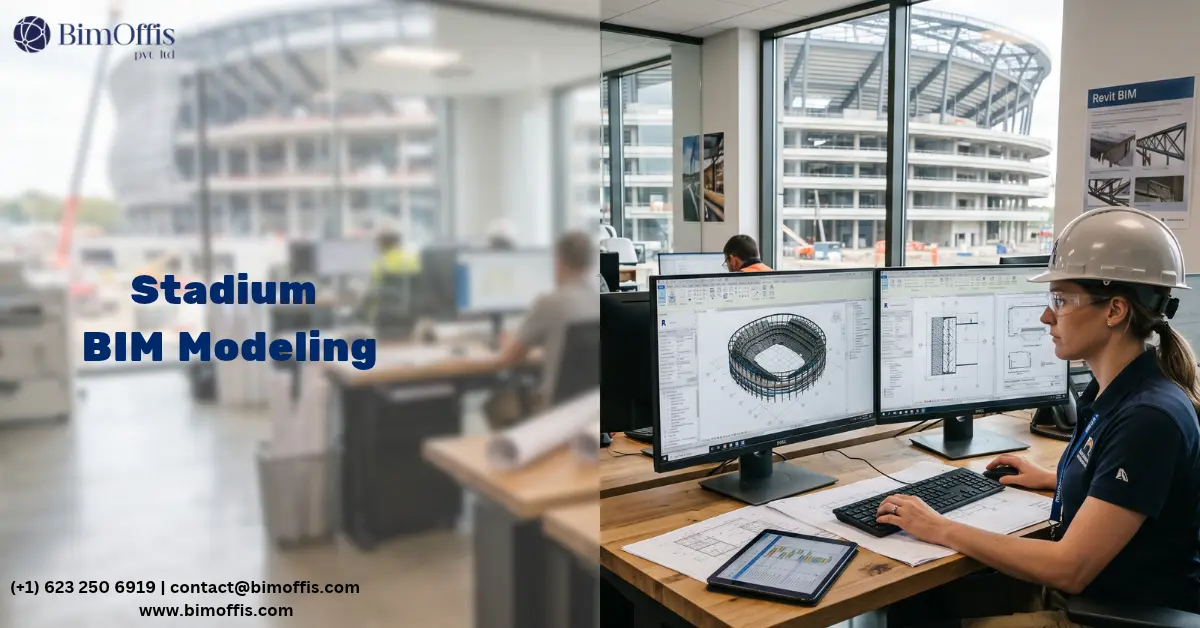
Most projects start with whatever the client already has lying around, old floor plans, sections, maybe elevations that haven’t been touched since the building went up. A modeler takes that and rebuilds it in something like Revit, this time with actual geometry and data attached instead of flat lines. How much detail goes into it depends entirely on what it’s for. A model meant to catch clashes doesn’t need to be as detailed as one meant to guide fabrication on site.
A lot of firms outsource this rather than build a BIM team internally, and honestly that makes sense more often than not. Training staff, buying software licenses, working out new processes from scratch, none of that is quick or cheap. Bringing in people who already do this daily usually gets the job done faster, and often for less money in the first year or two.
Where It’s All Going
BIM doesn’t exist in a vacuum. It’s part of a bigger shift happening across construction, alongside drone surveys, prefabrication, scheduling software that leans on AI now. Most of that other stuff needs a solid digital model underneath it to actually work, so BIM keeps ending up in the middle of the conversation whether people planned it that way or not.
Projects aren’t getting simpler. Clients aren’t getting more patient about delays or budget overruns either. Given that, it’s hard to picture demand for CAD to BIM services slowing down anytime soon. The firms making the switch now aren’t doing anything dramatic, they’re just quietly avoiding mistakes that used to be treated as normal.
If your team’s still running everything off flat CAD files, it might be worth looking into what a converted model would actually catch on your next project. It’s the kind of change that feels unnecessary right up until it saves you from something expensive.
Upgrade your projects with accurate CAD to BIM Services and improve construction efficiency.
Frequently Asked Questions from Clients
What are CAD to BIM Services?
CAD to BIM Services convert 2D CAD drawings into intelligent 3D BIM models.
Why are CAD to BIM Services becoming popular?
They improve project accuracy, collaboration, and construction efficiency.
Which industries use CAD to BIM Services?
Architecture, engineering, construction, infrastructure, and real estate industries.
What software is used for CAD to BIM Conversion?
Autodesk Revit is commonly used for creating BIM models from CAD files.
How do CAD to BIM Services reduce project errors?
They enable better coordination and clash detection before construction.
Who benefits from CAD to BIM Services?
Architects, engineers, contractors, developers, and facility managers.