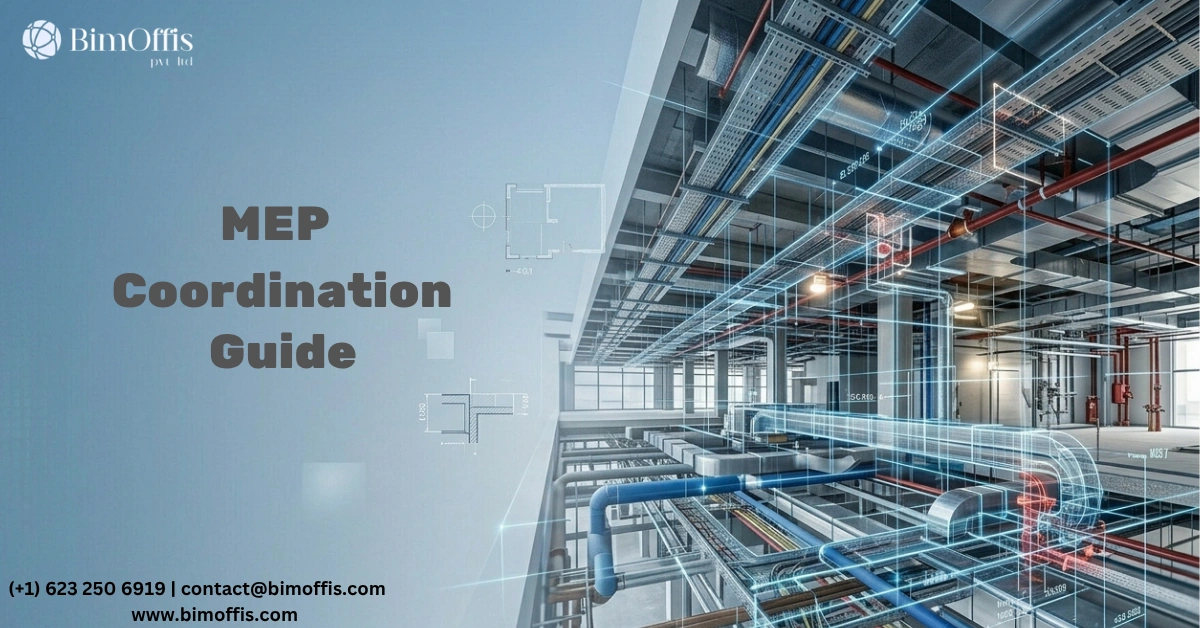
Building construction is not just about bricks and concrete. Inside every building there are hundreds of systems running through walls, floors and ceilings. Pipes carrying water. Ducts carrying air. Cables delivering power. All of these need to fit together perfectly. When they don’t, projects get delayed, costs go up, and everyone gets frustrated.
That is what MEP coordination in construction is all about. Getting all these systems planned and installed without conflict.
If you are new to this topic, don’t worry. I will explain everything simply and clearly.
What Does MEP Stand For?
MEP means Mechanical, Electrical and Plumbing.
Mechanical is your HVAC system. Heating, cooling and ventilation. The ducts you see in office ceilings. The air conditioning units on rooftops.
Electrical is everything powered by electricity. Lights, switchboards, fire alarms, data cables, power outlets.
Plumbing is water supply, drainage, gas lines and sanitation.
Every single building needs all three. And all three need space to run their systems through the same walls and ceilings. That limited space is where coordination problems begin.
So What Does Coordination Actually Mean Here
MEP coordination in construction simply means planning all three systems together so they don’t get in each other’s way.
Sounds obvious right. But in practice it is harder than it sounds.
The mechanical engineer designs the duct system. The electrical engineer designs the cable routes. The plumbing engineer designs the pipe layouts. Each of them is focused on their own system. They are not always looking at what the other two are doing at the same time.
When you bring all three designs together on site without checking for conflicts first, you get problems. A duct running straight into a beam. A pipe going exactly where an electrical tray was planned. Two systems fighting for the same 300mm of ceiling space.
MEP coordination in construction is the process that catches these problems before they reach the site.
A Story That Explains Why This Matters
A friend of mine works as a site engineer on commercial projects. He told me about a job where the MEP coordination was rushed because the project was already behind schedule.
Nobody had time to properly check how the systems fitted together. They just issued drawings and told everyone to get on with it.
Three weeks into installation the plumbing contractor hit a problem. His main soil stack needed to drop vertically through a section of ceiling that the mechanical contractor had already filled with ductwork. There was simply no space.
Ductwork had to come down. The route had to be redesigned. Materials had to be reordered. The project lost another two weeks on top of the delay it was already carrying.
My friend said something I never forgot. He said the coordination meeting they skipped would have taken half a day. The rework took two weeks. That is the cost of poor MEP coordination in construction.
Who Does the Coordination Work
This is something that confuses a lot of people starting out. So let me break it down simply.
The MEP engineer designs the systems. They are the technical brain behind where everything goes and how it works.
The MEP contractor installs everything on site. They are the ones who suffer most when coordination has not been done properly because they are the ones stopping work and pulling things apart.
The BIM coordinator or MEP coordinator brings all the designs together, finds where things clash and works with everyone to sort it out before construction starts.
The main contractor keeps the whole process moving and makes sure coordination actually happens on schedule.
When these people talk to each other regularly and share information openly the whole process works well. When they work in separate bubbles and only discover problems on site things go wrong fast.
How the Coordination Process Actually Works
Let me walk you through it simply.
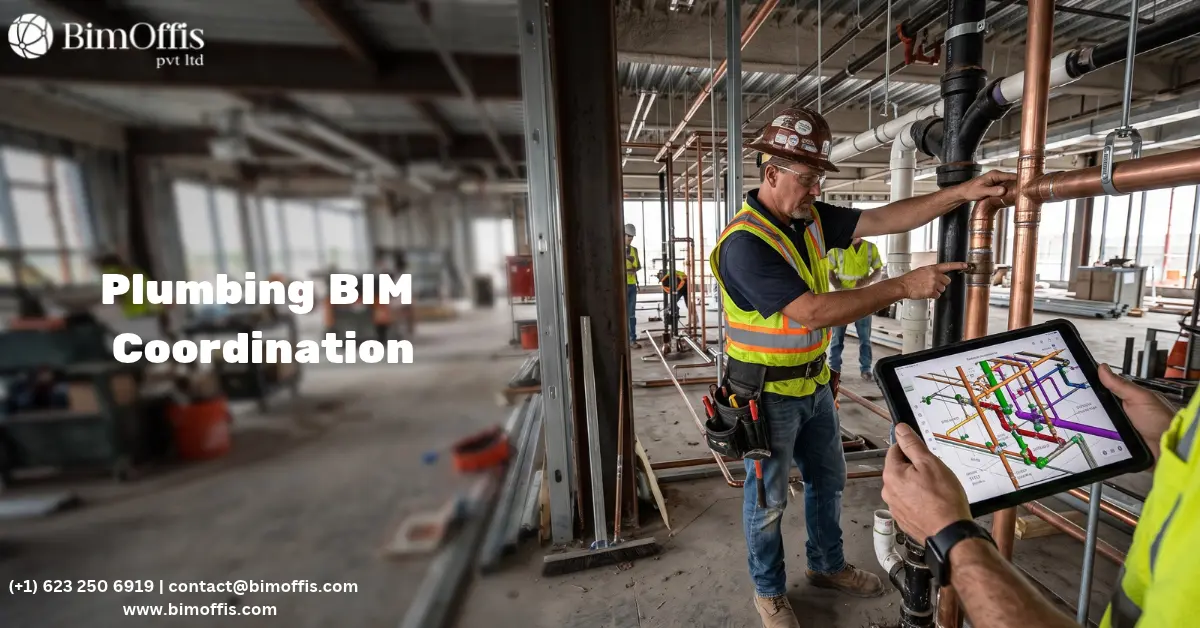
Each discipline produces their own 3D model or detailed drawings. Mechanical shows all the ducts. Electrical shows all the cable trays and conduits. Plumbing shows all the pipes.
These separate models get combined into one file. When you overlay everything together you can see immediately where systems are trying to occupy the same space.
Software then runs what is called clash detection. It finds every single point where elements from different systems conflict with each other and produces a report.
The coordination team goes through that report, figures out how to resolve each conflict and updates the drawings. Some clashes are simple to fix. Others need a proper conversation between the engineer and the contractor to find a practical solution.
Once everything is sorted the final coordinated drawings go out to site. That is what the contractors actually build from.
The Types of Clashes You Will Come Across
Hard clashes are the obvious ones. Two elements physically in the same spot. A duct going through a concrete beam. These always need to be fixed before work starts.
Soft clashes are subtler. Elements that are not overlapping but are too close together. Maybe there is not enough clearance around a pipe for a maintenance engineer to ever reach it once the ceiling is closed. These get ignored sometimes and cause real problems years later when something needs servicing.
Workflow clashes are about sequence. Even if two systems do not physically conflict one might need to be installed before the other can go in. Getting this sequence wrong creates delays even when the physical coordination is perfect.
Experienced people doing MEP coordination in construction pay attention to all three. Not just the ones the software flags automatically.
What Goes Wrong When Coordination Is Skipped
I have seen all of these on real projects.
Ducts getting cut on site because a pipe got there first. That cut duct now has reduced airflow for the entire life of the building. The HVAC system never performs quite the way it should.
Electrical conduits bending around obstacles at strange angles because nobody checked clearances beforehand. The installation looks rushed and accessing those conduits later is a nightmare.
Finished ceiling heights coming in 150mm lower than the architect designed because all the MEP systems needed more space than anyone planned for. The client notices. The architect is embarrassed. Nobody is happy.
These are not freak accidents. They are predictable consequences of skipping or rushing MEP coordination in construction.
How BIM Changed Everything
Not long ago coordination was done by printing drawings at the same scale and laying them on top of each other on a light table. Experienced coordinators could spot clashes but plenty got missed because 2D drawings simply cannot show you everything that happens in three dimensional space.
BIM changed that completely. Now every system gets modeled in 3D. You can look at any section of the building from any angle. You can zoom into that tight ceiling void above the corridor and see exactly what is happening with every duct, pipe and cable tray in there.
Clash detection software then finds every conflict automatically and logs it in a report.
What used to take weeks of careful manual checking now takes hours. And the accuracy is far better.
But I want to say this clearly because I think it gets misunderstood sometimes. The software finds the clashes. It does not solve them. That still takes people with construction knowledge and experience who understand what each clash means in practice and how to resolve it sensibly.
The technology made MEP coordination in construction faster and more thorough. Good people still make it actually work.
Honest Advice for Anyone New to This
Start early. Coordination done in the design stage costs almost nothing. Coordination done after installation has started costs a lot.
Get everyone in the same room regularly. Problems that take three days to resolve over email get sorted in twenty minutes when the right people sit down together.
Do not ignore soft clashes. I know they feel less urgent than hard clashes. But a pipe with no maintenance access will cause problems eventually and whoever signed off on that drawing will have to answer for it.
Write everything down. Every clash resolution, every design decision, every change. That record protects you if disputes come up later and helps whoever manages the building understand what is inside their walls.
Why This Skill Is Worth Learning Properly
MEP coordination in construction sits right at the point where design meets buildability. People who understand it well who can look at a combined model, understand what the clashes actually mean on site and communicate clearly with engineers and contractors to resolve them are genuinely valuable on any complex project.
It is not glamorous work. Nobody gives speeches about the coordination team at project handover.
But when coordination is done well, projects run smoother, contractors work more efficiently, buildings perform better and clients get what they paid for. That matters far more than the recognition.
And when it is done badly, everyone finds out very quickly. Ready to find out what your project will cost? Find out here.
Frequently Asked Questions from Clients
What is MEP coordination?
Planning mechanical, electrical and plumbing systems together so nothing conflicts inside the building before construction starts.
Why does it matter?
A clash fixed on drawing takes one hour. The same clash fixed on site takes days and costs a lot more money.
Who handles MEP coordination?
A BIM coordinator manages it. But engineers, contractors and the main contractor all need to be involved.
What is clash detection?
Software that finds every point where two systems conflict inside the combined 3D model before anyone starts building.
Hard clash vs soft clash?
Hard clash of two elements in the same space. Soft clash between two elements too close with no room for maintenance access.
When should coordination start?
Early in design stage. The later you start the more expensive every problem gets.