Honestly, the first thing most people notice when they start researching BIM outsourcing services in the USA is how all over the place the pricing looks. You reach out to three different firms, and you get three completely different numbers back.
One feels too cheap to be real. One feels like they added an extra zero by mistake. And the third one just says “let’s schedule a call” without giving you anything useful at all.
That frustration is valid. The reason it happens is not that BIM firms are being deliberately vague. It is that “BIM outsourcing” covers an enormous range of work, from a basic architectural shell model to a fully coordinated, multi-discipline production set with clash detection and construction-ready documentation.
Those two things should not cost the same. They do not. But when everyone uses the same terminology, it gets confusing fast.
So let us actually talk numbers.
Why American Firms Are Outsourcing BIM Work Right Now
The skilled labor shortage in the US AEC industry is real and it has been building for years. Finding a Revit technician who can start right away is hard right now.
They must know US construction standards and deliver consistent, high-quality work. And even when you find one, bringing them on full time means salary, benefits, software licenses, and management overhead. For smaller firms especially, that math stops working pretty quickly.
Outsourcing to teams in India or Eastern Europe solves the problem without the overhead. You get access to experienced modelers. They have worked on US-standard projects for years. Their hourly rates are often a fraction of a local hire’s cost.
Many mid-size American architecture and engineering firms have been quietly doing this for almost a decade. It stopped being unusual a long time ago.
The Real Hourly Rate Difference
What onshore BIM talent costs in the US
A BIM technician billing through a US firm typically costs somewhere between $65 and $120 an hour. In major metro areas like New York, Chicago, or Los Angeles, that number tends to sit toward the top of the range. On a project that needs 200 hours of modeling work, you will spend $13,000 to $24,000. This is before you add project management, QA review, or software costs.
What offshore BIM talent actually charges
The same 200 hours from an outsourced team in India runs $20 to $50 per hour. That puts your total between $4,000 and $10,000 for identical output.
Teams based in Eastern Europe, Romania or Poland for example, charge roughly $35 to $65 per hour. A bit more than India, but their time zones match US business hours better. Some project managers think that is worth the difference.
What Projects Actually Cost When Outsourced
Small residential projects
For a small residential project, a custom home or a small multi-family building, an outsourced architectural BIM model generally comes in between $600 and $2,500. That gets you a solid Revit model at LOD 200 to 300, which covers most permit and documentation needs at that scale.
Small commercial projects
Small commercial work, like a retail fit-out, clinic, or small office building, often costs $3,500 to $12,000.
This includes architectural and basic MEP modeling. The moment you add MEP, the scope grows. Now you have two models that must work together. Someone must ensure they actually do.
Mid-size commercial projects
Mid-size commercial projects, like offices, schools, and healthcare facilities, are often 50,000 to 200,000 square feet.
A properly federated LOD 350 model for all three disciplines usually costs $12,000 to $45,000. At that level you are getting clash detection reports, coordination rounds, and a model that a contractor can actually build from.
Large commercial and institutional projects
Large commercial and institutional work starts around $45,000 and climbs well past $150,000 for complex programs. Hospitals, large mixed-use towers, corporate campuses. The cost at that scale reflects hundreds of modeling hours, multiple coordination cycles, and teams of people working simultaneously across disciplines.
MEP-only and Scan-to-BIM
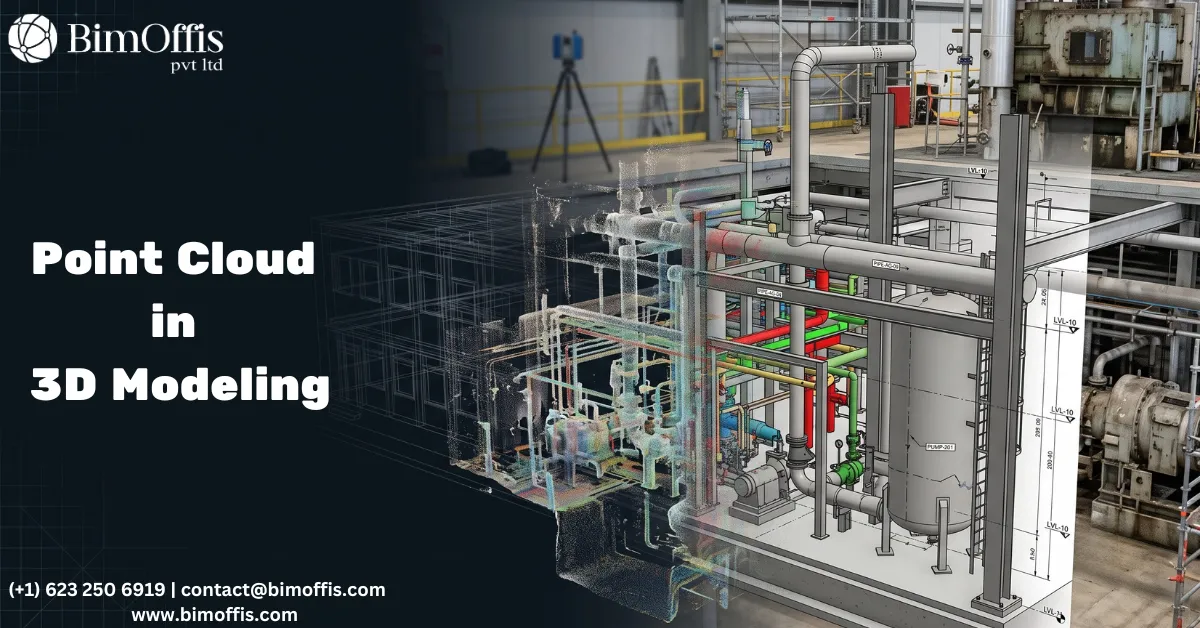
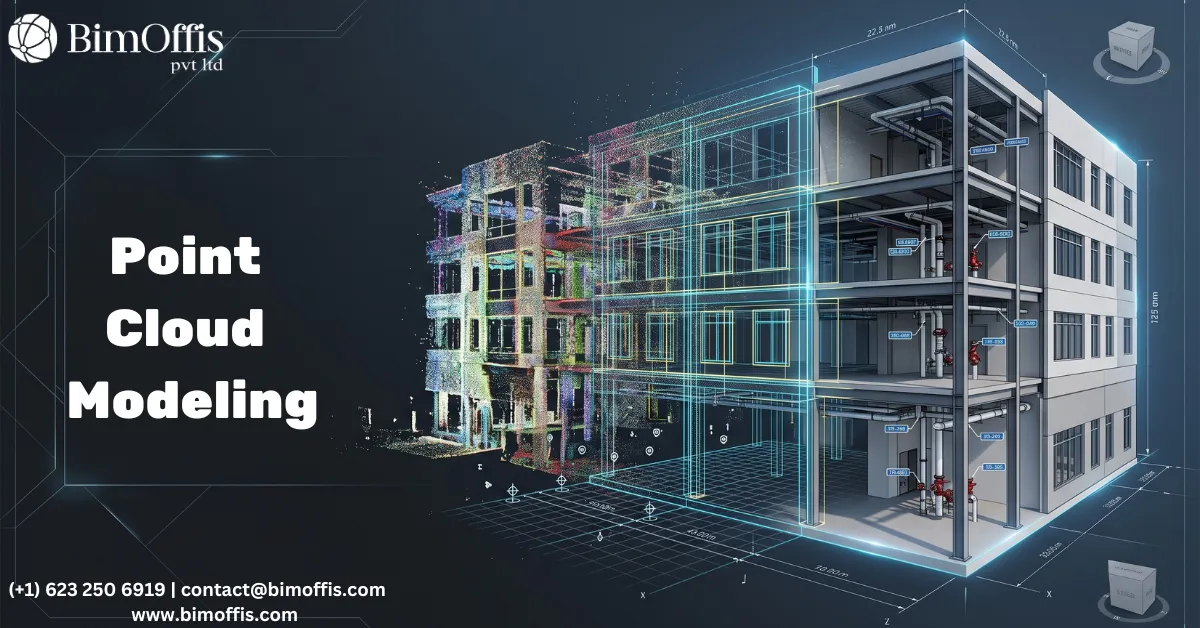
If you only need standalone MEP modeling, without architectural or structural, the range is roughly $4,000 to $30,000. That difference exists because a basic rooftop HVAC layout for a warehouse takes far less effort. A full plumbing, electrical, and mechanical coordination package for a medical facility takes much more. Scan-to-BIM projects model an existing building using point cloud data.
They typically cost $2,500 to $20,000.
The price depends on how much of the building is captured.
It also depends on the required accuracy level.
What Actually Moves the Price
Level of development
Level of development is the single biggest factor. Going from a LOD 200 concept model to LOD 350 construction documents for a commercial building can increase the cost a lot.
The cost can double or even triple. Each step up in LOD means more modeled elements, more data on those elements, more review time, and more coordination. The jump is not arbitrary, it is just hours.
Number of disciplines
How many disciplines you need covered matters just as much. Architectural alone is one thing.
Architectural plus structural is meaningfully more work. Add MEP on top of that and now you have three separate models that have to be combined, checked against each other, and corrected when they conflict. That coordination process is where a lot of the cost lives on larger projects.
Design complexity
Complexity of the design plays a bigger role than most people expect. Square footage is a factor but it is not the main one. A 25,000 square foot building with unusual geometry takes longer to model.
It may use mixed structural systems and detailed facade work.
A 70,000 square foot building may be faster to model.
This is true when it uses a repeated floor plate. Complexity is hours, and hours are cost.
Rush timelines
Rush timelines add cost. Always. If a project that should take six weeks needs to be done in two, that requires pulling resources from other work, running parallel review cycles, and putting more senior people on production tasks they would not normally handle. Any firm that does not charge for this is cutting corners somewhere else.
Picking the Right Outsourcing Partner
The cheapest quote is not always the one to take. A firm that comes in 60 percent below everyone else is either misreading your scope or planning to deliver something that will need to be redone. When you get quotes back at very different numbers, ask each one the same set of questions. What LOD are you modeling to? How many revision rounds are included? What happens when the design changes mid-project? What does your QA process look like?
The answers tell you a lot more than the price does.
The Bottom Line on BIM Outsourcing Services Cost in USA
BIM outsourcing services in the USA market have matured to the point where quality is not really the question anymore. The talent exists offshore. The workflows are established. The firms that have been doing this for US clients for ten-plus years understand American construction documentation standards, IBC requirements, and how US project teams like to work.
The question is whether you choose your partner carefully, write a clear scope, and treat the relationship like a collaboration rather than a transaction. Do that, and the cost savings are real without any sacrifice in what you get back.
Ready to find out what your project will cost? Find out here.
Frequently Asked Questions from Clients
How much does BIM outsourcing cost in the USA?
Depends on project size. Small residential starts around $600. Large commercial projects can go above $150,000. It varies based on scope and complexity.
Why is pricing so different between firms?
Because BIM outsourcing covers very different types of work. A basic model and a fully coordinated multi-discipline model are not the same job. That is why quotes look so different.
What do offshore BIM teams charge per hour?
Indian firms charge $20 to $50 per hour. Eastern European firms charge $35 to $65. US based BIM talent costs $65 to $120 per hour.
What affects the cost the most?
Level of detail, number of disciplines, design complexity and timeline. These four things move the price more than anything else.
Does adding MEP increase the cost?
Yes. MEP adds a separate model that needs to coordinate with the architecture and structure. That coordination work is where a lot of the cost comes from.
Should I go with the cheapest quote?
Not always. A quote 60 percent below others usually means something is missing from scope or quality will suffer. Ask questions before deciding.