The construction industry forms the backbone of all developing and developed economies. From commercial parks to high-rise apartments, it shapes how people live and work.
However, the industry is also known for inefficiencies, delays, and rising costs. This is where BIM in construction cost reduction plays an important role by improving planning, reducing waste, and increasing overall project efficiency.
BIM (Building Information Modelling) is a solution that has been designed to help organizations get over this through increased efficiency and transparency.
In addition, the integration of features such as AI and Digital Twins gives organizations the power to leverage these new-age technologies to take their cost savings even higher, helping improve their profit margins.
In this blog, we’ll explore the areas of a project that drive up the cost of construction and how the BIM process can drive down those costs.
BIM in Construction Cost Reduction: Major Cost Centers
A construction project consists of an extremely large number of moving parts.
Whether it’s sourcing materials from multiple vendors, ensuring that the labour force is utilised to its best, having all the heavy machinery available whenever it’s needed, or maintaining a constant flow of funds for operating expenses, keeping all these steps ticking perfectly is crucial to ensure that the project gets delivered on time.
As a result, all construction projects end up with some common areas that end up inflating the construction costs of the BIM project.
Materials
One of the most crucial aspects of any project, materials contribute the most in driving up the cost of projects. While using cheaper or fewer materials is never a good idea to save costs, one great way of achieving the same quality with reduced costs is reducing wastage.
When ordering materials, accounting for potential breakages is a great idea to ensure the flow of work is not hindered by unforeseen breakages.
However, since organizations are unable to calculate the exact amount of materials required, they often go above and beyond, and end up ordering a lot more than would be needed, leading to higher costs and wastage.
Labour
The component that makes any project possible, labour costs are essential to any project, and a more competent labor workforce automatically demands higher pay, leading to higher costs for higher expected quality. However, monitoring labor efficiency is a challenge, which if left unchecked, could end up inflating costs without a proportional increase in quality or speed of work.
Processes
As modern construction projects keep increasing in complexity, so do the number of stakeholders involved with these projects. As the number of stakeholders increases, so do the processes needed to keep all parties coordinated and working in sync.
Since most construction organizations have not switched to using modern solutions to streamline these processes, they often end up causing significant delays in construction progress, leading to an increase in costs.
Reworking
In construction projects, the most common cause that leads to the requirement for rework is errors. Depending on the work, rework can be something as simple as replacing a few parts in case of replacement of fittings, and as complex as having to completely undo the work done previously and then re-doing all of it again, as happens during retiling.
Reducing costs with the BIM approach
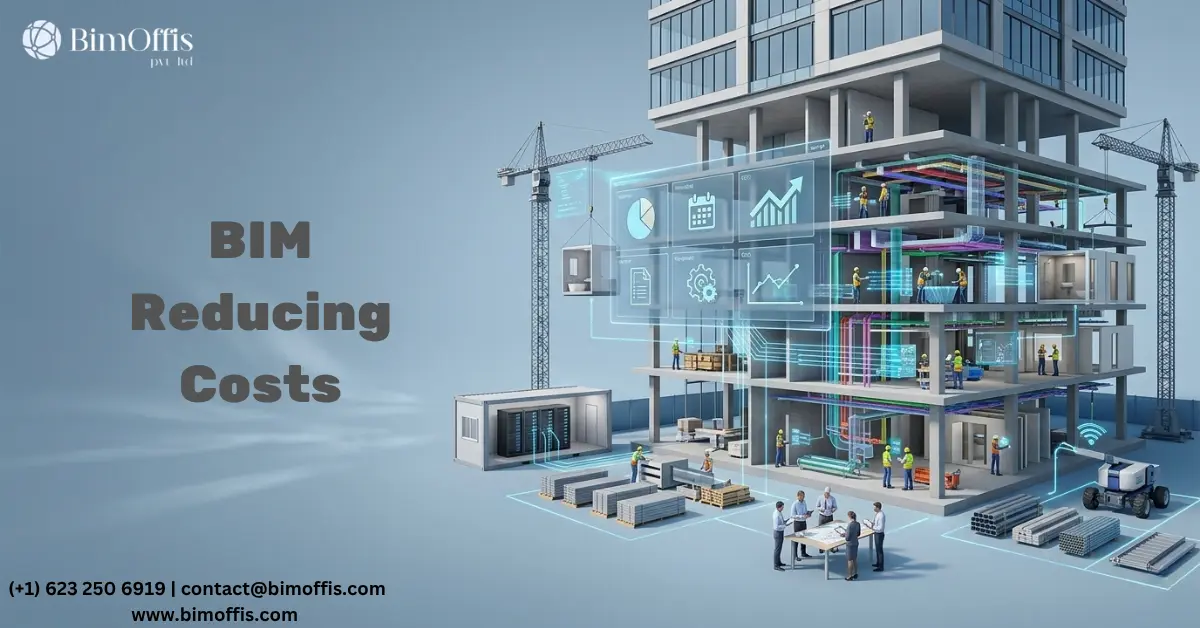
Building Information Modelling is a tool that helps organizations conceptualize, design, and construct environments. Using BIM, organizations can foresee potential issues and plan ahead of time.
Material Planning
BIM gives organizations and procurement managers the ability to visualize their projects right down to the most minuscule detail. This allows organizations to calculate the exact amount of materials and order accordingly, hence minimizing waste and reducing costs.
Labour Productivity
Keeping track of a large workforce can be extremely complicated, with managers having to take reports from multiple supervisors to stay on top of keeping everyone productive.
BIM provides a singular platform from which to monitor the productivity of your entire workforce, letting you make adjustments to improve efficiency.
Efficient Processes
Whether it’s keeping everyone on the same page or getting approval from the respective higher-ups, BIM helps you streamline all communication and internal processes, helping reduce many delays and reduce costs significantly.
Reduces Reworking
With the ability to visualize your projects in 3D, and the pattern recognition capabilities of AI, construction organizations can minimize errors during the construction process, eliminating the need for rework and reducing unnecessary costs.
Final Thoughts
BIM solutions for our clients, enabling them to experience higher levels of efficiency, productivity, and transparency, with lower costs. We work alongside the project teams of our clients, covering all aspects of digital delivery, right from design review to detailed BIM management.
Frequently Asked Questions from Clients
What is BIM in construction cost reduction?
It means using BIM to plan and manage projects better so costs can be controlled and reduced.
How does BIM help reduce construction costs?
BIM helps by improving planning, reducing errors, and avoiding unnecessary rework.
Can BIM reduce material waste?
Yes, BIM helps calculate the exact amount of materials needed, which reduces waste.
How does BIM reduce rework in construction?
It finds design issues early, so problems can be fixed before construction starts.
Is BIM useful for small projects?
Yes, even small projects can benefit from better planning and cost control.
Does BIM help in project planning?
Yes, it gives a clear view of the project, making planning easier and more accurate.