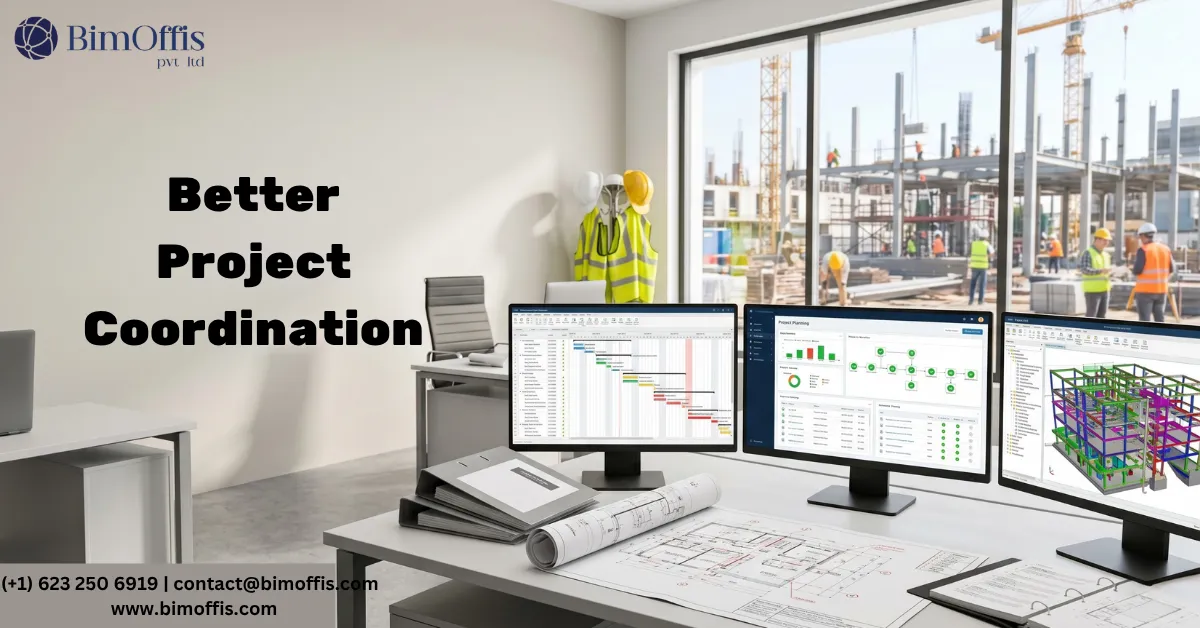
Construction document sets are the most direct influence on whether a construction project runs to programme or not. They outweigh contractor experience. They outweigh project management sophistication. They outweigh site conditions, weather, or any of the other variables that project teams point to when explaining why a project ran late.
Let me make that claim concrete.
A project runs late for one of a limited number of reasons. Work has to be redone because someone did it incorrectly. Decisions take too long because the team lacks the information needed to make them. Procurement stalls because the specification isn’t clear enough for the supplier to quote against. Coordination failures stop one trade from proceeding because another trade’s work is in the way. Programme slips because nobody knows about a problem until it’s already affecting the critical path.
Every single one of those reasons traces back, directly or indirectly, to the quality of the construction document set. Documents that are complete, coordinated, and clear prevent all of these problems. Documents that are incomplete, uncoordinated, or ambiguous create them.
How Incomplete Documents Create Delays
The RFI Problem
An RFI, a request for information, is what happens when the construction team needs information that the construction document set didn’t provide. The contractor submits a formal question. The design team reviews it, considers the response, and issues an answer. The process takes time. On a well-run project with a responsive design team, it might take a few days. On a project where the design team is busy, it might take weeks.
In the meantime, the work that depends on the information sits. The trade waiting for the answer cannot proceed. If that work sits on the critical path, the delay flows through to the project completion date.
Furthermore, RFIs are not isolated events. On a project with an incomplete construction document set, RFIs come in continuously throughout the construction phase. Each one creates a local delay. The cumulative effect of dozens of RFIs across a complex project adds up to a significant programme impact that nobody budgeted for and nobody can easily recover.
Most RFIs trace back to a construction document set that didn’t answer the questions the construction team needed answered. Addressing those gaps during document preparation eliminates the RFIs before they arise.
The Ambiguity Problem
Ambiguous documents create a different category of delay. When a document can be read two ways, the contractor reads it the way that suits them best. The design team disputes the interpretation. The dispute needs resolution. The resolution takes time. The work that depended on it waits.
Moreover, ambiguity disputes often escalate. What starts as a difference of interpretation about a single drawing detail can become a variation claim, a delay claim, and ultimately a programme dispute that consumes management time and legal attention on both sides. None of that featured in the original programme. All of it flows from a document that wasn’t precise enough to prevent the ambiguous interpretation.
How Uncoordinated Documents Create Delays
The Coordination Failure Problem
Coordination failures between disciplines in the construction document set are the single largest source of avoidable delay on complex construction projects. When the structural drawings show a beam in a position that conflicts with the MEP drawings, someone on site discovers the conflict during installation. Work stops. The affected trades stand by while the team assesses the conflict and designs a resolution. Approval follows. Work resumes.
That sequence takes time the programme never accounted for. Furthermore, it creates knock-on effects. The trade that was waiting cannot proceed in the affected zone. Other trades that were due to follow that trade cannot proceed either. The delay amplifies as it moves through the installation sequence.
On a large project with dense MEP systems and complex structural geometry, coordination failures aren’t rare events. They’re predictable consequences of a coordination process that didn’t catch the conflicts during document preparation. Each coordination failure that surfaces during construction represents a delay that a better-coordinated construction document set would have prevented.
The Specification Conflict Problem
When the drawings show one thing and the specifications say another, both parties have contract documents supporting their position. The conflict needs formal resolution through a design instruction or a variation. That process takes time, and the work affected by the conflict cannot proceed until the team confirms the resolution.
Specification conflicts are entirely avoidable. They arise from a document preparation process where nobody checked the drawings and specifications against each other before the documents went out. A straightforward review process during document preparation catches these conflicts, so resolving them costs editing time rather than contract time.
How Good Construction Document Sets Prevent Delays
Completeness That Answers Questions Before They Get Asked
A complete construction document set covers every condition that will occur in the building. Not just the standard conditions, but the non-standard ones, the unusual junctions, the conditions where the design carries specific requirements that a contractor reading the drawings cold wouldn’t otherwise know about.
When the documents cover these conditions completely, the contractor can proceed without waiting for information. The RFI that would otherwise have gone out never gets written. The work that would have waited for an answer proceeds on the original programme. The cumulative time saving across all of the RFIs that never happen is significant.
Coordination That Catches Conflicts During Design
A well-coordinated construction document set is the product of a design process where all disciplines coordinate their work against each other throughout design development, rather than assuming someone will catch conflicts later.
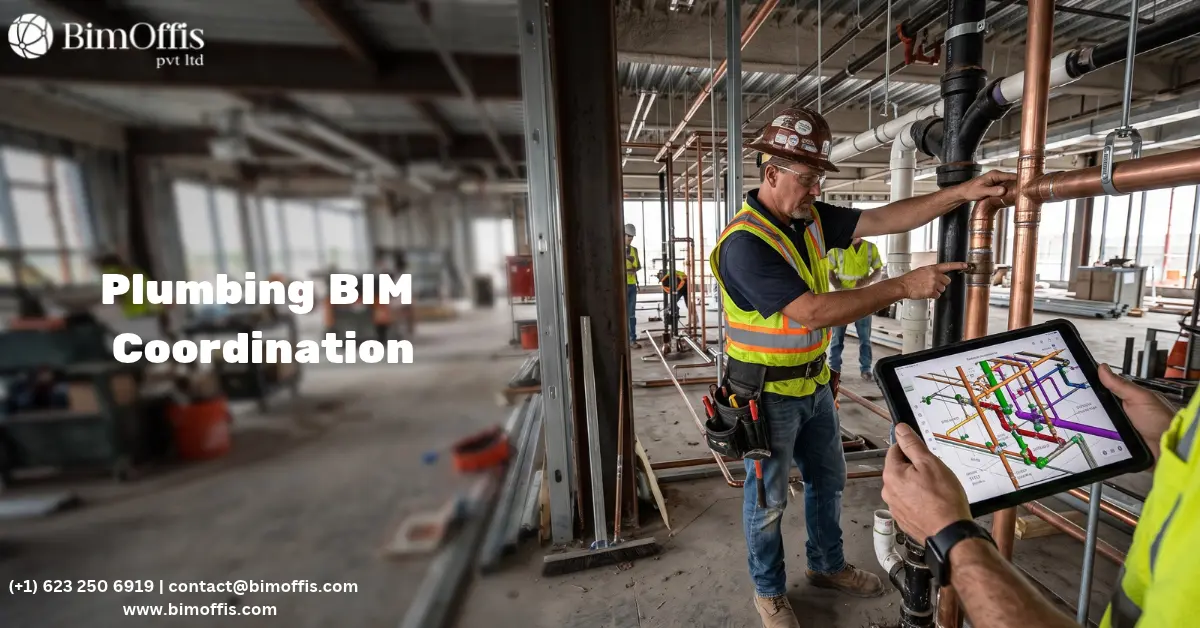
When structural and MEP teams coordinate their models throughout design development, they resolve during design the conflicts that would otherwise have surfaced during installation. Structural design development adjusts the beam position that would have blocked the duct route. Coordination redirects the conduit route that would have run through a structural element. Furthermore, the coordination that happens during design costs modeling time. The coordination that happens on site costs programme time, labour standby, and sometimes significant rework.
Moreover, a coordinated construction document set lets the contractor plan the installation sequence with confidence. When the documents are internally consistent and the team has resolved the coordination between disciplines, the contractor can sequence their works against the programme, knowing that an unresolved conflict won’t block the work they plan to do.
Clarity That Eliminates Interpretation Disputes
Clear construction document sets use precise language, unambiguous dimensions, and explicit detail drawings for every condition someone could misinterpret. They anticipate the questions the contractor might have and answer them in the documents rather than leaving them for the RFI process to resolve.
Furthermore, clear documents define the scope of work unambiguously. The contractor prices what the design actually requires. The design team approves what it actually designed. Variation claims from scope ambiguity become significantly less common, because the scope definition leaves no room for legitimate disagreement.
The Programme Impact of Document Quality
The relationship between construction document set quality and project programme is direct and measurable on any project that tracks both carefully.
Projects with complete, coordinated, and clear construction document sets consistently generate fewer RFIs. They experience fewer coordination failures during installation. They produce fewer variation claims from scope ambiguity and specification conflicts. Consequently, they run closer to their original programmes than projects with incomplete or poorly coordinated documents.
The difference isn’t marginal. On complex projects, document quality can shift the programme impact by weeks rather than days. The management time, the contractor standing time, and the acceleration costs needed to recover programme on a project with poor documents add up fast. Moreover, a project that runs significantly late damages the design team’s and contractor’s reputation, a real cost that never appears in the project accounts but affects future work.
The Bottom Line
Construction document sets help avoid project delays by eliminating the information gaps, coordination failures, and ambiguities that cause most construction delays in the first place.
Complete documents eliminate the RFIs that stop work waiting for answers. Coordinated documents eliminate the site conflicts that stop trades waiting for redesigns. Clear documents eliminate the interpretation disputes that stop work waiting for formal resolutions.
Getting the construction document set right is therefore not just a quality aspiration. It’s the most direct investment a project team can make in delivering the project on time.
Keep your project on schedule by partnering with our BIM documentation team for accurate construction document sets.
Frequently Asked Questions from Clients
What are Construction Document Sets?
They are detailed drawings and specifications used to guide construction projects.
How do Construction Document Sets prevent project delays?
They improve coordination, reduce errors, and provide clear construction instructions.
What is included in a Construction Document Set?
Architectural, structural, MEP, site, and detail drawings with specifications.
Who uses Construction Document Sets?
Architects, engineers, contractors, subcontractors, and project managers.
How does BIM improve Construction Document Sets?
BIM creates coordinated and accurate documentation, reducing conflicts during construction.
Which projects need Construction Document Sets?
Residential, commercial, industrial, healthcare, and infrastructure projects.