Millwork shop drawings are one of those things that interior designers and contractors both rely on heavily but rarely discuss in enough detail when a project starts. And that gap in the conversation is where a significant proportion of millwork problems originate.
Let me describe something that happens on interior fit-out projects more often than anyone likes to admit.
The interior designer has a clear vision of the custom cabinetry in the executive suite. The proportions are right. The details are refined. The specification is specific about materials, finishes, and hardware. The designer approves the concept and the contractor engages a millwork fabricator.
Several weeks later, the fabricated pieces arrive on site. Something is not right. The reveal dimension on the cabinet doors is slightly different from the design intent. The hardware positioning does not quite work with the adjacent element. The corner detail that looked clear on the design drawing has been interpreted in a way that changes the visual character of the piece.
None of these problems are insurmountable. But fixing them takes time, costs money, and creates friction in a project relationship that should be collaborative rather than adversarial.
Millwork shop drawings are what prevent that situation.
What Millwork Shop Drawings Actually Are
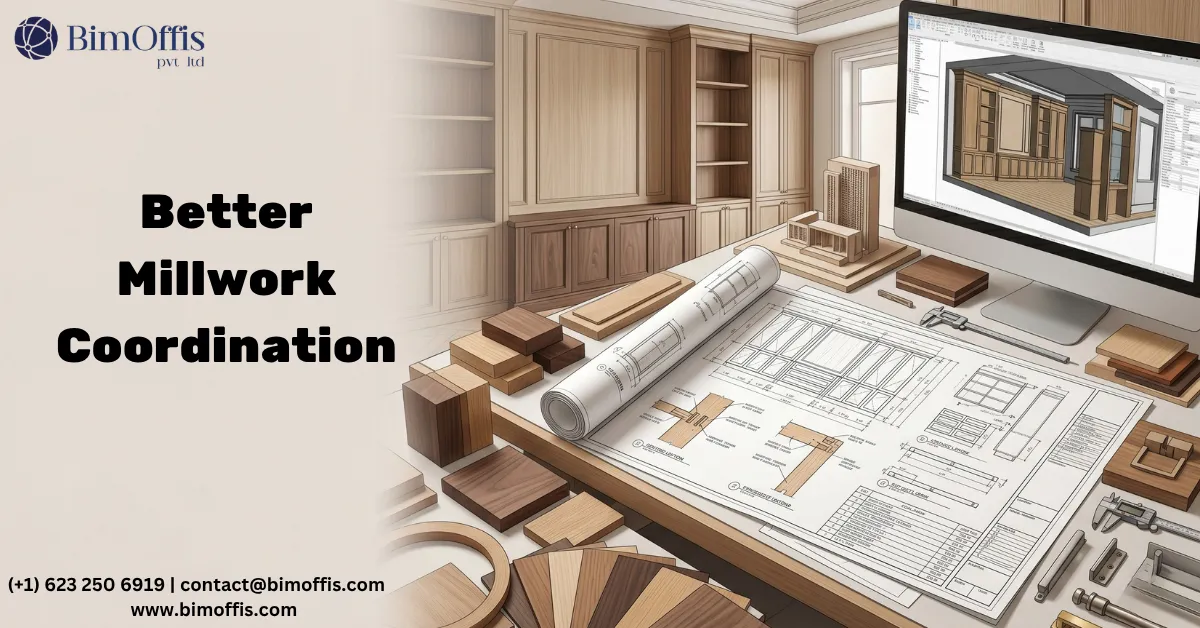
Millwork shop drawings are technical documents the millwork fabricator produces to show exactly how each piece of custom cabinetry, joinery, or built-in furniture will be manufactured and installed. They translate the interior designer’s design intent into the specific fabrication and installation instructions the workshop will work from.
These documents differ fundamentally from the designer’s concept drawings or specification sheets. A shop drawing is not simply a more detailed version of the design drawing either. Rather, it represents the fabricator’s interpretation of the design, worked out in the level of detail needed to actually make the piece and install it correctly.
A complete set of millwork shop drawings typically includes:
- Plan views showing the overall layout and dimensions of each piece
- Elevation views showing every face of the millwork at accurate scale
- Section drawings showing internal construction details and material thicknesses
- Large-scale details showing how specific conditions, corners, reveals, and transitions work
- Hardware schedules specifying every hinge, handle, drawer runner, and fitting
- Material specifications confirming the substrate, veneer, finish, and edge treatment for every element
How Millwork Shop Drawings Help Interior Designers
They Confirm the Design Intent Gets Built
This is the most fundamental value millwork shop drawings deliver for interior designers. They create a checkpoint between the design intent and the fabrication, where the designer can confirm that what the fabricator plans to make is actually what was designed.
Without millwork shop drawings, the fabricator interprets the design drawings and produces what they think was meant. The interpretation is sometimes exactly right. On other occasions it is close but not quite right. Occasionally it differs significantly from what the designer intended.
With millwork shop drawings, the designer reviews the fabricator’s interpretation before any material goes into the cutter. The designer identifies discrepancies between the design intent and the fabricator’s planned approach and resolves them before they become physical objects that are expensive or impossible to change.
They Resolve Ambiguities That Design Drawings Leave Open
Interior design drawings communicate design intent at a level of detail appropriate for design development. They are not intended to answer every fabrication question. Consequently, they often leave decisions open that the fabricator needs to make to actually build the piece.
How does the corner junction between two cabinets work in section? What is the exact thickness of the door reveal and how does it relate to the frame? How does the toe kick detail work at a change of floor finish? How does the top of the cabinetry meet the ceiling when both are slightly out of level?
Millwork shop drawings force these questions to be answered before fabrication starts. The designer reviews the proposed solutions and either approves them or requests changes. Fabrication then starts from a resolved design rather than from drawings that leave important decisions to the fabricator’s judgment.
They Provide a Reference for Site Installation
When millwork pieces arrive on site, the installation team needs clear instructions about how each piece goes in, how it relates to adjacent elements, and what sequence of installation is required. Moreover, the team needs a reference against which to check that the fabricated pieces match what was specified.
Millwork shop drawings serve both purposes. They give the installation team the information they need to install correctly. They also give the designer and contractor a reference against which to inspect the fabricated pieces before installation confirms them in place.
How Millwork Shop Drawings Help Contractors
They Define the Scope Precisely
For contractors managing a fit-out project, one of the most persistent sources of cost and programme risk is scope ambiguity in millwork packages. When the millwork specification is not precise enough to unambiguously define what needs to be delivered, the contractor and the fabricator can find themselves in dispute about what was included in the price and what constitutes a variation.
Millwork shop drawings, reviewed and approved by the designer, define the scope with precision. The contractor confirms every dimension, pins down every material, and resolves every detail before fabrication starts. As a result, the contractor knows exactly what the fabricator is committed to delivering and the fabricator knows exactly what the contractor is committed to paying for.
Consequently, scope disputes that arise from ambiguous millwork specifications become significantly less common when approved shop drawings define the work.
They Support Programme Planning
Custom millwork has a lead time that can significantly affect a fit-out programme if the team does not plan it properly. The fabrication period starts when the fabricator has approved shop drawings to work from. Furthermore, the installation period starts when the fabricated pieces arrive on site and the site is ready to receive them.
Millwork shop drawings create the trigger point that starts the fabrication clock. When the designer approves the shop drawings, the fabricator can commit to a fabrication programme and a delivery date. The contractor can then plan the installation sequence and the preceding site works against a confirmed delivery date rather than an estimate.
On complex fit-out projects with multiple millwork packages, coordinating these lead times is a significant programme management task. Millwork shop drawings make it possible by providing the approval trigger that sets the fabrication programme in motion.
They Reduce Site Problems
Millwork that arrives on site with problems costs more to fix than problems the team catches during the shop drawing review. Moreover, millwork that cannot install as designed because site conditions do not match what the shop drawings assumed creates programme delays that ripple through the rest of the fit-out sequence.
Good millwork shop drawings anticipate site conditions by requiring the fabricator to verify critical dimensions before producing final shop drawings. Floor-to-ceiling heights, wall positions, adjacent element dimensions, and existing condition clearances all need verification. These checks catch discrepancies between the design drawings and the actual site conditions before they produce fabricated pieces that do not fit.
Additionally, when site problems do occur, approved millwork shop drawings provide a clear reference for determining whether a fabrication error, a site condition issue, or a design change caused the problem. This matters significantly for resolving who bears the cost.
The Review Process That Makes It Work
The value of millwork shop drawings depends entirely on the quality of the review process. A shop drawing that the team stamps without careful review does not deliver the coordination value that makes the exercise worthwhile.
What Good Review Looks Like
A thorough millwork shop drawing review checks every dimension against the design intent. The reviewer verifies that the hardware specification matches the design requirements. Additionally, the review confirms that the proposed construction approach achieves the visual result the design requires. It also identifies conditions where the fabricator’s approach differs from the design intent and requires either a design decision or a fabricator revision.
Furthermore, good review happens on a timeline that allows revisions before fabrication begins. A shop drawing review that takes longer than the programme allows forces the fabricator to start cutting material before approval, which defeats the purpose of having the review in the first place.
What to Flag in Review
Interior designers reviewing millwork shop drawings should specifically check:
- All dimensions against the design intent and the site conditions
- Hardware positioning against adjacent elements and the design aesthetic
- Corner details and transitions against the visual result the design requires
- Material and finish specifications against what was designed
- The construction approach the fabricator proposes against the result the design intent requires
The Bottom Line
Millwork shop drawings help interior designers and contractors by creating a structured checkpoint between design intent and physical fabrication. The shop drawing process confirms that the fabricator builds what the designer actually specified rather than their interpretation of it. Ambiguities disappear before they become expensive problems. Scope clarity protects both the contractor and the fabricator from disputes. Furthermore, the programme trigger the shop drawings provide starts fabrication on a confirmed timeline rather than an estimate.
The projects that deliver the best millwork outcomes are almost universally the ones where the shop drawing process was taken seriously. Reviews were thorough. Revisions happened before fabrication started. The fabricated pieces matched the approved drawings.
That is what millwork shop drawings make possible. And on any project where custom millwork is a significant part of the design intent, taking that process seriously is one of the better investments the project team can make.
Request a Quote for Custom Millwork Solutions.
Frequently Asked Questions from Clients
What are Millwork Shop Drawings?
They are detailed drawings used to fabricate and install custom woodwork accurately.
Why are Millwork Shop Drawings important?
They reduce errors, improve coordination, and ensure precise fabrication.
Who uses Millwork Shop Drawings?
Interior designers, contractors, architects, and millwork manufacturers.
What information is included in Millwork Shop Drawings?
Dimensions, materials, finishes, hardware, and installation details.
Can Millwork Shop Drawings reduce project delays?
Yes, they help prevent fabrication and installation issues before construction.
Which projects require Millwork Shop Drawings?
Residential, commercial, hospitality, retail, and office interior projects.