Talk to any builder with ten or fifteen years of experience, and you will hear the same thing. Clients don’t trust paper anymore. A blueprint doesn’t convince a buyer, and a brochure doesn’t either. Even a nicely printed floor plan struggles to do the job. Because of this, people want to see the place before it exists. That’s exactly the gap 3D Rendering has filled over the last few years.
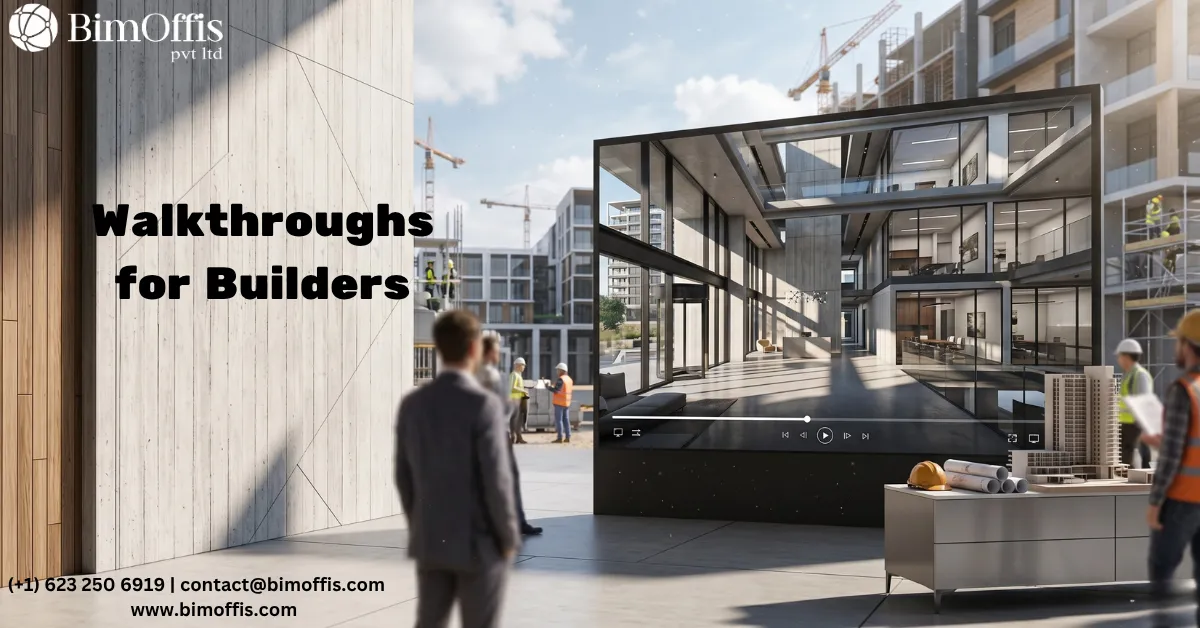
A 3D architectural walkthrough is basically a video, and sometimes it’s even interactive. It takes a viewer through a building that hasn’t been built yet. First, you see the entrance. Then you move through the hallway and step into the bedroom to look out of the window. It sounds simple when you describe it like that, but for a builder, this small shift changes almost everything about how projects get sold, approved, and even constructed.
Why Builders Actually Need This
Here’s the honest truth. Most delays don’t come from bad labour or bad materials. Instead, they come from confusion. A client imagines one thing, while the architect draws another, and the contractor ends up building something slightly different from both. Thankfully, a good 3D Rendering walkthrough removes a huge chunk of that confusion, because everyone looks at the same picture before anyone lays a single brick.
1. Selling Before the Building Exists
Pre sales is where builders get the most value from walkthrough animation. In fact, builders often sell apartments and villas on paper, months or even years before possession. Nobody wants to buy something they can’t picture, and most people also struggle to read a 2D floor plan properly.
For example, show the same person a walkthrough of their future balcony with the evening light hitting it just right. Suddenly, the conversation changes completely. It stops feeling like a transaction and starts feeling like they already live there. So, no matter how detailed it is, a printed layout rarely creates that emotional pull.
2. Catching Design Mistakes Early
This one doesn’t get talked about enough. Fixing a design flaw after construction starts costs time and money. But if the architect and the client walk through the animated version first, small problems tend to show up early. For instance, a bathroom door might swing into a wall, or a staircase could feel cramped in the walkthrough even though it looked fine on paper.
As a result, builders who use 3D Rendering at the planning stage catch these issues while they’re still cheap to fix. Sometimes it’s just a quick design tweak instead of a demolished wall six months later.
3. Talking to Investors Who Aren’t Architects
Not every investor can read a technical drawing, and honestly, they shouldn’t have to. Since builders often need to raise funds or get sign off from stakeholders, a polished walkthrough animation does something a stack of drawings never could. It tells the story of the project in a way anyone can follow, whether they’re an engineer or someone who just manages the money.
On top of that, there’s a quieter benefit here. A finished looking walkthrough signals that the builder runs a tight, organised project, and that impression matters more than people realise when funding decisions are on the table.
4. Letting Clients Personalise Their Space
Everyone wants their home to feel like theirs, not a copy of the model unit down the hall. Thanks to 3D Rendering, builders can create a few versions of the same walkthrough, showing different flooring, different kitchen finishes, or a warmer and cooler colour palette for the living room.
Once clients pick what feels right to them, and since they’ve already seen it rendered realistically, there’s a lot less back and forth once construction actually begins. Overall, this means fewer surprises at handover, fewer disputes, and happier clients.
5. Getting Noticed Online
Scroll through Instagram or YouTube for a minute, and notice what actually stops your thumb. A static photo of a building rarely does it, while a smooth 3D walkthrough holds attention because it feels like a mini experience rather than an advertisement.
Because of this, builders who post this kind of content regularly tend to see better engagement and more genuine inquiries. After all, people simply share and watch videos far more than they read brochures. In short, it’s not magic, it’s just how attention works these days.
6. Keeping Contractors on the Same Page
This use case sounds less glamorous, but it’s actually one of the most practical. Since site engineers and contractors sometimes read drawings differently, small misunderstandings tend to pile up over the course of a project. However, a walkthrough animation gives everyone a shared visual reference to point back to, and this cuts down on the kind of miscommunication that quietly eats into timelines and budgets.
Wrapping Up
3D architectural walkthrough animation isn’t just a marketing add on anymore. Instead, it has become part of how serious builders plan, sell, and execute projects. Indeed, the uses of 3D Rendering stretch across nearly every stage of construction, from convincing a hesitant buyer to catching a design flaw before it turns into an expensive mistake.
Ultimately, builders who bring this into their process early usually see fewer disputes and faster approvals. Additionally, they build a stronger reputation in a market where trust is getting harder to earn. In a business built on trust, that’s not a small thing.
Present every project with confidence by connecting with our architectural visualization experts to create immersive 3D walkthrough animations.
Frequently Asked Questions from Clients
What is 3D Architectural Walkthrough Animation?
It is a realistic animated presentation that visualizes a building before construction.
How do builders benefit from 3D walkthrough animation?
It improves client presentations, design reviews, and project approvals.
Can walkthrough animations help sell properties?
Yes, they create engaging experiences that attract buyers and investors.
Which projects use 3D walkthrough animation?
Residential, commercial, industrial, hospitality, and mixed-use developments.
What software is used for architectural walkthrough animation?
3ds Max, Lumion, Twinmotion, Unreal Engine, and Blender are commonly used.
Why is 3D walkthrough animation important for builders?
It enhances visualization, reduces misunderstandings, and supports better project communication.