A Quick Story Before We Start
A few years back, I visited a small manufacturing unit where the head engineer still kept rolls of paper blueprints stacked on his desk. He told me, half joking, that he trusted paper more than “the computer stuff.” Fast forward to today, and he uses 3D models for every single project. That basically sums up the whole manufacturing industry right now. Mechanical 3D modeling isn’t optional anymore. Manufacturers rely on it every single day.
So what changed, and why does it matter this much? Let me explain it the way I’d explain it to someone standing on the shop floor, not in textbook language.
What Mechanical 3D Modeling Actually Means
In simple terms, engineers build a part or a machine digitally, in full 3D, using CAD software, before anyone touches actual metal or plastic. They can rotate the model, look inside it, and check whether two pieces actually fit together. It sounds basic, but it changes a lot about how manufacturing works day to day.
Fewer Parts End Up in the Scrap Bin
I’ve heard plenty of stories from machinists about parts that “should have fit” but didn’t. Someone misread a measurement, or a tolerance calculation went wrong on paper. A 3D model locks those numbers in from the start. Mistakes still happen sometimes, nobody’s perfect, but manufacturers see far fewer of them.
Everything Moves Faster
The old way looked like this: build a prototype, test it, find something wrong, scrap it, build another one. That process alone could eat up a month. Now an engineer changes a dimension on screen and sees the result in seconds. I won’t pretend it’s instant magic, software still has hiccups and teams still need training, but the overall speed difference is real and manufacturers feel it.
It Saves Real Money
Every failed prototype wastes material and machine time. Fixing a design flaw on a screen costs almost nothing compared to fixing it after the machine has already cut the part. Small manufacturers feel this the most. A handful of avoided mistakes can turn a rough quarter into a good one.
Non-Engineers Can Understand the Design Too
People often overlook this benefit. Not everyone reads technical drawings well, and clients definitely don’t. Show someone a 3D model they can rotate and zoom into, though, and they understand it immediately. Teams run fewer confused meetings, and clients stop saying “wait, that’s not what I asked for” after the fact.
Engineers Catch Problems Before They Become Real Problems
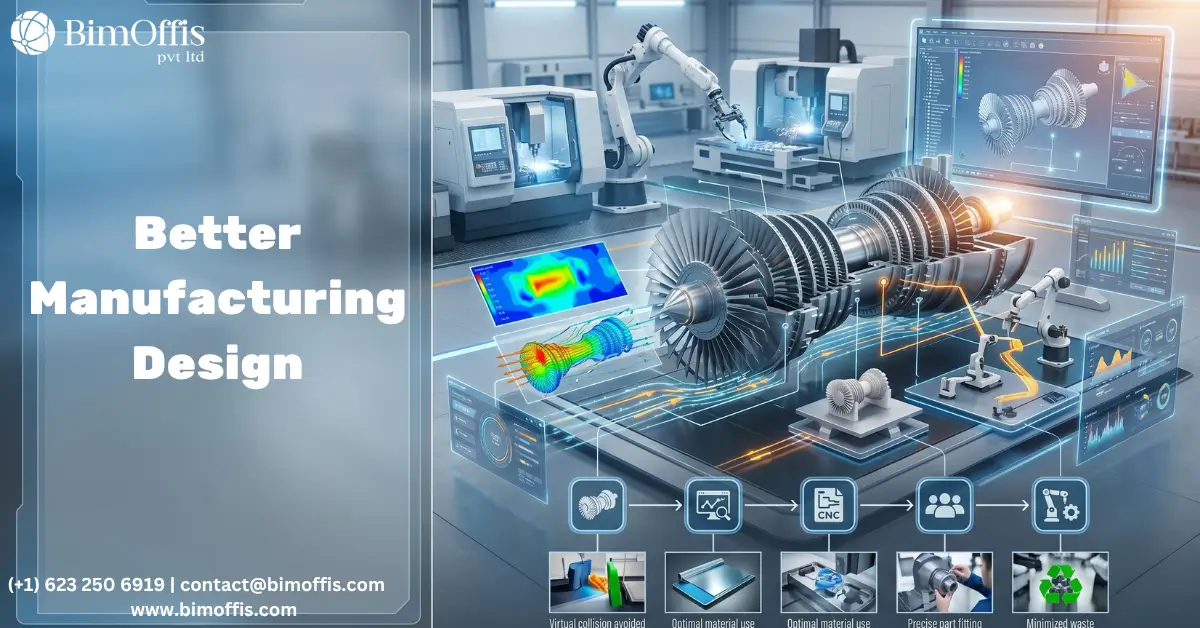
Many CAD tools let engineers simulate stress, heat, and vibration directly on the model. So instead of a part failing after a customer already installed it, the engineer finds the weak spot on a Tuesday afternoon at their desk. That makes for a much better Tuesday.
Design Flows Straight Into the Machines
Nobody has to read a flat drawing and interpret it their own way anymore. The 3D file goes straight to the CNC machine or the 3D printer. The machine builds exactly what the engineer designed, without a middle step where errors can creep in.
Version Control Stops Being a Nightmare
Anyone who has dealt with five files named final_v3_actualfinal knows this pain well. Good 3D modeling software tracks every change automatically, so teams always know which version is current.
Complicated Shapes Stop Being Scary
Lightweight aerospace brackets, custom medical parts, and tight internal geometries for electronics housings are nearly impossible to draw accurately by hand. 3D modeling software handles these shapes with ease, and some tools even suggest designs an engineer might not have considered on their own.
Quality Problems Surface Earlier
Engineers catch misaligned parts during the design review instead of on the assembly line. This earlier check means less scrap, fewer defects, and less frustration for everyone involved.
There’s a Sustainability Angle Too
Manufacturers waste less material and scrap fewer prototypes when they design in 3D first. It’s not the flashiest benefit on this list, but it adds up quickly, especially for companies working to hit real sustainability targets instead of just talking about them.
Bottom Line
None of this comes down to looking modern or chasing a trend. Mechanical 3D modeling solves problems manufacturers have dealt with for decades: parts that don’t fit, timelines that drag on, budgets that blow up for no good reason. Companies that use it well end up building better products with far fewer headaches along the way.
The technology isn’t going anywhere either. If anything, it will only become more central to how manufacturing works in the years ahead.
Improve product development and manufacturing accuracy by collaborating with our mechanical 3D modeling specialists for reliable, production-ready CAD solutions.
Frequently Asked Questions from Clients
What is Mechanical 3D Modeling?
It is the process of creating detailed 3D digital models of mechanical parts and assemblies.
Why is Mechanical 3D Modeling important in manufacturing?
It improves design accuracy, visualization, and production planning.
Can 3D modeling reduce manufacturing errors?
Yes, it helps identify design issues before fabrication and assembly.
Which software is commonly used for Mechanical 3D Modeling?
SolidWorks, Autodesk Inventor, Creo, and AutoCAD are widely used.
What industries benefit from Mechanical 3D Modeling?
Manufacturing, automotive, aerospace, industrial equipment, and energy industries.
What are the main advantages of Mechanical 3D Modeling?
Faster product development, better collaboration, improved accuracy, and reduced rework.