











Revit BIM Clash Detection Coordination Services
Optimize construction with Revit BIM clash detection and coordination services. Reduce errors, save time, and boost accuracy. Request a quick quote now.
Revit Clash Detection Services
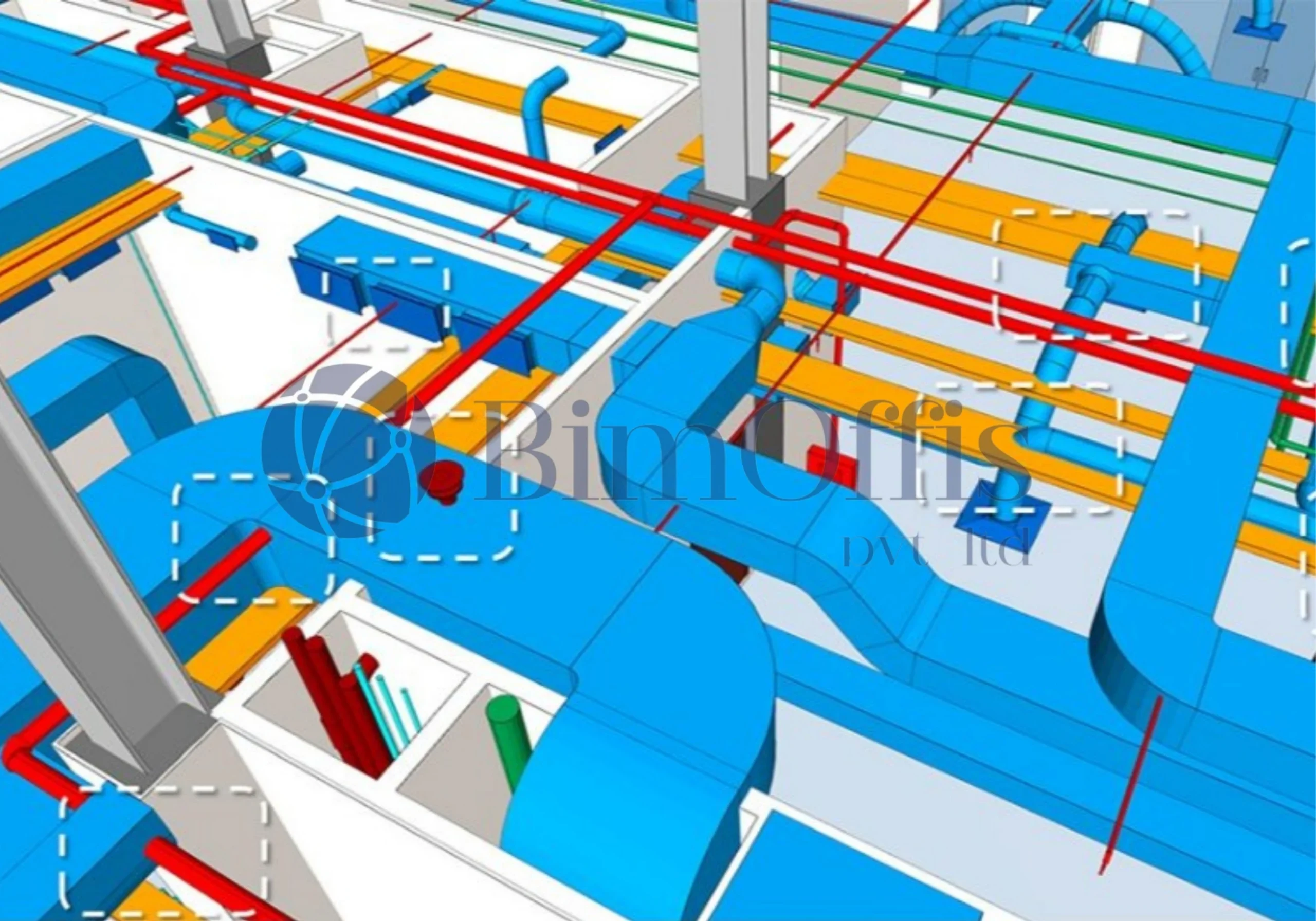
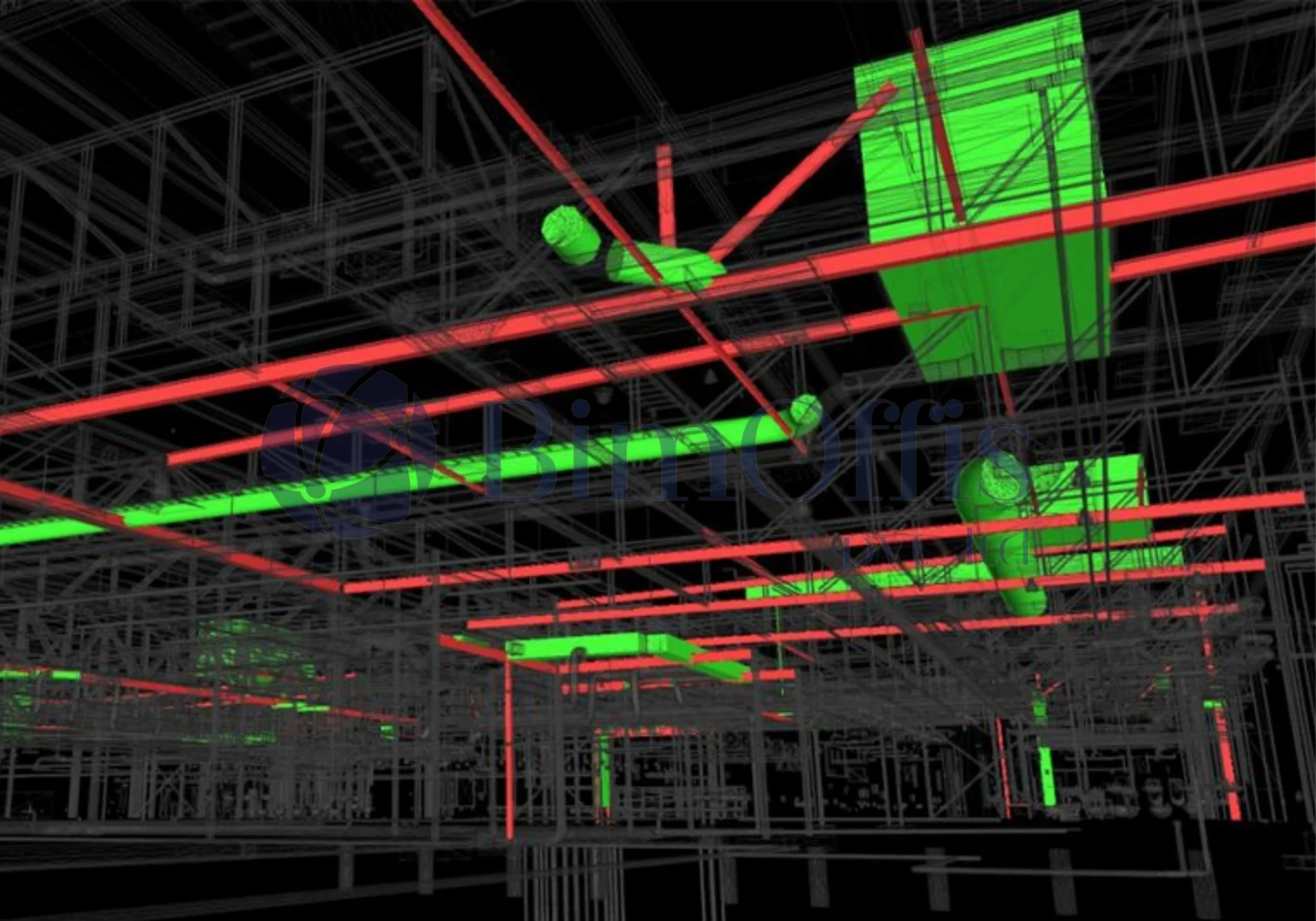
If you are looking to optimize project planning and ensure precision, BIMOffis offers Revit BIM Clash Detection Services with the perfect solution. Our clash detection Revit services and clash coordination services help construction teams avoid costly design conflicts, reduce rework, and improve project timelines. Using advanced Revit and BIM software, our team identifies clashes between architectural, structural, and MEP systems before construction begins. This ensures a clear, coordinated, and high-quality model that supports seamless project execution.
Our BIM 360 clash detection services provide accurate reports, visual representations of clashes, and actionable coordination insights. Whether you need hard, soft, workflow, or multidisciplinary clash checks, we provide detailed clash resolution strategies tailored to your project. By detecting issues early, you save time, minimize material waste, and eliminate site delays.
We work closely with contractors, architects, engineers, and developers to create conflict-free BIM models that improve collaboration and communication. Our Clash Coordination Services help streamline design reviews, improve documentation, and support efficient decision-making throughout the project lifecycle. Contact us today for a customized quote, sample reports, and fast project delivery. Let us help you build smarter, safer, and more efficiently.
We offer our Revit BIM coordination and clash detection in key markets worldwide, including the USA, UK, Canada, Mexico, Australia, New Zealand, Europe (Germany, Switzerland, Liechtenstein, Gibraltar, France, Spain, Belgium, Norway, Italy, Turkey, Greece, Slovakia, Austria, Poland, Netherlands, Sweden, Romania, Bulgaria, Denmark, Finland, Portugal, Malta, Bosnia and Herzegovina), UAE, and many more. Start your project today!
Our Clash Detection Coordination Services
Industries We Serve
Architectural
Engineering
Construction
Laser Surveying
Real-Estate
Manufacturing
Residential
Commercial
Amphitheater
Facilities Management
Industrial
Entertainment
Our Software Expertise
Recent Projects
Why Choose BIMOffis for your Clash Detection Coordination Project
Choose BIMOffis for Revit clash detection Services and Clash coordination services to eliminate design conflicts, speed up approvals, and reduce construction risks. We deliver accurate clash reports, fast turnaround, and reliable BIM expertise. Get your project quote today.
Accurate Clash Reporting
We provides precise clash detection revit ensures conflict-free project planning.
Expert BIM Specialists
Our skilled Revit professionals dedicated to flawless coordination.
Fast Turnaround Time
BIMOffis provides quick delivery to keep your construction timelines on track.
Cost & Rework Reduction
Detect issues early to avoid delays, errors, and extra expenses.
Customized Reports
Clear, project-specific clash reports for easy decision-making.
Seamless Team Collaboration
Improves communication between architects, MEP, and engineers.
Advanced BIM Software
We use latest software for detailed, high-quality clash identification.
End-to-End Coordination Support
Complete clash resolution guidance from start to final model.
Our Testimonials
Frequently Asked Questions from Clients
How do Clash Coordination Services help my construction project?
Clash Coordination Services streamline multi-disciplinary models, resolve conflicts early, and improve communication among teams. This ensures smoother execution, fewer change orders, and faster project approvals. It helps you achieve higher accuracy and cost savings.
What types of clashes can be detected using Revit BIM?
Revit BIM detects hard clashes, soft clashes, system interferences, clearance issues, workflow clashes, and multidisciplinary conflicts. Identifying these early ensures clean model coordination, reduces site delays, and helps maintain construction quality and safety standards.
How can Revit Clash Detection reduce overall project costs?
It eliminates expensive rework by finding issues during design instead of on-site. This minimizes material waste, delays, and coordination errors. You save money through optimized planning, fewer RFIs, and smoother construction workflows supported by accurate BIM data.
How often should clash detection be performed during a project?
Clash detection should be done at every major design stage: schematic, design development, pre-construction, and final coordination. Regular checks help track updates, maintain model accuracy, and ensure all disciplines stay aligned before physical construction begins.
Who benefits the most from Clash Coordination Services?
Architects, MEP engineers, contractors, builders, and project owners benefit. It enables clear communication, reduces conflicts, enhances model accuracy, and improves construction efficiency. Any project seeking smoother execution and quality output gains major advantages.
What deliverables can I expect from a clash detection service?
You receive clash reports, color-coded visuals, marked conflict zones, coordination meeting support, and final resolved BIM models. These deliverables help contractors and designers understand issues quickly and make accurate decisions to avoid onsite disruptions.
How does clash detection improve project timelines?
By identifying errors early, teams avoid onsite confusion, stoppages, and redesigns. Clash detection speeds up approvals, enhances scheduling, and ensures smoother workflows. This allows faster construction progress, predictable planning, and reduced project delays.
Get a Quote Today
Our Latest Blogs
5 Key Benefits of Outsourcing BIM Services to Expert Teams
Building vs Buying AEC BIM Software: Exploring the Pros and Cons
How Scan to BIM is Shaping the Future of Smart Cities
BIM For Residential Projects Challenges and Opportunities
4D BIM For MEP Enhancing Construction Schedules and Coordination
The Evolution of BIM Standards and Protocols in 2025
BIM for underground construction projects