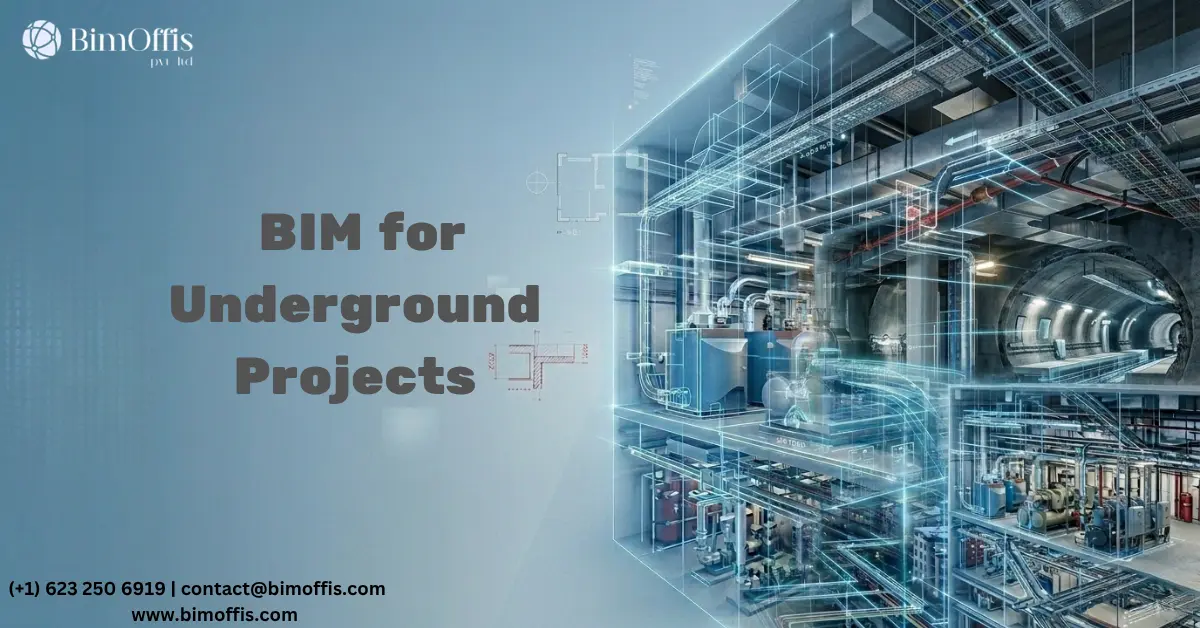
The construction industry continues to embrace innovation. However, underground construction presents unique and complex challenges. It requires careful planning and precise execution to ensure safety and accuracy.
This is where Building Information Modeling (BIM) becomes a game-changer. It improves efficiency, accuracy, and collaboration across projects.
Why BIM Is Important in Underground Construction
Underground projects such as tunnels, subways, and pipelines are highly complex. They often involve:
- Unpredictable geology: Subsurface conditions vary significantly and require advanced modeling.
- High-risk environments: Mistakes can lead to serious safety and financial consequences.
- Multidisciplinary coordination: Civil, mechanical, and geotechnical teams must work closely together.
To address these challenges, BIM provides a centralized platform for data, design, and project management. As a result, it transforms underground construction in several ways.
1. Enhanced Design Accuracy
BIM enables engineers to create accurate 3D models of underground structures.
In addition, advanced levels such as 4D and 5D BIM include time and cost data.
Therefore, teams can ensure that projects stay on schedule and within budget.
2. Improved Risk Management
BIM helps teams analyze geological conditions and construction processes.
As a result, they can identify potential risks early.
For example, in tunneling projects, BIM can predict ground movement.
This allows engineers to plan reinforcements and reduce structural failures.
3. Seamless Collaboration
Underground projects involve many stakeholders, including geologists, engineers, and contractors.
Therefore, effective communication is essential.
BIM provides cloud-based platforms that allow real-time data sharing.
Consequently, all team members stay updated, and coordination improves.
4. Cost and Time Efficiency
Traditional underground projects often face delays and cost overruns.
However, BIM improves planning and forecasting.
As a result, teams can avoid costly mistakes and complete projects faster.
5. Integration with Smart Technologies
BIM integrates with technologies such as GIS, IoT, and virtual reality.
This integration enables real-time monitoring and better visualization of underground conditions.
In turn, stakeholders can make more informed decisions.
Real-World Applications
- Crossrail (London): BIM helped manage complex tunneling work and reduced construction clashes.
- Doha Metro (Qatar): BIM improved design accuracy and ensured proper alignment with minimal resource waste.
The Future of BIM in Underground Construction
The Future of BIM in Underground Construction
Underground construction projects are becoming larger and more complex.
Therefore, BIM will play an even more important role in the future.
Emerging technologies such as Digital Twins and AI-driven analytics will further enhance BIM capabilities.
As a result, projects will become safer, smarter, and more sustainable.
Final Thoughts
BIM is more than just a tool. It represents a shift in how underground construction projects operate.
When teams use BIM effectively, they can reduce risks, save time, and control costs.
In conclusion, BIM bridges the gap between design and execution.
Especially in underground construction, it ensures better outcomes in even the most challenging environments.