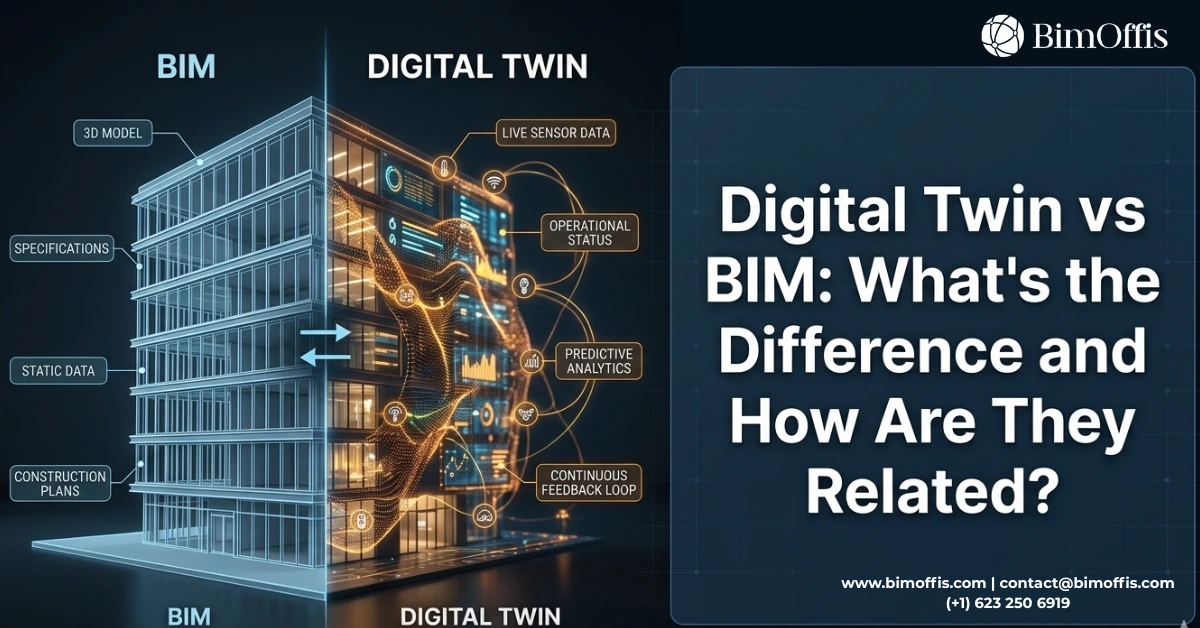
Understanding Digital Twin vs BIM in Real Projects
If you’ve been around construction or engineering projects recently, you’ve probably heard people discussing digital twin vs BIM quite often. At first, both terms seem similar; they involve digital models, improve efficiency, and support better decision-making.
But when you actually start working on projects, you realize they are not the same. They are connected, but each serves a different purpose. Understanding this difference is important if you want to use them effectively instead of just following industry trends.
What is BIM?
So, BIM, in simple words, is just a smarter way of planning a building before it actually gets built.
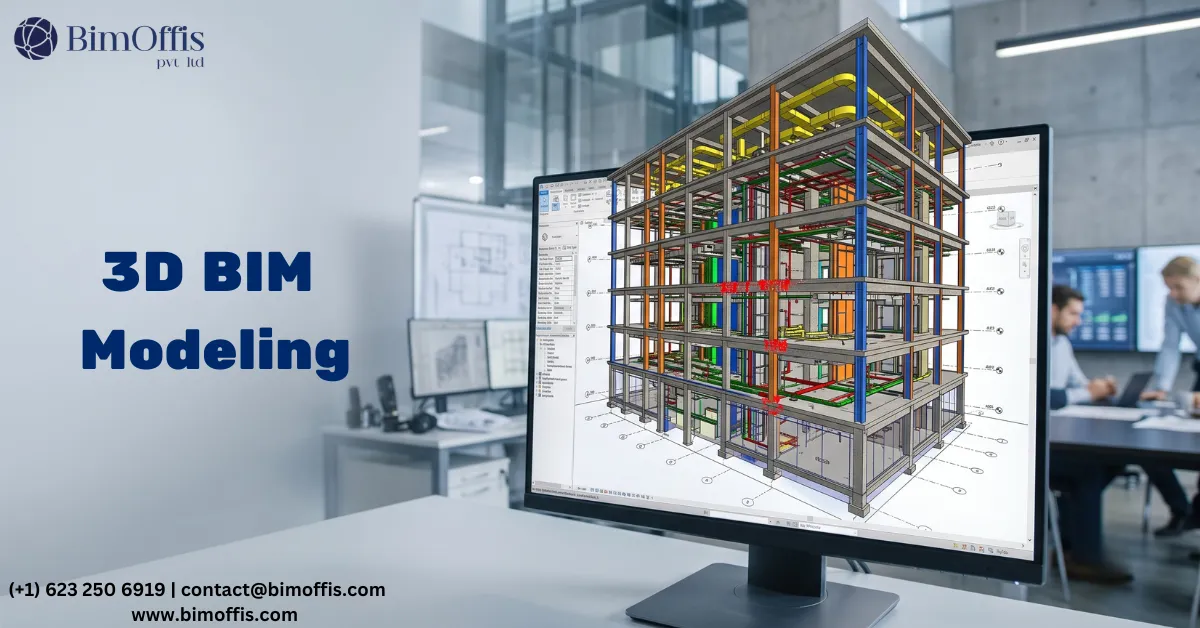
It’s not only a 3D model, as many people think. It’s more like a working model where you can see how everything fits together: structure, pipes, ducts, electrical, all of it.
On real projects, BIM is where most of the problems get solved early. You can check layouts, adjust things, and fix issues before they reach the site. And honestly, that’s where it saves the most time.
Instead of fixing mistakes later BIM lets you handle them while everything is still digital.
What is a Digital Twin?
Now digital twin is a bit different, and this is where people usually get confused.
It’s not just a model sitting there. It’s connected to the actual building.
Like, real data. Sensors. Systems running. Live updates.
So instead of looking at what you planned, you’re seeing what’s actually happening in the building.
For example, you can check how much energy is being used or if a system is not working properly without even being there physically.
That’s why it’s called a “twin” because it reflects the real thing.
Digital Twin vs BIM: Key Differences
If I explain it in the easiest way possible:
BIM is before and during construction.
Digital twin is after.
That’s the main difference.
- BIM helps you plan and build properly.
- Digital twin helps you manage and monitor after everything is running.
Also, BIM doesn’t update on its own. Once the model is done, it stays like that unless someone changes it.
A digital twin keeps updating because it’s connected to real systems.
That’s a big difference in how they actually work.
How BIM and Digital Twin Work Together
This part is important.
A digital twin usually doesn’t start from zero. It actually comes from BIM.
You create your model using BIM during design and construction. Then later, if you connect that same model to real-time data, it becomes a digital twin.
So it’s not like choosing between the two.
It’s more like:
first BIM then digital twin.
When to Use Each Technology
In real life, it’s pretty straightforward.
You use BIM when you’re designing, planning, and coordinating the project. That’s where it’s most useful.
Once the building is complete and in use, that’s where a digital twin starts making sense.
Trying to use a digital twin during early design doesn’t really add much value. And using only BIM after construction means you’re missing out on real-time insights.
So both have their own timing.
Real-World Use Cases
Let’s take a simple example.
In a commercial building project, BIM is used first to design everything structure, MEP, layouts, coordination.
Once the building is ready, a digital twin can be used to monitor systems like HVAC, energy usage, and maintenance.
In bigger projects like hospitals or airports, this becomes even more important. There are too many systems running, and you can’t manage everything manually.
That’s where digital twin actually helps in day-to-day operations.
Final Thoughts
If someone asks about digital twin vs BIM, I’d keep it simple. BIM helps you get things right before building. Digital twin helps you keep things running after. That’s the real difference. And if you use both properly, you’re not just building smarter you’re managing smarter too.
Frequently Asked Questions from Clients
Is BIM and digital twin the same thing?
No, they’re not the same. BIM is used for planning and design, while a digital twin is used after construction for monitoring and management.
Can a BIM model turn into a digital twin?
Yes, it can. Once you connect the BIM model with live data from the building, it becomes a digital twin.
Do small projects need a digital twin?
Not always. For smaller projects, BIM is usually enough. Digital twins are more useful in large or complex buildings.
Why are digital twins becoming popular?
Because they help track performance in real time and make building management easier and more efficient.
Which one should I learn first?
Start with BIM. Once you understand that properly, moving to digital twin becomes much easier.
Which is better: BIM or digital twin?
BIM and digital twins serve different purposes. BIM is primarily used during design and construction, while digital twins are used during operation and maintenance.