Nobody talks about this enough, but one of the most expensive mistakes in refurbishment or fit-out projects happens before construction even begins.
Typically, you commission a manual survey. The team measures carefully, takes photographs, and records every dimension. As a result, the process can take weeks of effort. However, somewhere along the way, something is often missed or recorded incorrectly.
How Small Errors Become Big Problems
At first, the issue may seem minor. For example, a ceiling void might be shallower than expected. Alternatively, a structural beam could be hidden above a suspended ceiling that nobody noticed.
However, three months later, that small inaccuracy becomes a major issue on site. Consequently, it leads to delays, variations, and uncomfortable conversations with the client.
In fact, I’ve seen this happen many times. And almost every time, people say the same thing afterward: We should have scanned it.
What Scan to BIM Actually Means
If you are new to this, here is a simple explanation.
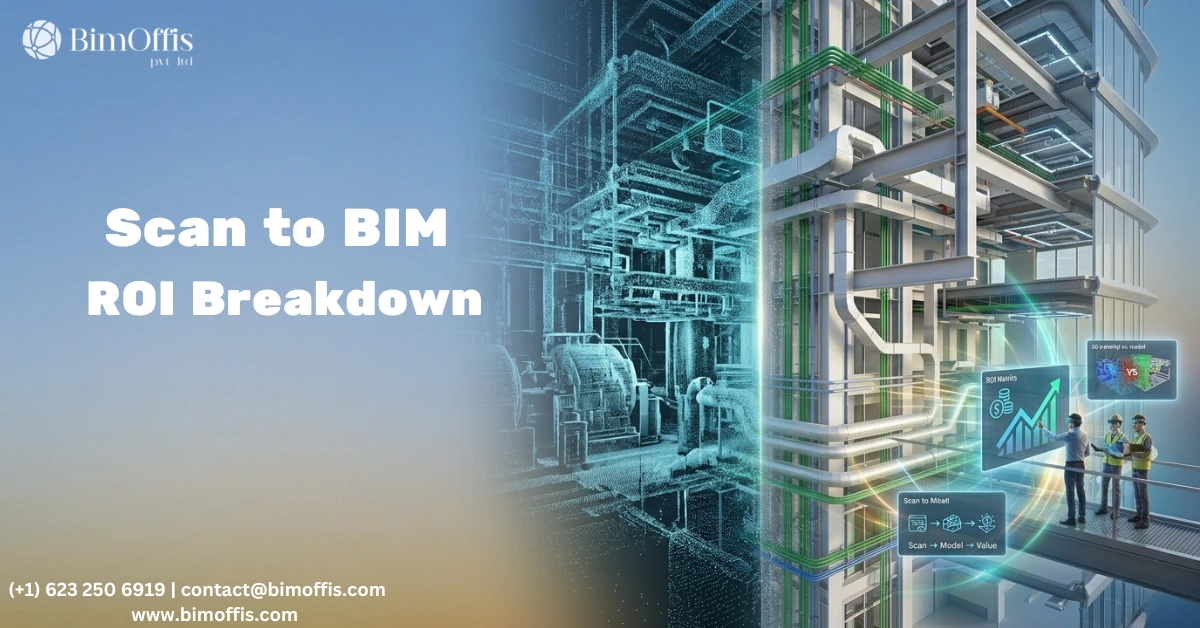
A 3D laser scanner captures millions of measurement points as it moves across a building. As a result, everything visible is recorded, including walls, floors, ceilings, structural elements, pipework, columns, and even irregular details.
This data forms what is known as a point cloud, which is a highly accurate digital representation of the building as it exists.
Next, Scan to BIM converts that point cloud into an intelligent BIM model. In other words, it is not just geometry; it includes real building elements with embedded data such as wall thicknesses, pipe diameters, and structural dimensions.
Therefore, the key difference is simple: you design based on reality, not assumptions.
What Does Scan to BIM Cost?
Naturally, this is usually the first question, and it deserves a clear answer.
The truth is, the cost depends on several specific factors.
What Affects the Cost
Building Size
First of all, larger buildings require more scans, more data processing, and more modelling time.
Level of Detail
Secondly, a basic architectural model is faster and cheaper than a detailed MEP model with fully coordinated services.
Building Complexity
In addition, simple modern buildings are easier to model. On the other hand, older or heavily modified buildings take more time due to irregular geometry and hidden elements.
Site Access
Finally, easy access reduces cost, whereas restricted or out-of-hours access increases it.
Where the Real Value Comes Back
While the upfront cost is easy to see, the savings are often much larger.
Avoiding Redesign Costs
For instance, incorrect survey data leads to design changes later, which can cost thousands in consultant time and delays.
Preventing Site Surprises
Similarly, hidden structural elements or services can cause expensive variations once construction starts. However, Scan to BIM significantly reduces this risk.
Saving Design Time
Moreover, when everyone works from an accurate model, coordination improves, and design work moves faster.
Long-Term Value for Building Owners
Importantly, a BIM model is not just useful during construction; it becomes a long-term asset.
For example, it supports:
- Maintenance planning
- Future refurbishments
- Energy analysis
- Compliance and audits
Therefore, over time, its value continues to grow.
When Scan to BIM Is Worth It
Of course, not every project requires scanning.
Not usually needed:
- Small, simple fit-outs
Highly recommended:
- Complex refurbishments
- Older buildings
- Healthcare and education projects
- Large commercial spaces
Ultimately, the more complex the building, the more valuable scanning becomes.
What to Check Before Choosing a Provider
Before commissioning Scan to BIM services, it is important to ask a few key questions:
- What scanning equipment do they use?
- Can they show examples of similar projects?
- What is their quality control process?
- Will the deliverables be compatible with your design team’s software?
Final Thoughts
At the end of the day, Scan to BIM does cost money upfront. That is simply a fact.
However, the real question is not whether scanning costs money. Instead, it is about what poor survey data, unexpected site conditions, redesign fees, and programme delays will cost you.
In most projects of any real size or complexity, that second number is significantly higher.
Therefore, teams that scan as standard are not being extravagant. Rather, they are making a calculated, informed decision.
Ready to find out what your project will cost? Find out here.
Frequently Asked Questions from Clients
What is scan to BIM?
It is the process of laser scanning an existing building and converting that scan data into an accurate BIM model. Instead of manual measuring you get a precise digital model of exactly what is there.
How much does scan to BIM cost?
Small projects usually cost between 3,000 and 8,000. Mid size projects run between 8,000 and 25,000. Large or complex buildings can go above 25,000 depending on size and detail required.
What affects the cost of scan to BIM?
Four main things. The size of the building, the level of detail needed in the model, how complex the building is, and how easy it is to access during scanning.
Is scan to BIM worth the cost?
On most refurbishment and fit out projects yes. Avoiding one or two significant site surprises or redesign events usually covers the entire scanning cost with money to spare.
How long does scan to BIM take?
Scanning a building usually takes one to two days, depending on size. Processing the point cloud and producing the BIM model typically takes one to three weeks, depending on complexity and detail level.
What is a point cloud?
A point cloud is the raw data captured by the laser scanner. Millions of measurement points that together create an accurate 3D picture of the building. The BIM model is then built from this data.