Ask any project manager what eats their contingency budget, and they’ll probably point to variations or procurement issues. However, if you dig a little deeper, rework is almost always sitting quietly underneath all of it.
Wrong drawing. Wrong version. Two systems fighting for the same space. Material was ordered short because someone eyeballed the take-off. These aren’t rare disasters; they’re everyday occurrences.
Research shows rework sits between 5% and 15% of total project cost, depending on the project type. On a large job, that becomes a painful number. More importantly, on a tight-margin project, it can decide whether you finish in profit or loss.
What BIM Actually Is
BIM is not just 3D modeling. In fact, that misconception is exactly why many teams underuse it.
At its core, BIM provides one shared, accurate, data-rich model that every discipline works from: architecture, structure, and MEP, all in one place. As a result, teams align better and communicate more effectively.
When teams implement BIM properly, a huge portion of the communication failures that cause rework simply disappears.
How BIM Reduse Rework in AEC Projects
1. Clash Detection Before Construction Begins
The first time you review a proper clash detection report, the impact is obvious. For example, one project flagged over 200 conflicts between structural and MEP models, before breaking ground.
Each of those conflicts represented a potential rework issue waiting to happen.
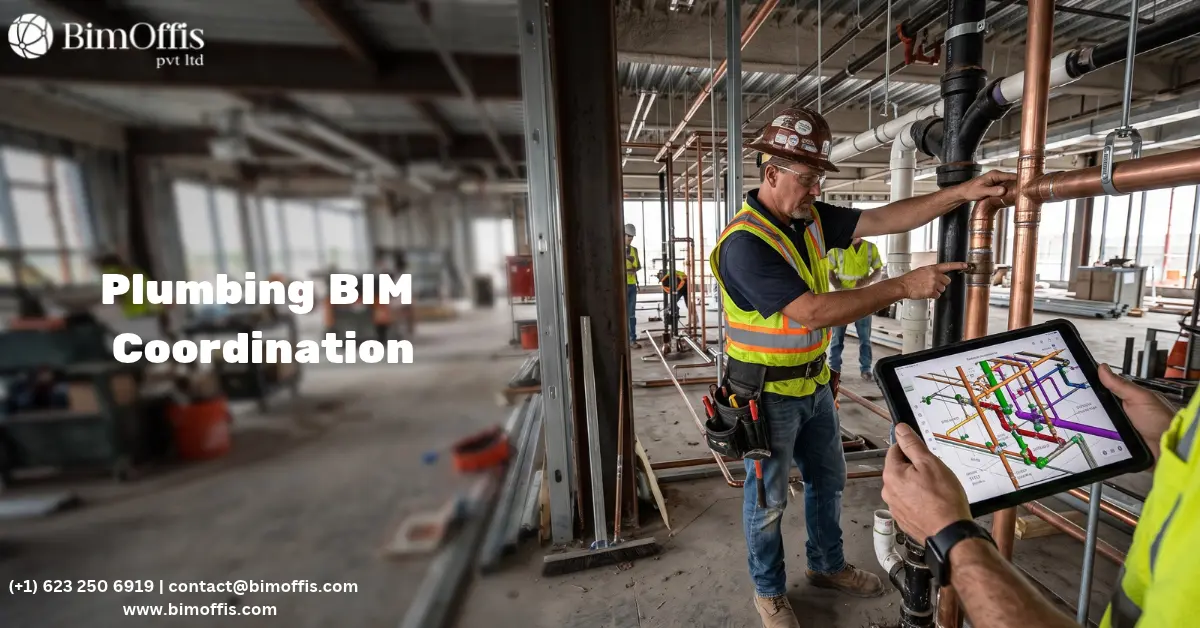
Tools like Navisworks run automated checks across federated models and highlight exactly where systems clash. For instance, a fire suppression line might intersect a beam, or a lighting conduit might conflict with HVAC.
Instead of fixing these problems on-site, teams resolve them in coordination meetings. Consequently, they avoid costly delays and demolition work.
As a result, teams that use clash detection effectively reduce field conflicts by 40–50%. Clearly, that’s a significant improvement.
2. A Shared Model Eliminates Version Confusion
Traditionally, teams exchange drawings back and forth. The architect issues a set, engineers revise it, and contractors work from printed copies. Meanwhile, the design keeps evolving.
Because of this, teams often work from outdated information.
With BIM, however, updates happen in a shared model that everyone can access in real time. For example, a contractor on-site can pull up the latest detail on a tablet instead of relying on old drawings.
This shift removes an entire category of rework caused by version mismatches.
3. Accurate Quantity Take-offs Improve Procurement
BIM-based quantity take-offs come directly from model geometry. In contrast, traditional methods rely on estimation or scaling from PDFs.
Because of this accuracy, procurement teams order materials much closer to actual requirements.
Over-ordering leads to waste and increased costs. On the other hand, under-ordering delays work, disrupts schedules, and forces teams into reactive planning.
Both scenarios create rework in different ways. Therefore, accurate quantities significantly reduce these risks.
4. 4D BIM Improves Construction Sequencing
4D BIM connects the model to the project schedule, allowing teams to simulate construction sequences before work begins.
As a result, teams can identify sequencing issues early. For example, they might discover that a raised floor system is scheduled before completing electrical containment beneath it.
While this may seem minor during planning, it becomes a major issue on-site.
Such sequencing conflicts often lead to delays, trade disputes, and rework. However, when teams identify them early, they resolve them quickly and at minimal cost.
The Hidden Cost of Rework
Budget impact is the easiest part to measure. However, rework creates deeper issues that many teams overlook.
First, it affects morale. Tradespeople who complete quality work only to see it removed lose confidence in the project.
Second, it damages collaboration. Subcontractors begin protecting themselves instead of working as a team.
Finally, it erodes client trust. When clients see money wasted on avoidable mistakes, they question the entire delivery process.
BIM, when used effectively, changes this dynamic. It encourages earlier communication, faster problem-solving, and stronger collaboration. Consequently, teams shift from reactive behavior to proactive coordination.
Is BIM Worth the Investment?
The upfront investment in BIM software, training, and coordination can feel significant. However, the return often justifies the cost.
In fact, a single major rework incident can cost more than a full year of BIM implementation.
So, if your team still treats BIM as optional, consider this:
What has rework actually cost your recent projects?
Not just in direct expenses, but also in delays, strained relationships, and lost trust.
While BIM won’t eliminate every issue, it removes a large category of preventable problems. And that alone makes a measurable difference.
Final Thoughts
Rework is not just a cost issue, it’s a people, trust, and culture issue.
Too often, strong teams struggle because of mistakes that should never have reached the site.
Therefore, if your team is still hesitating on BIM, stop waiting for the perfect moment. The next rework issue you face will likely justify the investment.
Build smarter. MEP Coordination better. Waste less. Ready to find out what your project will cost? Find out here.
Frequently Asked Questions from Clients
What is BIM in construction?
BIM stands for Building Information Modeling. It is a shared digital model of a building where all project teams like architects, engineers, and contractors work together from one accurate source of information.
How does BIM reduce rework in AEC projects?
BIM catches clashes between systems before construction starts, keeps everyone on the latest design version, and improves coordination between all disciplines. This means fewer mistakes reach the site.
What is clash detection in BIM?
Clash detection is an automated process that checks where different building systems, like structure, MEP, and architecture, overlap or conflict in the model. Teams fix these issues digitally before construction begins.
Is BIM only for large construction projects?
No. BIM is useful for projects of all sizes. Even small and mid-size projects benefit from better coordination, fewer errors, and more accurate material quantities.
How much does rework cost in construction?
Studies show rework can cost between 5% and 15% of total project cost. On large projects this can run into millions, most of which is avoidable with proper BIM coordination.
What is 4D BIM?
4D BIM links the 3D model to the project schedule. It lets teams simulate the construction sequence before work starts so sequencing conflicts are caught early and not on a live site.