When people hear “construction,” they usually think about offices, apartments, or malls. Hospitals don’t really come to mind first. But honestly, healthcare buildings are way more complicated than most people expect.
It’s not just about building rooms and corridors. Everything has to work together perfectly. Doctors need to move fast, patients should feel safe, equipment has to fit exactly where it’s supposed to, and most importantly, nothing can fail. Not even for a minute.
That’s where BIM Healthcare is starting to stand out.
A lot of firms are switching to it now. Not because it’s some new trend, but because the old way of doing things just doesn’t work well anymore, especially for hospitals.
So, what exactly is BIM Healthcare?
Let’s keep it simple.
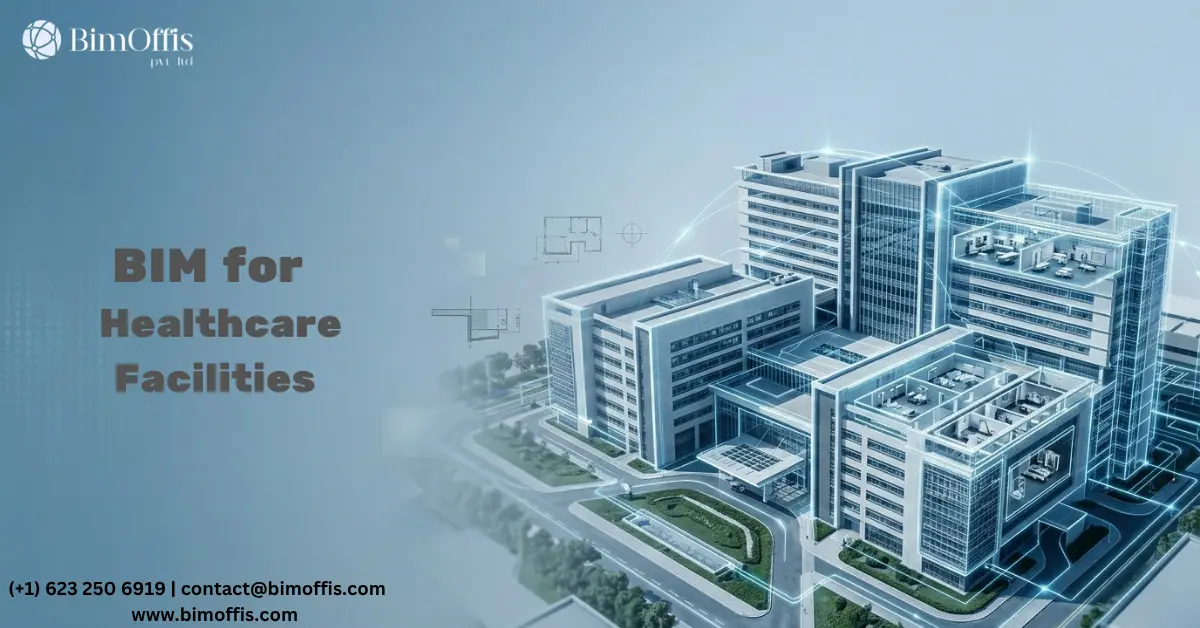
Think of it like a digital version of a hospital, but smarter. It’s not just a 3D design. It actually includes real details like materials, systems, equipment, and how different spaces will be used.
Instead of different teams working on separate drawings, everyone works on the same model.
And honestly, that makes a huge difference.
Why hospitals need BIM more than other buildings
If you’ve ever looked at a hospital project closely, you’ll know it’s not easy to manage.
There’s just too much going on:
- strict rules and regulations
- heavy and sensitive medical machines
- complex wiring and ventilation systems
- and almost no room for mistakes
Even a small issue like a wrongly placed pipe or cable can slow everything down.
That’s why BIM isn’t just helpful in healthcare projects. It’s almost necessary at this point.
What makes BIM actually useful here?
One big advantage is planning.
Instead of guessing how things will fit together, you can actually see it before construction even starts. That alone helps avoid a lot of confusion later.
Another thing is fewer on-site problems.
Most clashes or design issues get solved early, so you’re not fixing things at the last minute which usually costs more time and money.
Team coordination also becomes easier.
In traditional projects, everyone works separately, and that’s where misunderstandings happen. With BIM, everyone is on the same page, literally looking at the same model.
It also saves time. More than people expect.
Since things are better planned, the work moves faster. Some parts can even be built off-site and then installed later.
And of course, cost control improves too.
Because everything is already detailed, estimates are more accurate. There’s less guessing and fewer unexpected expenses.
And it doesn’t stop after construction
This part often gets ignored.
Even after the hospital is built, BIM is still useful. It helps in managing equipment, planning maintenance, and keeping track of different systems without digging through files.
Where BIM really helps in real projects
Take hospital layouts, for example.
Hospitals need to function smoothly. BIM helps test different layouts before finalizing them like making sure emergency areas are easy to access or reducing unnecessary walking for staff.
Then there’s medical equipment.
Machines like MRI or CT scanners need proper space and setup. You can’t just adjust things later. BIM helps plan everything in advance so there are no surprises.
Renovations are another big challenge.
Many hospitals expand while still operating. BIM makes it easier to plan work in phases so daily activities aren’t badly affected.
It also helps manage MEP systems like power, plumbing, and ventilation which are extremely important in hospitals.
And after COVID, infection control has become a priority.
With BIM, teams can even study airflow and design better ventilation systems, especially for critical areas like isolation rooms.
What’s next?
BIM is still evolving.
Now it’s being combined with things like IoT and digital twins. That means hospitals can actually monitor systems in real time and fix problems before they even happen.
So it’s not just about construction anymore it’s about smarter operations too.
Final thoughts
If you really think about it, hospitals are too complex for old construction methods.
BIM Healthcare makes things clearer, more organized, and less risky. It helps teams avoid mistakes and build spaces that actually work the way they should.
And in healthcare, that’s not optional it’s essential. Ready to find out what your project will cost? Find out here.
Frequently Asked Questions from Clients
What is BIM in healthcare?
BIM Healthcare is a digital model used to design, build, and manage hospitals more efficiently.
Why is BIM important for healthcare projects?
It reduces errors, improves coordination, and helps deliver safer, more functional facilities.
Can BIM be used for existing hospitals?
Yes, it is useful for renovation and expansion without major disruption.
How does BIM improve hospital design?
It helps plan layouts, equipment placement, and workflows more accurately.
Is BIM useful after construction?
Yes, it supports maintenance, facility management, and long-term operations.