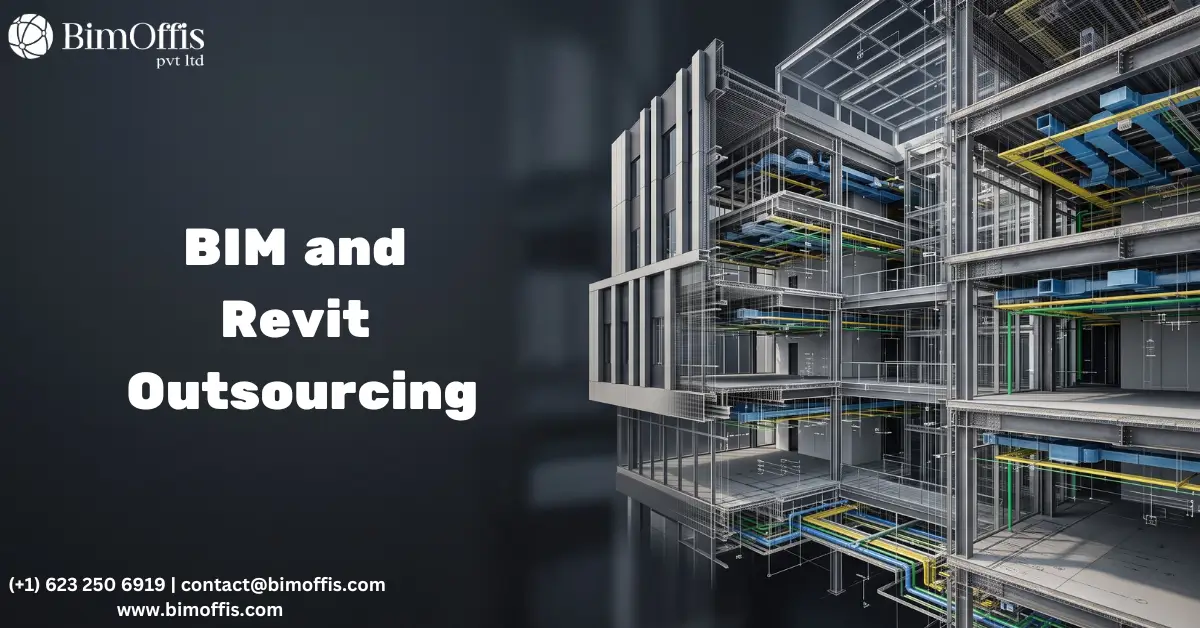
At some point, almost every AEC firm hits the same wall. Project load goes up, the Revit team doesn’t, and suddenly you’re choosing between missed deadlines and burning out the people you already have. That’s usually the moment BIM and Revit outsourcing starts coming up in team meetings.
And it can genuinely help. More hands on modeling, faster turnaround on documentation, lower overhead than hiring full-time for every skill. But ask anyone who’s tried it and gotten burned, and they’ll tell you the same thing: outsourcing is only as good as the partner you pick. A bad fit doesn’t just waste money, it hands you a model your own team then has to fix, which is often worse than not outsourcing at all.
So how do you actually pick well? Here’s what tends to separate the good partnerships from the painful ones.
Get specific about what you need before you go shopping
This sounds obvious, but most firms skip it. “We need Revit help” isn’t a scope, it’s a wish. BIM and Revit outsourcing can mean a dozen different things – architectural modeling, structural detailing, MEP coordination, clash detection, as-built documentation, LOD development. A team that’s brilliant at clean architectural models might have no real experience untangling MEP coordination on a hospital job.
Sit down and write out exactly what you’re handing off. Which discipline, which LOD, what software version, what stays in-house versus what goes external. When your brief is vague, you get vague proposals back, and the mismatch only shows up once the work is already underway.
Don’t judge them by the portfolio alone
Every outsourcing website has the same thing: slick renders, a project list, maybe a few client logos. None of that tells you whether the people behind it understand construction sequencing or just know how to make a model look good in a screenshot.
Ask harder questions instead. How do they handle naming conventions and model standards on a shared project? What does their clash detection and resolution process actually look like? Do they work natively in Revit, or is there conversion happening somewhere that quietly introduces geometry problems? Can you see an actual working model, not just a rendered still?
You’ll notice the difference in how they answer. A team with real depth walks you through their process without blinking. A rendering shop dressed up as a modeling firm tends to steer the conversation back to visuals.
Communication matters more than the hourly rate
Most firms lead with price when comparing outsourcing options, which is understandable but usually the wrong starting point. The truth is, most of the pain in these partnerships doesn’t come from cost, it comes from communication breakdowns across time zones and teams who never quite understood the brief. A technically correct model that misses your actual intent because something got lost along the way will cost you more time than a slightly higher rate ever would.
Pay attention early on to how they respond when things change. Do they ask the right clarifying questions, or just agree to everything you say? Oddly enough, a team that pushes back a little usually understands the work better than one that says yes to every request without thinking it through.
Working-hour overlap matters too. Even two or three overlapping hours a day makes a real difference when you need a fast answer on something that’s holding up coordination.
Ask how they actually check their own work
Every firm will tell you they have quality control. Far fewer can explain what that actually means. Push a little: does a second modeler review the work before it comes back to you? Do they run clash checks before delivery, or is that left to you? Is there a checklist tied to your project’s specific LOD requirements?
You’ll know pretty quickly who has a real process and who’s improvising. “We’re very thorough” and “our team double-checks everything” are not answers, they’re placeholders for an answer that doesn’t exist yet. On projects where a missed clash costs real money later, that gap matters.
Run a small trial before you commit big
No amount of research replaces actually working with someone. Before signing anything long-term, hand over something small – one floor, one discipline, a limited piece of the model – and watch how it goes. Turnaround time, model quality, how they respond to your notes, all of it tells you more than a proposal ever could.
What happens after you send feedback is the real test. A partner worth keeping takes the notes, makes the changes, and tells you what they adjusted. One that gets defensive or quietly ignores half your comments on a small trial will do the same thing later, just at a much worse time.
Think past the current project
The strongest BIM and Revit outsourcing relationships aren’t one-off transactions. A team that learns your templates, your standards, your team’s quirks gets faster and more accurate every time you work together. Start over with a new vendor for every project, and you’re paying that learning curve again and again, which eats into a lot of the efficiency you outsourced to gain in the first place.
If you find a team that takes feedback well, communicates without you having to chase them, and delivers consistent quality, that relationship is worth protecting rather than replacing.
Bottom line
The right BIM and Revit outsourcing partner isn’t the cheapest name on the list or the one with the best-looking website. It’s the team that actually understands your scope, tells you the truth about their process, and proves it on a small job before you trust them with a big one.
Do the vetting properly upfront, and outsourcing stops feeling like a gamble. It starts feeling like an actual extension of your team.
Scale your projects with confidence by connecting with our BIM and Revit outsourcing experts for reliable, high-quality project support.
Frequently Asked Questions from Clients
What is BIM and Revit Outsourcing?
It involves outsourcing BIM modeling and Revit services to specialized professionals.
Why should companies outsource BIM and Revit services?
It helps reduce costs, access skilled experts, and speed up project delivery.
What services are included in BIM and Revit Outsourcing?
BIM modeling, Revit drafting, Scan to BIM, CAD to BIM, clash detection, and MEP coordination.
How do I choose the right outsourcing partner?
Evaluate experience, technical expertise, quality standards, portfolio, and communication.
Which industries benefit from BIM and Revit Outsourcing?
Architecture, engineering, construction, infrastructure, and real estate.
Can outsourced BIM teams meet international standards?
Yes, experienced providers follow industry standards and client-specific requirements.