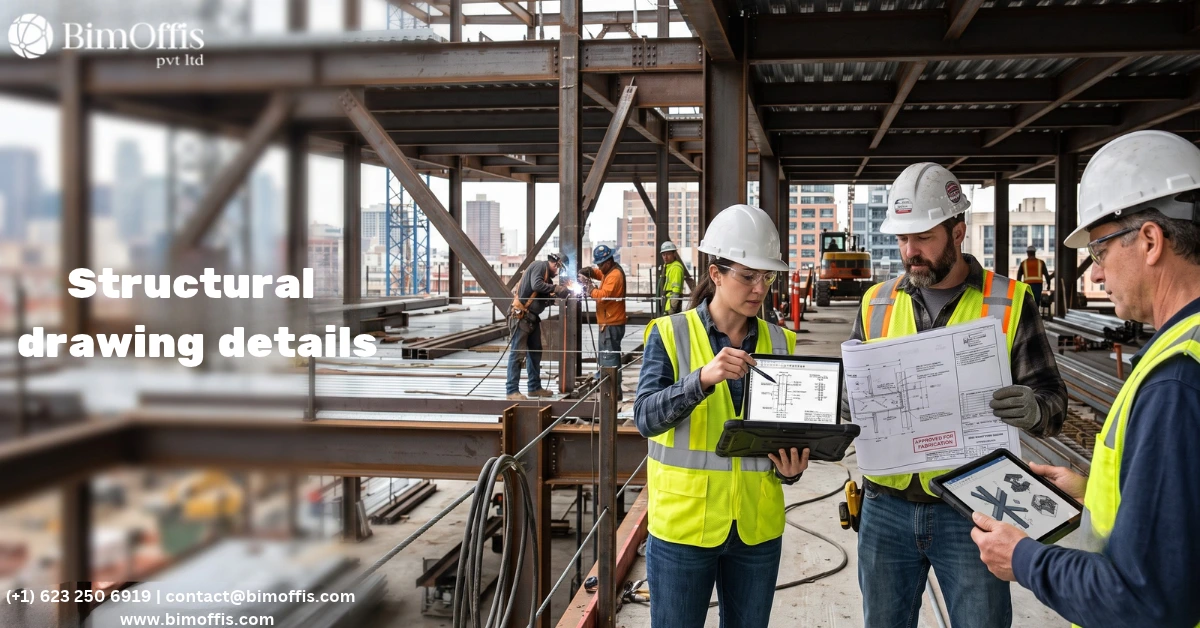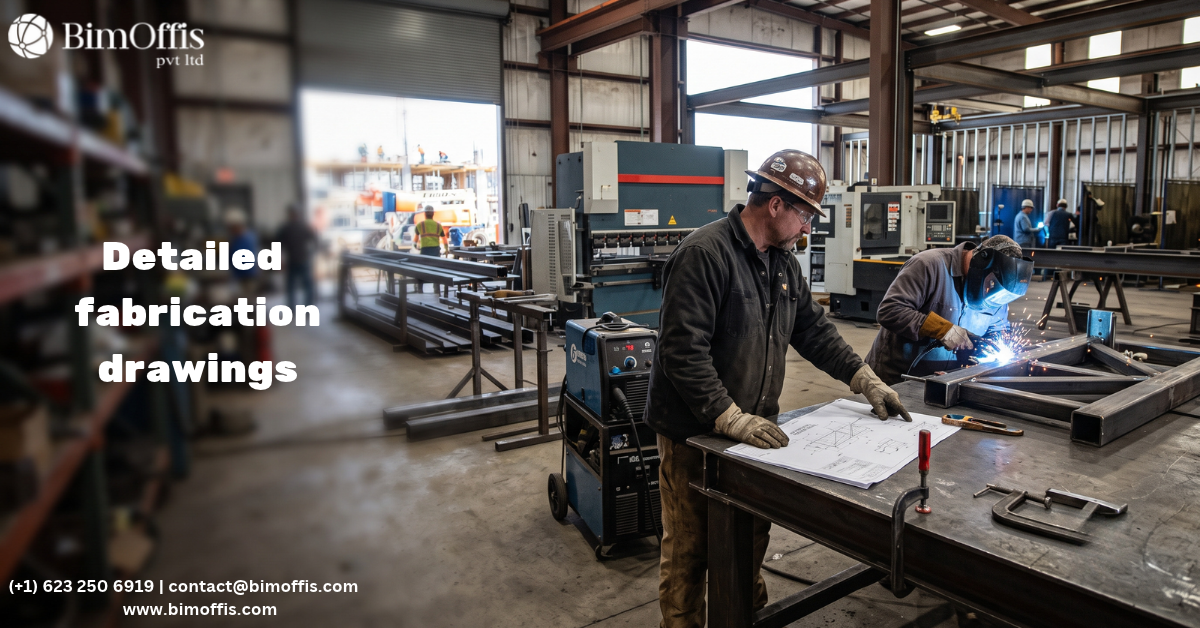
Fabrication shop drawings take a design from approved concept to manufactured reality. They give the fabrication shop the instructions it needs for cutting, bending, welding, and assembling the components that eventually become part of a building or structure.
Let’s start with something that fabricators, contractors, and engineers all recognise from experience.
The quality of the fabrication shop drawings a shop receives determines the quality of what comes out of that shop. A fabricator working from clear, accurate, complete drawings can focus entirely on the manufacturing process. They cut to the right length, drill to the right position, and weld to the right specification. The result is components that fit correctly on site. A fabricator working from unclear or incomplete drawings spends time resolving questions the drawings should have answered. Some of those questions get resolved correctly. Others get resolved incorrectly. Those incorrect resolutions show up as problems during installation, and fixing them there costs far more than producing better drawings would have.
Fabrication shop drawings mark the point where a project either delivers components that install correctly, or ends up needing field modification. Understanding what good fabrication shop drawings involve is worth the time for any project team commissioning fabricated elements. So is understanding why their quality matters.
What Fabrication Shop Drawings Are
The Fabricator’s Working Document
Fabrication shop drawings are technical documents that show exactly how a specific component or assembly will be manufactured. They translate the structural engineer’s or architect’s design intent into the fabrication level detail a workshop actually needs.
Design drawings show what the team needs to achieve. Fabrication shop drawings show how the fabrication shop proposes to achieve it. Take a structural steel connection as an example. The design drawing shows the connection type, the forces it needs to resist, and the geometric requirements it needs to satisfy. The fabrication shop drawing for that same connection shows the exact plate dimensions, the weld sizes and types, the hole positions and diameters, the bolt specifications, and the fabrication sequence.
This level of detail serves several purposes at once. The fabricator needs it to manufacture correctly without guessing. The engineer needs it to confirm that the proposed fabrication approach meets the design requirements. The site team needs it to verify that what arrives on site matches what was approved. And the quality inspector needs it to check that the manufactured components meet the specified standards.
The Range of Elements That Need Fabrication Shop Drawings
Fabrication shop drawings cover a broader range of building elements than most people realise. Structural steel sections and connections are the most obvious example. The same drawings also cover bespoke architectural metalwork, custom facade components, and specialist equipment housings. They extend to platform and access structures, pipe spools and mechanical assemblies, precast concrete elements, and any other component manufactured off site to specific dimensions.
Each element type carries its own fabrication drawing requirements, shaped by the manufacturing process involved. Steel fabrication shop drawings differ from aluminium fabrication shop drawings. Sheet metal fabrication drawings differ from structural plate fabrication drawings. What sets specialist fabrication shop drawing services apart from general drafting is simple: they produce drawings that reflect the actual manufacturing process, not a generic technical drawing convention.
Why 2D Fabrication Shop Drawing Services Matter
Accuracy That Drives Correct Fabrication
Dimensional accuracy is the most fundamental requirement of fabrication shop drawings. Every dimension on every drawing needs to reflect the actual required geometry of the component. It also needs to account for fabrication tolerances, installation tolerances, and the interface dimensions of adjacent components.
Dimensional errors in fabrication shop drawings produce dimensionally incorrect components. Consider a steel bracket fabricated 5mm too short because the shop drawing showed the wrong dimension. It fits incorrectly against the adjacent structural element. Or consider a hole pattern drilled in the wrong position because the edge distance was dimensioned incorrectly. The shop then has to redrill or remake the component. Both outcomes cost more to fix on site than an accuracy check would have cost during drawing production.
Good 2D fabrication shop drawing services check every dimension against the design drawings and against adjacent component drawings before the drawings reach the fabricator. This checking process catches errors at the lowest possible cost point in the project timeline.
Completeness That Prevents Field Decisions
Fabrication shop drawings can be geometrically accurate yet still incomplete. That gap forces the fabricator to make decisions about whatever the drawings don’t cover. Some fabricators make these calls correctly, based on experience and professional judgment. Others get them wrong. And some get them right for the fabrication process but wrong for an installation condition they weren’t fully aware of.
Good 2D fabrication shop drawing services answer every question the fabricator needs answered before cutting begins. These include material specification and grade, surface finish and paint system, and weld sizes and types at every joint. They also cover hole sizes, positions, and tolerance requirements, along with assembly sequence for complex built up sections. Marking requirements for site identification and packaging and transportation requirements for fragile assemblies round out the list.
When the drawings answer all of these questions, the fabrication shop can work independently from receipt of drawings through to delivery of finished components. No one needs to stop and ask for clarification. That independence produces reliable fabrication lead times and predictable delivery dates.
Coordination That Prevents Installation Conflicts
Fabrication shop drawings can be accurate and complete and still fail if they aren’t coordinated against adjacent components and building systems. The result is correctly manufactured components that don’t relate properly to their installation environment.
Take a structural beam fabricated to the correct length but with its connection plates oriented the wrong way relative to the adjacent column. It can’t go in without modification. Or take a bespoke facade panel fabricated to the correct dimensions but missing the MEP penetration that needs to pass through it. That gap forces field cutting that damages the panel finish.
Good 2D fabrication shop drawing services coordinate every fabricated element against the adjacent elements it needs to work with. Structural connection plates get oriented correctly relative to the adjacent members. Facade panel drawings show every penetration that passes through them. Pipe spool connections align with the adjacent piping at the correct face to face dimensions. This coordination, done during drawing production, prevents installation conflicts that always cost more to fix in the field than they would have cost to catch at the design stage.
The 2D Fabrication Shop Drawing Production Process
From Design Drawings to Fabrication Instructions
The fabrication shop drawing production process starts with the design drawings and specifications that define what needs fabrication. The detailer works through every element of the fabrication package. From there, they determine how the design intent translates into specific manufacturing instructions for each component.
This translation demands two things: technical understanding of the design requirements, and practical understanding of the manufacturing process. A detailer who has both can produce drawings that are not just geometrically correct but practically producible. These drawings reflect how the fabrication shop actually works, rather than an idealised view of manufacturing the shop then has to interpret and adapt.
Several quality checks run before drawings reach the fabricator. A dimensional check confirms every dimension matches the design drawings and adjacent component drawings. A specification check confirms all material, finish, and weld specifications carry the correct call outs. A coordination check confirms the fabricated components relate correctly to the adjacent elements they connect to or interface with.
The Review and Approval Process
Once the fabrication shop drawings are ready, the design engineer reviews and approves them before fabrication starts. This review confirms the detailer’s interpretation of the design. It also checks that the proposed fabrication approach meets the structural or architectural requirements, and it verifies the drawings are complete enough to drive correct fabrication.
The review process runs on a formal status system. Drawings approved for fabrication can go to the shop floor immediately. Drawings approved with comments need the comments noted, but they don’t require resubmission before fabrication. Drawings rejected and returned for revision need the detailer to address the engineer’s comments and resubmit before any fabrication starts.
For projects with multiple interconnected fabricated elements, the review process also checks that shop drawings for different elements coordinate with each other. Column shop drawings and beam shop drawings need matching connection geometry. Facade panel drawings and structural bracket drawings need compatible fixing arrangements. Catching mismatches during review heads off the installation conflicts that uncoordinated approved drawings otherwise produce.
What Good 2D Fabrication Shop Drawing Services Deliver
Speed Without Compromising Accuracy
Good 2D fabrication shop drawing services deliver drawings on a timeline that lets the review and approval process finish before the fabrication programme needs to start. Fabrication lead times are real and often significant. Drawings that arrive too late leave no room for review before fabrication needs to begin. This forces the fabricator to start work before approval, which defeats the purpose of the review in the first place.
Professional 2D fabrication shop drawing services understand the programme implications of their delivery timeline and manage it accordingly. They set realistic delivery commitments at the start of the engagement. They flag proactively when they need additional information to complete the drawings. And they process revision comments efficiently so approved drawings reach the fabricator without unnecessary delay.
Revision Management That Keeps Everyone Current
Design changes happen on every project. When a design change affects a fabricated element, the fabrication shop drawing needs revision before that element goes into production. Revision management in 2D fabrication shop drawing services decides one thing above all: whether the fabricator always works from current drawings, or whether some elements get fabricated to a drawing a design change has already superseded.
Good revision management marks every revision clearly on the affected drawing. It issues revised drawings to the fabricator before the affected element reaches the fabrication queue. It also maintains a drawing register that shows the current revision status of every drawing in the package. This discipline prevents an expensive scenario, where a component gets fabricated to a drawing that’s been revised, so the finished part no longer matches the current design.
The Bottom Line
Fabrication shop drawings matter because they form the direct interface between the design team’s intent and the fabrication shop’s output. Accurate, complete, coordinated fabrication shop drawings produce components that arrive on site fitting correctly and connecting as designed. They install without the field modifications that incorrect fabrication always demands.
Investing in quality 2D fabrication shop drawing services pays back on every project. Components install correctly on the first attempt. Installation programmes run without fabrication driven delays. And project teams spend their time building, rather than fixing the consequences of fabrication errors that better drawings would have prevented.
Achieve precise production with expert 2D fabrication shop drawing services that support accurate dimensions, clear detailing, and efficient fabrication workflows.
Frequently Asked Questions from Clients
What are fabrication shop drawings?
Fabrication shop drawings provide detailed instructions for manufacturing, assembling, and installing specific components.
Why are 2D fabrication shop drawings important?
They improve dimensional accuracy, reduce fabrication errors, and help prevent costly field modifications.
What information do fabrication shop drawings include?
They include dimensions, material specifications, weld details, hole positions, finishes, tolerances, and assembly requirements.
What elements require fabrication shop drawings?
They can cover structural steel, architectural metalwork, facade components, pipe spools, mechanical assemblies, and precast elements.
How are fabrication shop drawings reviewed and approved?
Design engineers review the drawings to verify design requirements, fabrication methods, completeness, and coordination before fabrication begins.
How do 2D fabrication shop drawings improve construction?
They help ensure components arrive ready for installation, reducing delays, rework, and field modifications.