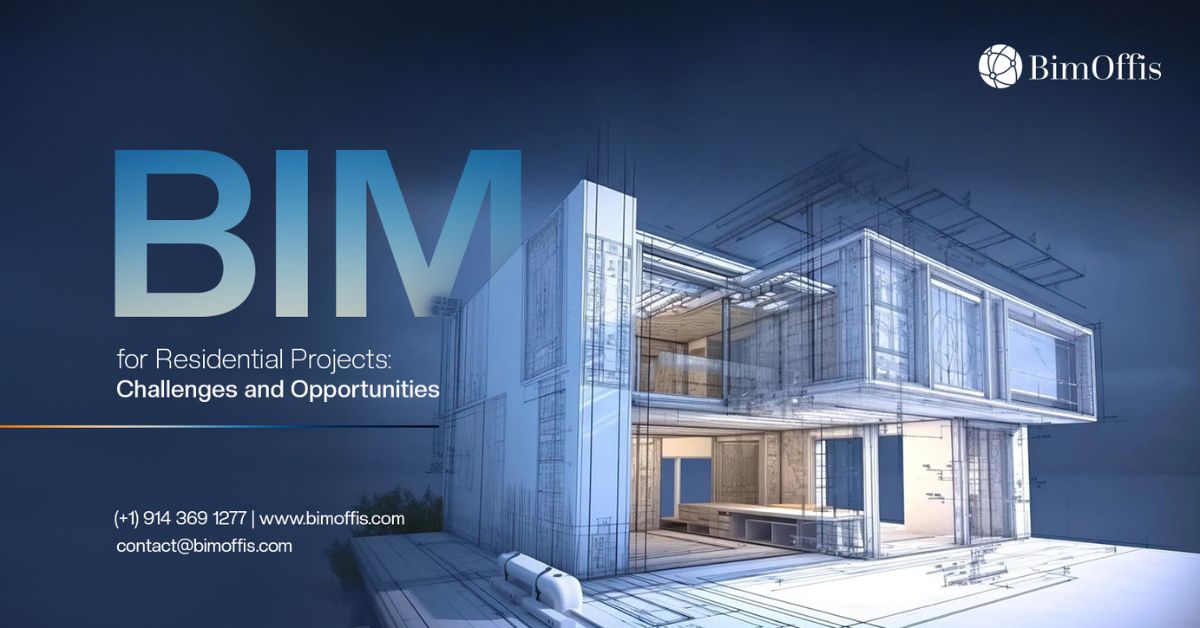
Building Information Modeling (BIM) is transforming the architecture, engineering, and construction (AEC) industry. It enhances collaboration, improves efficiency, and ensures precision. BIM is especially valuable for residential projects, but it also brings some challenges.
BIM Opportunities in Residential Projects
- Enhanced Visualization and Design Accuracy:
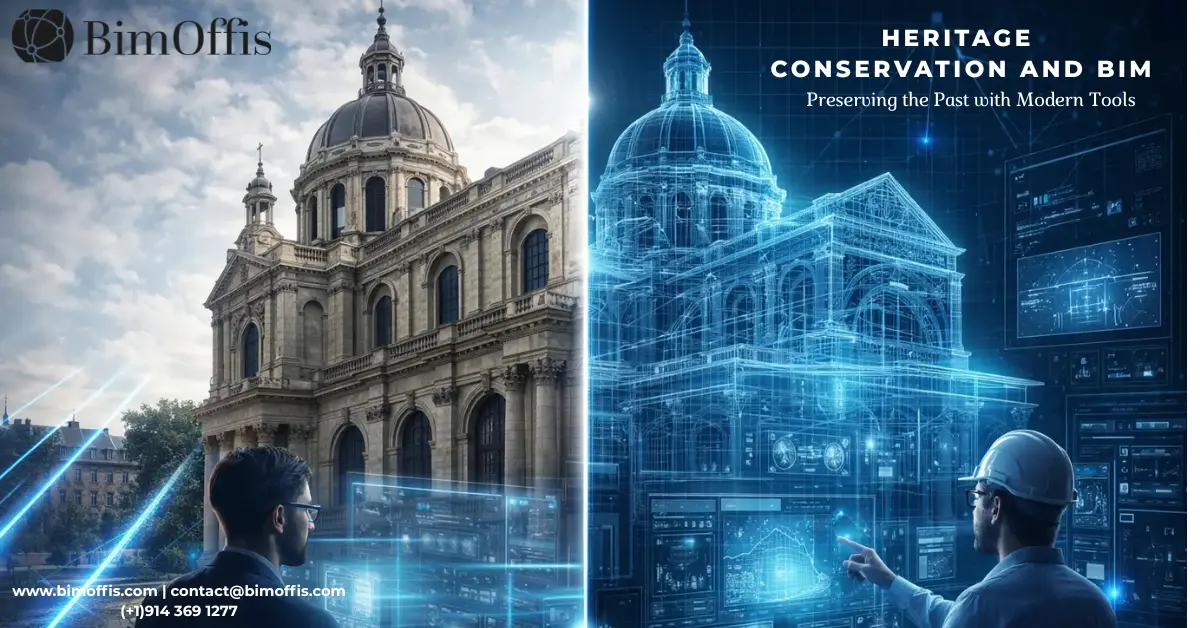
BIM creates detailed 3D architectural models. These models give homeowners and stakeholders a clear view of the building as it develops. This helps in making informed decisions and allows design changes early in the process for better results. - Improved Collaboration Among Stakeholders:
BIM provides a shared data environment for architects, engineers, and builders. This improves communication, reduces errors, and optimizes construction. This approach effectively reduces errors and optimizes construction processes. - Cost and Time Efficiency:
BIM helps with accurate material quantification and clash detection. This reduces wasted materials and costly rework, saving time and money. - Sustainability and Energy Efficiency:
BIM supports energy-efficient design planning, helping create environmentally friendly residential buildings.
Challenges When Applying BIM to Residential Projects
- High Initial Investment:
BIM software, hardware, and training can be expensive. This cost is a barrier, especially for small and medium-sized enterprises. - Resistance to Change:
Switching from traditional methods to BIM requires cultural change. Change management and leadership support are necessary to overcome resistance. - Lack of Standardization:
Without standard BIM processes, teams may be inconsistent across projects, affecting quality and outcomes. Ensuring standardization is vital. - Interoperability Issues:
Different stakeholders use different BIM software. Without a unified system, data exchange problems can arise, leading to lost or misinterpreted information.
Strategies to Overcome Challenges
- Investing in Training and Development:
Role-specific training programs help equip teams with the skills they need to work effectively with BIM. - Adopting Standardized Processes:
Established BIM standards maintain project consistency and quality. - Ensuring Software Compatibility:
Choosing compatible software prevents interoperability problems.
In conclusion, while implementing BIM in residential projects comes with challenges, the opportunities—such as improved design accuracy, collaboration, and efficiency—are significant. By proactively managing these challenges, the full potential of BIM can be realized to deliver superior residential projects.