The construction industry is not short of technology promises. New platforms, new workflows, new acronyms claiming to solve problems that have existed on projects for decades. Most deliver something useful at the margins. A few genuinely change how projects get built.
3D BIM modeling is one that genuinely changes things. Not because it is new technology, but because it solves a problem sitting at the centre of construction project delivery for as long as buildings have required coordination between multiple disciplines.
That problem is simple to describe. Architects, structural engineers, MEP consultants, and contractors all design and plan their work in relative isolation. They exchange drawings, coordinate through meetings, and then arrive on site to discover that the systems they designed independently do not fit together the way everyone assumed. The structural beam sits exactly where the mechanical duct needs to run. The ceiling height that looked generous on a floor plan turns out to be impossible once MEP infrastructure goes in. The coordination that everyone assumed was happening was not happening in any meaningful way.
3D BIM modeling is the workflow that changes this dynamic fundamentally.
What 3D BIM Modeling Actually Is
Most people have a general sense of what BIM means. Building information modeling. A 3D model of the building. A better way of doing drawings.
All of that is roughly right and all of it misses the point.
3D BIM modeling is not primarily about producing better drawings. It is about creating a coordinated, data-rich digital environment where every discipline’s design exists in the same space simultaneously. The architectural model, the structural model, and the MEP models all sit together in one federated environment. Every element carries data, what it is, what it consists of, what it connects to, what it costs. Furthermore, the coordination between all those elements happens in the model before construction starts rather than on site after fabrication has already happened.
That shift, from coordination-by-drawing to coordination-by-model, is what makes 3D BIM modeling genuinely transformative for modern construction rather than just a more sophisticated CAD system.
What Advanced 3D BIM Modeling Delivers on Real Projects
Coordination That Actually Works
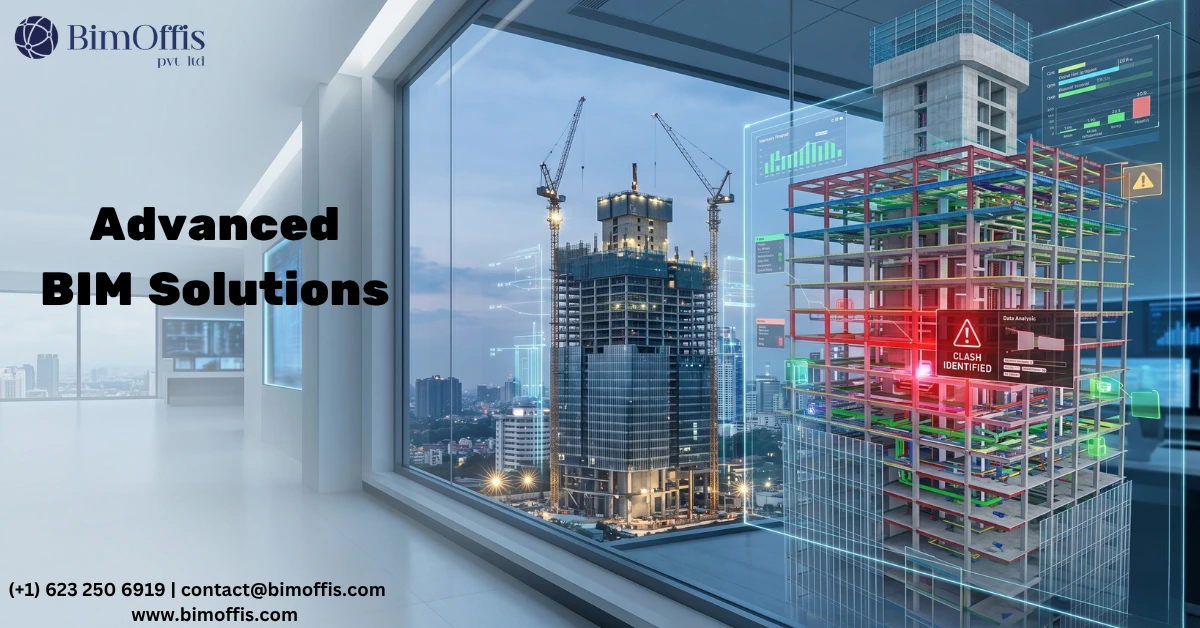
The most direct benefit of 3D BIM modeling on a complex construction project is clash detection. When all discipline models exist in the same coordinated environment, automated clash detection finds every geometric conflict between systems. Not some of them, not the obvious ones, all of them.
Consider what this catches in practice:
- A structural beam running through a major ductwork run
- An electrical cable tray sitting exactly where a plumbing riser needs to pass
- MEP services routing through a zone the architect specified as a clear ceiling void
- Foundation elements conflicting with underground drainage routes
The team resolves these conflicts in a coordination meeting during design. That resolution costs a few hours of modeling time and a conversation. The same conflict discovered on site costs rework, programme delay, and significant disruption to installation sequences planned around the conflict not existing.
On complex commercial projects, data center developments, healthcare facilities, and large residential schemes, the cumulative value of those avoided conflicts consistently justifies the 3D BIM modeling investment many times over.
Documentation That Comes From the Model
When a building exists as a properly built 3D BIM model, the documentation supporting construction comes directly from that model rather than from a separate manual exercise.
Floor plans, sections, elevations, schedules, and quantity takeoffs all generate from the model automatically. When the design changes, the documentation updates with it. The structural drawing reflects the current structural design. The door schedule reflects current door types and sizes. The material takeoff reflects the current specification.
On a large project with multiple consultants, hundreds of drawing sheets, and a continuously evolving design, this is a genuine project management advantage. The documentation stays current. The information contractors and subcontractors work from reflects the actual design rather than a version that was accurate three months ago.
Construction Planning and Programme Certainty
3D BIM modeling supports construction planning in ways that go beyond coordination and documentation.
When the building exists as a detailed 3D model before construction starts, the contractor can plan installation sequences against that model. Prefabrication decisions happen with reference to actual geometry rather than drawing interpretations. Material quantities come directly from the model rather than from manual takeoffs carrying measurement uncertainty.
For complex projects where programme certainty matters, tight completion deadlines, phased occupancies, or significant penalty provisions, the ability to plan construction against a detailed, coordinated model rather than a drawing set provides a meaningful competitive advantage.
Where 3D BIM Modeling Makes the Biggest Difference
Healthcare and Life Sciences
Healthcare facilities rank among the most MEP-intensive building types in the modern construction market. Operating theatres, intensive care units, laboratory spaces, and specialist clinical areas carry mechanical, electrical, medical gas, and data infrastructure at a density that makes traditional coordination methods genuinely inadequate.
3D BIM modeling on healthcare projects does not just improve coordination. It makes meaningful coordination possible in the first place. The density of systems competing for the same ceiling and wall zones simply cannot be managed reliably through overlaid drawings and manual checking.
Data Centers
Data center infrastructure is the most coordination-intensive building type most construction teams encounter. Redundant power distribution, precision cooling, structured cabling, fire suppression, and raised floor systems all interact in a confined space with zero tolerance for coordination failures.
Every serious data center project team working at scale uses 3D BIM modeling as the coordination platform. Managing that coordination through drawings creates failures that surface during commissioning, the worst possible moment on a project with a hard go-live date.
Commercial and Mixed-Use Developments
Large commercial office buildings, mixed-use developments, and high-rise residential schemes all carry enough MEP complexity and structural coordination challenge to benefit significantly from 3D BIM modeling.
The benefits show up most directly in the construction phase:
- Fewer RFIs because the documentation answers questions before contractors ask them
- Less rework because coordination happened in the model rather than on site
- Installation sequences that hold because the team planned against real geometry
- More predictable programme delivery because surprises get resolved during design
What Makes 3D BIM Modeling Advanced Rather Than Just Basic
A meaningful difference exists between a team using BIM software and a team delivering advanced 3D BIM modeling on real projects. That distinction matters when evaluating providers or deciding how to invest in BIM capability.
Advanced 3D BIM modeling means:
- Families built with correct parameters and real data rather than generic placeholder geometry
- Coordination processes running regularly throughout design development rather than as a one-time clash detection exercise
- LOD standards defined and delivered at each project stage rather than loosely approximated
- Models generating accurate documentation without manual fixing
- As-built records reflecting what was actually installed rather than what the design showed
These things require expertise, process discipline, and genuine project experience. The software alone does not deliver them.
The Bottom Line
Advanced 3D BIM modeling is not a technology investment for its own sake. It is a project delivery investment that pays back through better coordination, more reliable documentation, more predictable construction programmes, and buildings that get built the way they were designed.
The construction projects that consistently deliver on time, within budget, and with fewer coordination surprises are almost universally the ones where 3D BIM modeling started at the project beginning rather than as a documentation exercise at the end of design.
On complex projects where the cost of coordination failures is as high as it is in modern construction, getting this right from the start is not a premium. It is just how good projects get delivered.
Your 3D BIM model should prevent clashes, not cause budget ones. Get your free project quote.
Frequently Asked Questions from Clients
What is 3D BIM modeling?
A coordinated digital environment where every discipline’s design exists in the same space, allowing real coordination before construction starts.
How does it reduce construction problems?
Automated clash detection finds every geometric conflict during design, fixing them costs hours in a meeting rather than weeks of rework on site.
Does 3D BIM modeling improve documentation?
Yes. Drawings, schedules, and quantities generate directly from the model and update automatically every time the design changes.
Which project types benefit most?
Healthcare facilities, data centers, and large commercial developments, anywhere MEP density and coordination complexity make drawing-based coordination inadequate.
What separates advanced BIM from basic BIM?
Properly built families with real data, regular coordination rounds throughout design, correct LOD standards, and models generating accurate documentation without manual fixing.
When should 3D BIM modeling start on a project?
From day one of design, not at construction documents stage. The value comes from resolving conflicts early when changing them is still cheap.